
Between one office visit and the next storm, a drain can become the quiet source of a ceiling mark that keeps returning. Cottonwood Heights, UT treats Fort Union Boulevard as the main east-west route through town and a place to redevelop, asks in its general plan for neighborhood shops, office and commercial uses and mixed-use activity centers, and names Canyon Centre as its active Community Redevelopment Area. Buildings in a city like that range from shop rows to small office blocks, and the roof walk begins with whichever one has the stain: confirm the address and the access, then inspect the outlets, seams, curbs and edge details that sit between the stain and the sky. Our commercial roof inspection turns that first walk into a written record of what is confirmed and what still needs a test.
Fort Union and the shops along it
The city's corridor plan treats Fort Union Boulevard, with Union Park, Highland Drive and 2300 East as focus areas, as a place for commercial and mixed-use planning, and a feasibility study covers development along the road. A property on that road may be a small retail row, a bank pad or an office with a few tenants. Each has a different roof habit. A retail row has long runs of parapet, a scupper or two and rooftop units added tenant by tenant. A pad has one tenant and one roof, and its leaks trace to a few details. We look at the corridor frontage in the Fort Union Boulevard corridor page and at the shops around the City Center area as separate cases, because their roofs and their neighbors differ.
The cheapest early check on any of them is the roof edge. A gutter that sags between brackets, a coping cap that rocks when pressed, or a downspout that discharges onto a walk shows up from the ground and tells us where to start. We press every length of edge metal by hand, because sealant that looks whole from the ground can be split at the surface after a summer of afternoon heat.
Rooftop units get the same attention. A curb corner that has lost its sealant, a condensate line that drips on one spot all summer and a worn path between the hatch and the unit are the usual first findings on a shop roof, and each costs far less to fix in spring than after the first January leak.
Snow, ice and the roof edge above a walk
Salt Lake City International Airport's normals show recurring winter snowfall, freezing nights and warm summers, and the valley's elevation and exposure change from one neighborhood to the next, so the way snow lies on a Cottonwood Heights roof is learned on that roof. After a melt we follow the water from the field to each outlet and look for ice at the eave, in gutters and at scuppers. Near a walk, we also ask whether snow can slide off a sloped section, what sits below to catch it and where the meltwater ends up. Ice that lifts a coping joint or drags a gutter off its bracket goes on the sketch with a photograph and a line saying whether it looks like a one-time event or a habit. Our snow and ice damage repairs start from that record.
Summer belongs in the notes as well. The same normals show warm summer months, and metal edges and sealants expand and contract with them. A joint that was tight in October can be open by August, which is why the fall check looks at sealant before the first snow tests it. If ice or unsafe footing blocks a section on the day of the visit, the record marks that area as not reached and sets a return for a clear roof, instead of calling it sound.
Tracing a stain back to a seam
A ceiling stain marks where water appeared indoors, not necessarily where it entered. Water can ride a deck flute or an insulation joint before it drips, so the room gets compared with the slope, the nearest drain, the curbs and earlier repairs, and each observation is marked by roof section. If the insulation may be wet or the route is uncertain, a moisture reading or a small opening shows how much material belongs in the repair. A photo-backed condition report separates a confirmed split or displaced flashing from a suspected path, so the owner sees what the walk proved and what it only suggested. Where a roof has additions or more than one membrane, each stays separate in the record until the owner confirms the system.
Redevelopment and the roofs that were not part of the plan
Canyon Centre is the city's active Community Redevelopment Area, and the general plan asks for infill and redevelopment that use existing infrastructure. Redevelopment puts new money under old roofs, and the roof is the part of the building that money depends on. A Canyon Centre building about to be remodeled deserves a roof walk before the interior work starts, so a stain over new finishes does not become an argument about whether the leak is old or new. The same applies to a shop row on Fort Union that is changing tenants: the new tenant's equipment lands on the old membrane, and the curb flashing has to be done right the first time.
Cost and timing depend on the roof system, the wet insulation, the edge work, the access and how much of the field has to be opened. We put those drivers in writing beside the evidence, so a property manager can explain a number to an owner without guessing. Emergency response is available around the clock, holidays included, for water that cannot wait for a scoped repair.
Repair, test or replace: choosing the line from the evidence
A contained repair fits when the nearby membrane is sound and a compatible tie-in is available. Several open seams or broad moisture call for a test or a larger review. Emergency water control and permanent repair are scoped apart, so a leak can be stopped tonight while the lasting fix waits for evidence. A replacement comparison lists roof sections, removal and protection assumptions, insulation, penetrations, edge details, drainage and access windows, and names the concealed conditions that could change price or schedule. For an owner with several properties, a roof capital plan orders confirmed work by urgency.
Keeping the next inspection comparable
A useful closeout lists dated photographs, section labels, work limits, materials, tests and the items not confirmed. If weather or access restricted the visit, that limit stays in the record, and a later walk revisits the same outlet or repair to see whether it changed. For an active leak we begin with safe access and temporary water control; for planned maintenance we compare tests, upkeep and replacement from confirmed conditions. Share the building contact, the reported area and any access restriction, and we will set a practical next step for the roof in Cottonwood Heights.
Commercial Roofing Questions
How do you handle a roof that is covered in snow?
We record what is visible, mark what is hidden and return when the roof clears. A seam under ice counts as unseen.
What does a moisture survey resolve?
It can map hidden moisture or clarify a water path. We explain where the test goes and which decision its result supports.
Can you work around active offices or shops?
We coordinate the approved roof entry, escorts, noise windows, staging and affected spaces with the facilities contact before setting the sequence.
How do you trace a leak that appears far from a drain?
We compare the interior report with slopes, seams, curbs and penetrations, document the likely paths and recommend a test if the assembly hides the route.
What should be sent before a first visit?
The address, the room where water showed, the dates, the roof access route and any repair invoices. Those help us plan a focused walk.
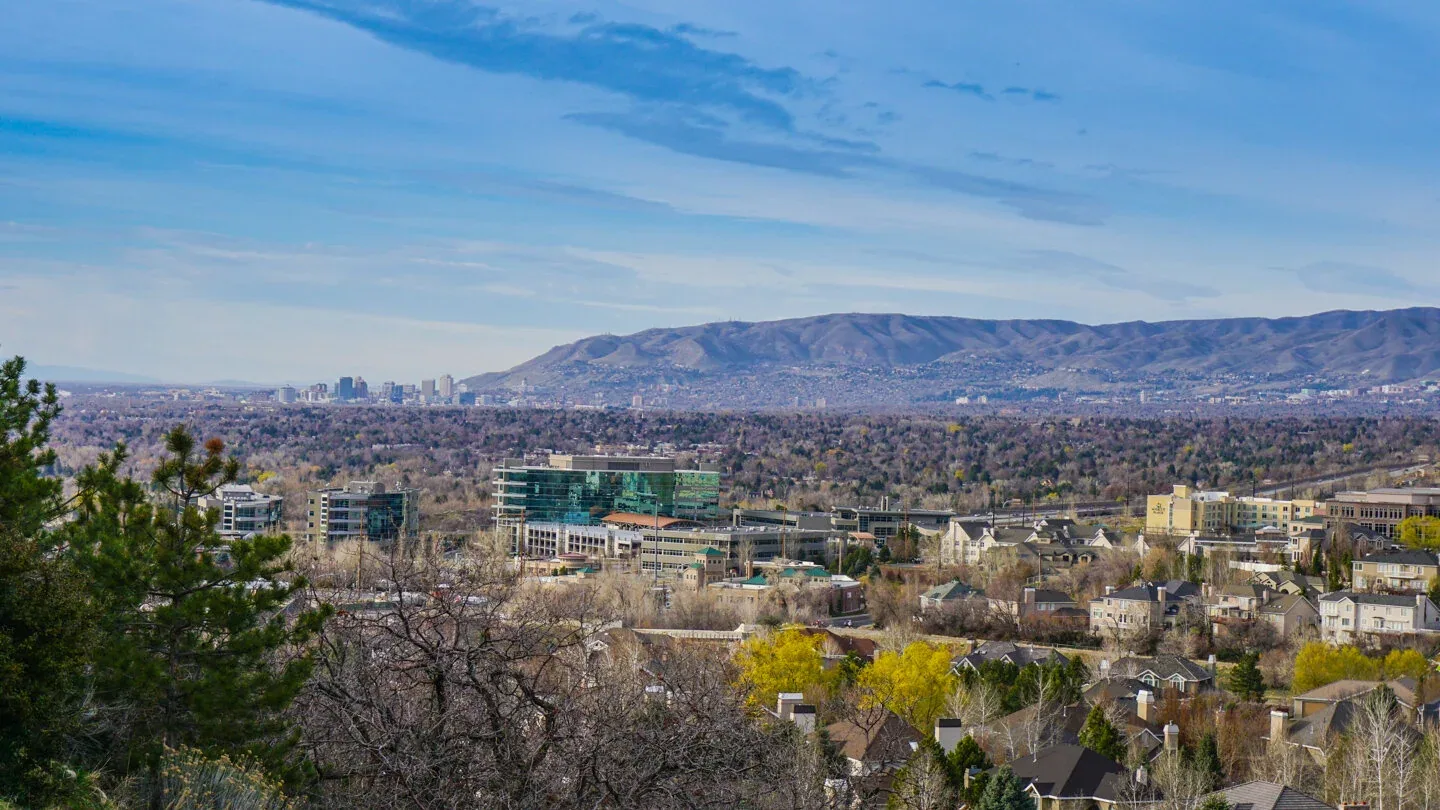
Review the roof conditions in Cottonwood Heights
Tell us the building contact, the reported area and the access limits. We will document the reachable sections and explain whether repair, testing or a wider plan follows from the findings.