
Standing on a roof that still feels firm underfoot, with a membrane that has gone dull but is not yet falling apart, an owner naturally asks whether a new roof can simply go on top of the old one. Sometimes it can. In West Jordan, UT, a recover is worth a serious look because it skips the tear-off, keeps debris out of the dumpster and leaves tenants undisturbed below. It is also a decision that can quietly fail if the insulation under the old surface is wet, so the first step is always a roof walk and a moisture reading, not a quote.
A recover leaves the existing roof in place as a base and adds a cover board and a new membrane above it. What matters is whether that base is dry, flat enough to drain and strong enough to carry another layer.
Wet insulation first
The single fact that decides a recover is moisture. Water trapped in the old insulation does not leave just because a new membrane has been laid over it. It stays against the deck, keeps the old roof heavy and soft, and can push vapor up into the new layer on a hot afternoon. A recover over wet insulation tends to blister in the first warm season and fail along the lines where the wet areas were.
We check with an infrared and core-cut moisture survey, and we mark the dry and wet zones on a plan. If wet areas are small and contained, we cut them out and fill them before the cover board goes down. If they cover much of the field, the roof needs a full tear-off and we say so while the roof is still open to inspection rather than after the cover board is ordered.
Where a recover stops
Not every roof can take another layer. The number of existing layers, the condition of the deck, the weight of ballast or gravel on the surface and the height of the existing flashings all set a limit. Utah's building code, effective July 1, 2026, is the 2024 International Building Code with local amendments, and recover provisions are reviewed against whichever edition is in force when the permit is pulled. Where a recover would put a second or third membrane over a roof that already carries two layers, the building department can require the old material to come off.
Height at the edges matters as well. Wall flashing, curbs and penetration sleeves were set for the old roof thickness. Adding insulation and a cover board raises the surface, so every termination needs to be extended or rebuilt. We measure those heights during the roof walk and tell the owner which details will need new metal before the membrane is priced.
Drainage and snowmelt path
A recover keeps whatever slope the old roof had. If the old surface ponded water after snow melted, the new membrane will pond too, unless tapered insulation is added to move water to the drains. The Salt Lake Valley sees recurring winter snowfall and freeze-thaw periods, and the standing water that sits against a seam through a freezing night is the same water that works its way in during the next thaw. The airport weather record is a regional reference, not a reading from each West Jordan roof, but the pattern of snow, melt and refreeze is a fair reason to take drainage seriously.
We look at the drain bowls, the scupper heights and the low spots mapped during the walk. If a drain has settled below the surrounding field, we reset it before the recover goes on. A new drain or scupper costs much less now than it will after the membrane is sealed around it.
Membrane and cover board choices
A cover board sits between the old surface and the new membrane. It protects against punctures, gives the new system a flat, stable face and helps resist fastener back-out and thermal movement. The membrane choice follows what the building does. A TPO membrane is a common single-ply choice over a cover board because the seams are heat-welded and the white surface reflects summer sun. A PVC roof is often chosen where grease, chemicals or exhaust deposits touch the surface.
On a metal roof, a recover is a different job entirely. Rather than adding to the surface, the work often means installing furring and a second panel layer, which a retrofit metal system is built for, provided the existing structure can carry it.
Occupied buildings along Redwood Road
Where tenants stay in place, whether in the commercial blocks West Jordan plans around its downtown core at 7800 South and Redwood Road or in the Gardner Village area nearby, a recover has a clear appeal because it avoids opening the roof deck to the interior. There is no tear-off dust falling into a retail space or an office suite, and no overnight exposure of a bare deck if a storm moves in.
That advantage has a price in planning. Attachment through an old roof can hit conduit, plumbing vents or old fasteners, so we locate penetrations before the schedule is set. For an owner in West Jordan who wants to stay open and spread cost across budget years, a staged recover is often the more workable path, as long as the moisture survey supports it.
Seasonal timing: pick the dry window
Cover board adhesive and welded seams want dry, moderate conditions, and a recover leaves less margin for weather than a tear-off does because the old roof cannot be left open. In the Salt Lake Valley the freezing nights of the cold season and the warm summer months bracket the working window, so a recover is usually planned for the stretch between thaw and the heat of midsummer. A written condition report from the spring check gives the owner the roof plan and photographs needed to choose that window and set the budget before the first warm week arrives.
If a leak cannot wait, we dry in the active area with a temporary repair first and fit the recover into the planned window afterward.
Commercial Roofing Questions
How many layers can a roof carry before a tear-off is required?
Code and the deck set the limit, and the building department reviews it at permit. We count layers during the roof walk and report the total before any pricing, so a recover is never proposed on a roof that cannot legally take one.
Does a recover cost less than a full replacement?
Usually, because the old membrane and insulation stay in place and disposal is smaller. The savings shrink if wet insulation has to be cut out, flashings have to be raised, or tapered insulation has to be added.
Will a recover change how the roof looks from the parking lot?
The edge profile rises by the thickness of the new insulation and board. Coping, edge metal and wall flashings are raised to match, so the parapet line and the finished color are the visible changes.
Can the new roof be warrantied as a recover?
A manufacturer sets its own terms for recover systems and reviews the existing roof before it agrees. We submit the moisture findings and roof plan with the request so the decision rests on the roof as it stands.
What if the survey shows wet insulation across most of the roof?
Then the recover is off the table and we price the tear-off. Wet areas drive blisters and soft spots, and covering them only delays the same repair under a newer surface.
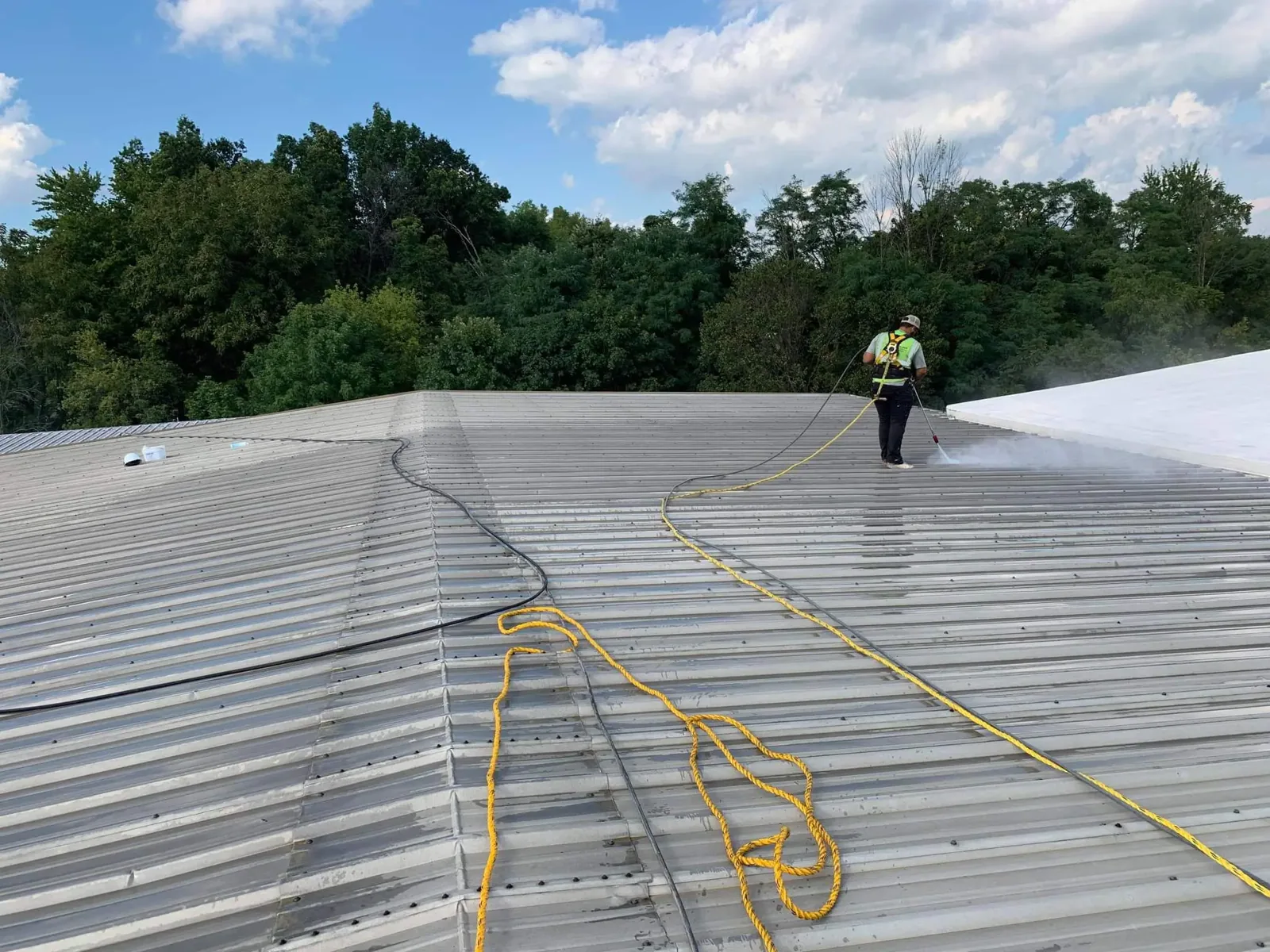
Find out if the roof can take a recover
Send us the address, the roof type if you know it, and where water has shown up. We will arrange a roof walk, run the moisture check, and tell you which parts of the roof can stay and which cannot.