
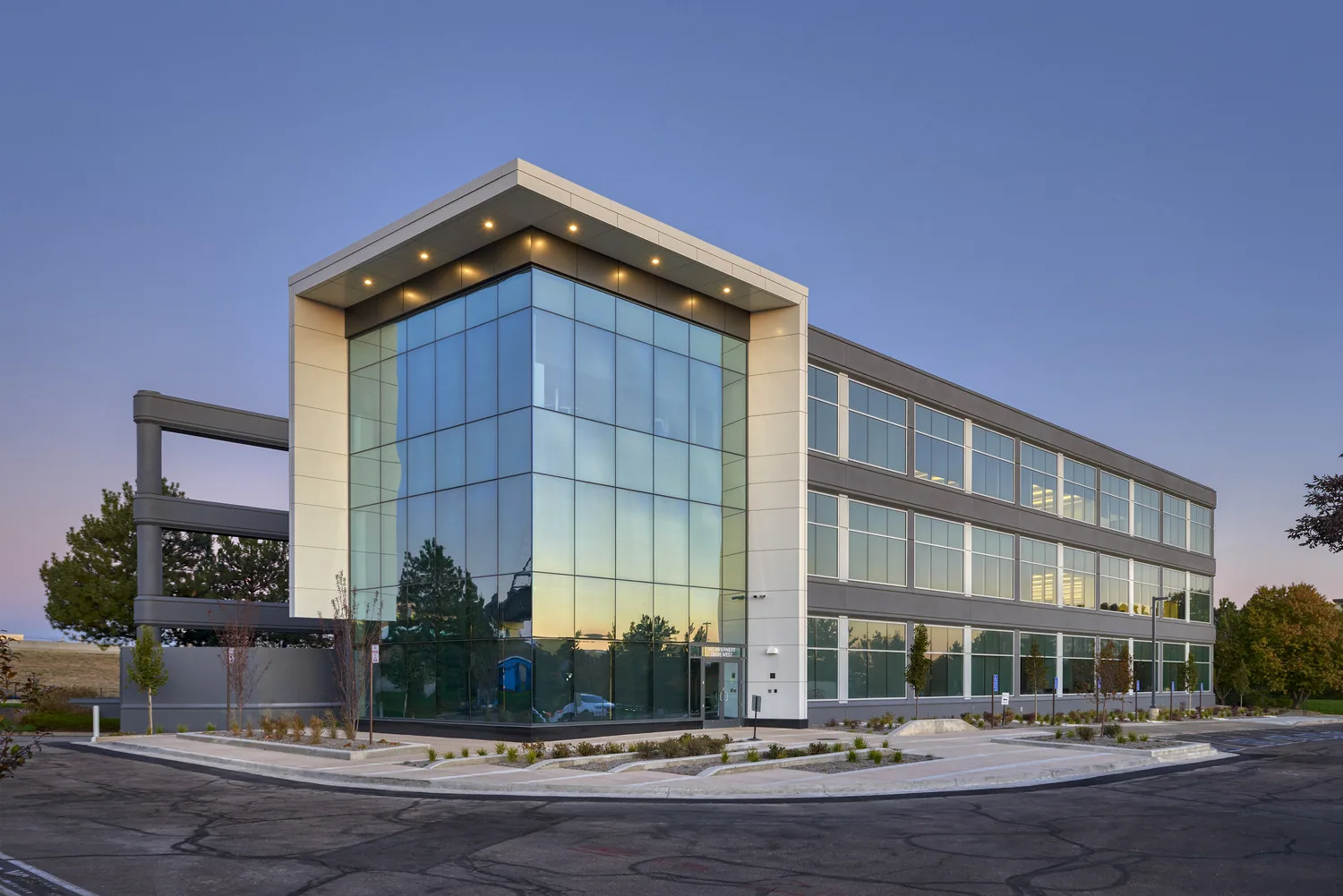
A ceiling tile that darkens after a storm can be one room's problem or the last visible stop on a longer roof path, and in an office building the trace starts in the grid above the tile. We inspect the area above it, follow the nearby seams and drains, and note whether equipment or a parapet changes the route. In West Jordan, UT the snowmelt and freezing periods of winter make drainage and flashing worth checking after a thaw, while warm summers add heat exposure, and the building's own assembly decides which detail needs attention. Office work often means coordinating roof access with tenants and security, so we identify the roof section, who can escort the crew and which interior room needs protection before a repair is priced. West Jordan's plan supports commercial, service, office and mixed-use development, and a commercial inspection starts with what the roof walk can confirm.
Keep tenant access in the plan
Before stepping onto the roof, we confirm the building contact, the entry rules, the hatch access and any rooms that may need a short ceiling check. A leak above a shared corridor can affect different tenants than a stain above one suite, so the location is tied to a floor and a roof section. We record the visible mark and compare it with the membrane, the curb and the drain above. The stain is a starting point, not the repair boundary.
For an active leak, the first scope identifies the opening, the nearby conditions and any temporary protection if the interior is still in use. We photograph the edge or seam that needs work and say what stays outside the repair. If the membrane around the defect is stable, a local patch may be enough; if seams keep releasing or water reaches the insulation, a wider area may need investigation. A repair visit should leave the property manager with a clear area to monitor after the next rain or melt.
Security matters on an office roof too. A hatch inside a locked mechanical room, a key held by the building engineer and a badge reader on the stair door can each add an hour to a visit, so we ask for the route in advance and write it into the file.
Roof units and hidden transitions
Office roofs carry units, ducts, exhausts and conduit runs that interrupt the membrane. We inspect the curb corners, the flashing height, the fasteners and the path water takes around each base. A unit replacement or a service call can disturb a transition without changing the roof field nearby, so we ask about recent work and compare it with the leak timing. When a mechanical trade must move equipment, we confirm who closes the roof opening and when that handoff happens.
The detail also has to suit the roof material and the unit's operating clearance. Sealant at the visible edge does not repair a loose curb or an open membrane seam. We identify the substrate and the attachment before selecting materials, then set a boundary that can be inspected at closeout. A curb and support detail can be scoped with equipment access in mind.
Drainage through winter and summer
Water can sit behind an equipment base or move from a high roof section to a low drain before a ceiling mark appears. We check the bowl, the strainer, the outlet connection and the surrounding membrane, then follow the slope toward areas that stay wet. Salt Lake City airport records show snow falling repeatedly through winter and lying deep for long stretches, and individual roofs vary with exposure and elevation. The drain and scupper repair needs to address the whole outlet detail when the bowl or its tie-in has failed.
We note whether water drains after nearby areas clear, whether the leak follows a weather event and whether the same spot returns. Those observations help choose between clearing, a localized repair or testing the insulation. If a test is needed, we explain what question it answers and how the opening will be closed before the interior or the roof materials are disturbed.
Choose repair, recover or replacement
A single open seam on otherwise sound roofing may be repaired locally. A recover is possible only when the existing layers are dry enough, attached and compatible with the proposed roof. Repeated leaks, broad wet insulation or edge movement can point to a larger scope. We inspect representative areas and name where a test would change the decision, then explain the repair, recover and replacement choices in terms of access, interior protection and project duration. A recover overlay is not assumed from the roof's appearance alone.
Price depends on roof area, penetrations, edge metal, deck and insulation condition, access restrictions and how the work is divided around occupied floors. The proposal names the repair boundary, the materials, the staging, the daily closeout and any allowance for concealed conditions. If office tenants remain below the work, the plan identifies interior protection and when a room or a corridor may need brief access.
Office roofs in West Jordan
The city's plan places the historic downtown and regional commercial core at Redwood Road and 7800 South, and it names the Gardner Village area and a planned station district around Jordan Valley Hospital. UTA's Red Line includes the West Jordan City Center and Jordan Valley stations. For an office in West Jordan, the owner's roof plan and access rules locate each section, and nearby medical office buildings may need tighter room coordination while a warehouse roof has different access and staging questions. We record the roof condition, the interior mark, the recent equipment work and any area that could not be reached, and a roof condition report keeps those observations tied to a section and a practical next step.
A repair record the manager can use
Before mobilization, we confirm the roof entry, the tenant notices, the parking or lift placement and who can approve a change in scope. If ceiling access is needed, we schedule it with the right occupant and protect the area below. Each open section gets a dry-in plan for the work period, with the closeout check recorded before the crew leaves, and the schedule names a usable alternate date in case the weather changes the installation window. After the work, the record identifies the repaired seam, drain, curb or edge and notes anything left for monitoring. Planned roof maintenance can revisit those details before snowmelt and after seasonal work on rooftop units.
Commercial Roofing Questions
Can you inspect an office roof without entering tenant suites?
The exterior walk can begin without suite access, though an interior mark may help narrow the roof section. We coordinate any ceiling check with the property manager and note what evidence was available.
How do you reduce disruption during a repair?
We confirm access hours, tenant notices, lift placement and any room protection before mobilizing. Work can be phased by roof section when the repair and the installation conditions allow a complete dry-in at each closeout.
Does a recurring leak mean the roof needs replacement?
Not by itself. We inspect the repeated area, the adjacent seams, the drains and the insulation, then check whether the defect stays localized or appears across several sections.
Can rooftop unit work cause a roof leak?
Equipment service can disturb a curb or a flashing transition. We compare the timing with the roof detail and coordinate the equipment trade so the opening is closed and checked after the handoff.
What should the office roof proposal include?
The affected section, the repair limit, the materials, the access assumptions, the interior protection, the schedule and any concealed condition that could change the scope.
Tie the leak to the right office section
Share the room or corridor affected, when the stain returns and how tenant access is arranged. We will inspect the roof area above it, map nearby details and explain what needs confirmation before pricing.