
Water on a warehouse floor is a claims problem before it is a roofing problem. Pallets of client goods sit under the roof, racking stands in long rows, and a drip over the wrong aisle means a damaged shipment, a notice to a customer and a hard conversation about who pays. Logistics and third-party operators in West Jordan, UT, work in a city that reports access to I-15 and I-80, and the roofs over their buildings spend each winter under snow that melts, refreezes and tests every seam and drain. We plan logistics roofing around inventory and dock flow, because those are what the operator cannot afford to disturb.
Under the roof: racking, stock and sprinklers
A distribution building holds stock close to the roof deck, and in many layouts the sprinkler piping, lighting and racking all sit within a few feet of the underside. A roof leak can wet product, short a light fixture, or corrode sprinkler fittings. We ask where the most sensitive client stock sits, which aisles carry the highest value and where racking is bolted to the floor, and we plan the roof sequence so that work above those aisles gets finished and dried in first.
When a leak shows up, the first move is protection: plastic over stock, a catch basin under the drip, and a call to the roof. The dry-in plan then follows the interior damage back to the entry point on the roof, with the area photographed for the claim file.
Sprinkler contractors should hear about roof work as well. A new curb or a drain change near a main can touch hangers and supports, and fire protection inspectors will ask for a note of any change. A short heads-up to the building's fire protection vendor avoids a failed inspection after the roof is finished.
Dock doors, trucks and hoisting
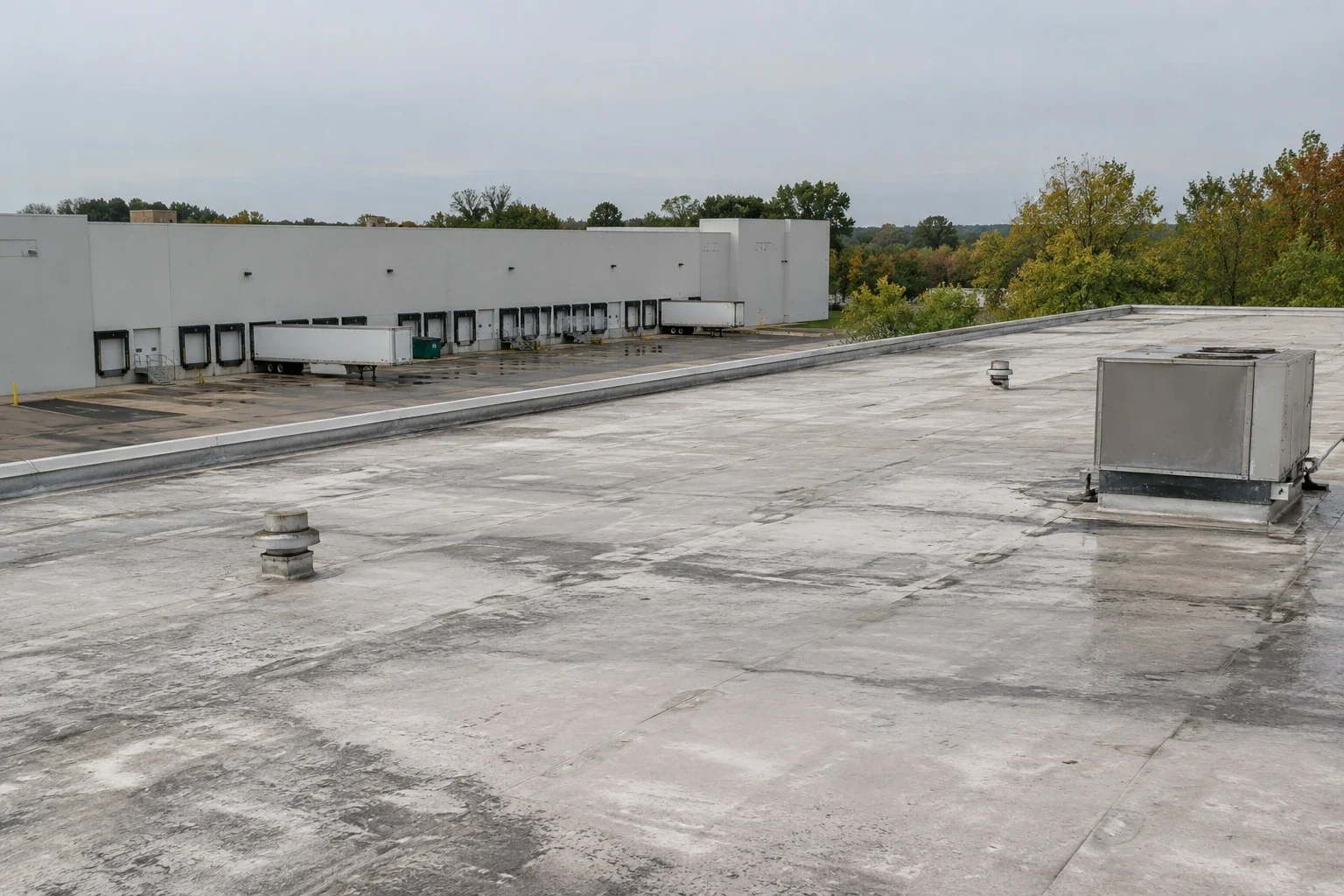
The busiest part of a logistics building is also the most awkward for a roof crew. Trailers back in all day, yard trucks shuttle between lots, and forklifts cross the dock apron constantly. We choose hoisting locations away from active doors where the site allows, set fenced staging areas, and brief the dock supervisor on where material will be lifted. Where a raised dock canopy or a loading bay roof sits low, we protect the gutters and scuppers from foot traffic.
Roof drains near the docks deserve a look. Trailer wash, tire debris and wind-blown packaging collect at low points, and a clogged scupper at a dock wall can back water against the building envelope. Our drain and scupper work clears and rebuilds those outlets so melt has a path off the roof.
Weather windows matter at the docks. Snow that slides off a low roof edge lands where drivers walk, so edge metal, snow guards where fitted and clean gutters protect the people below. After heavy snow we clear access and look at the dock-side parapet before trucks run again.
Big, flat fields and the details around them
Warehouse roofs tend to be wide, low-slope fields broken by skylights, smoke vents, exhaust fans and rooftop units. The field itself often performs well until it ponds or the seams open. The trouble starts at the details: pipe boots, curb corners, parapet flashing and the joints where one roof section meets another. Each of those is a short length of seam that moves under heat and cold. Shippers that also run a production floor under the same roof line face the same details, with exhaust added.
Our distribution center roofing work puts attention on those short lengths. A thorough roof walk tests every seam near a penetration, probes the low points after a thaw, and notes where water has left a mark. Repairs at the details usually cost far less than a field replacement, and they extend the time until a larger project is needed.
Corridors and clusters around the valley
West Jordan counts I-15 and I-80 access and South Valley Regional Airport among its assets, and that matters to any operator moving freight in and out. Bluffdale reports business and distribution development underway in Mountain View Business Park, while South Salt Lake lists warehouse and distribution among its business sectors. An operator with a lease in one place and a growth site in another often manages several roofs at once.
For a client with space in Bluffdale and West Jordan, one condition format simplifies the reporting and the budget. We use the same fields on every building so the operator can compare roof age, drainage and open repairs across leases.
Leases, landlords and who pays
Most 3PL operators lease their space, and the lease decides who repairs the roof. Some leases put structural and roof repair on the landlord and ask the tenant to report problems promptly. Others pass roof cost through as a pro rata charge. Either way, the operator needs dated evidence that a leak was reported and that the response was timely, and a roof contractor's notes become that evidence.
We write the findings in language a landlord can act on, with a repair scope, a priority and a photo set. If a landlord prefers its own vendor for major work, our report still gives the operator a clear basis to press for a response. A building owner reading the same page can see what was found and what is recommended.
Snow, melt and the spring check
Salt Lake Valley winters bring recurring snowfall, and airport records show a cold season with repeated freezing. On a warehouse roof that means ice at drains, meltwater under blistered membrane and edge metal that lifts as ice forms. A preventive maintenance visit each spring reads those signs after the melt and fixes small openings before the dry months. A second visit in fall clears debris and prepares the drains for the first snow.
Spring is also when a ponded area becomes visible. Water that stands for a day after a thaw points to a low spot or a slow drain, and a ponding water repair corrects it with tapered insulation, a new sump or a drain adjustment. Left alone, standing water adds weight and shortens seam life, and a warehouse roof with a long run of ponded seams ends up on the replacement list sooner.
Commercial Roofing Questions
Can a warehouse roof be recovered while stock stays in place?
Often yes, with a recover that avoids removing old membrane over the stock. We use cover board, mechanical attachment and clean daily dry-in, and the aisles under work are checked each morning.
What if a leak hits client-owned inventory?
Tarp or sheet the stock, record the time and the location, and call us the same hour. Photos from the roof and the interior make the claim easier to document.
Does a tenant need landlord approval for roof repairs?
Usually the lease says so. We prepare the scope and photos in a form the landlord can approve without a second site visit.
How do we protect the building during a long roof project?
By working in sections, with each section dried in before the crew leaves. Open areas are never left uncovered overnight.
Can you walk several sites in one trip?
We can plan routes across the valley, and each building gets its own report so lease and budget decisions stay separate.
What does a seasonal peak mean for roof scheduling?
We avoid the weeks when dock traffic is heaviest and plan loud work for the slower weeks. If a leak appears mid-peak, dry-in comes first and permanent work waits for the lull.
Tell us the aisle, the dock and the lease
Share where stock is getting wet, which doors stay busy, and who holds the roof under the lease. We will plan the roof walk, mark what has to be confirmed on site, and set a dry-in that keeps freight moving.