A bubble along a seam, a corner of flashing standing proud of the wall, or a patch from two summers ago that has lifted at its edge: these are the small things that turn into a ceiling stain after the next melt. In West Jordan, UT, winter snow sits on a flat roof for days and then releases all at once, and any weak detail gets tested by the water that follows. A planned repair is the work that happens before the stain, or right after it, with a clear boundary around what is being fixed and what is being left alone.
We start with a roof walk, mark every finding on a plan, and sort the list into repairs that will hold and areas where the surface has gone past patching.
Where repairs are needed
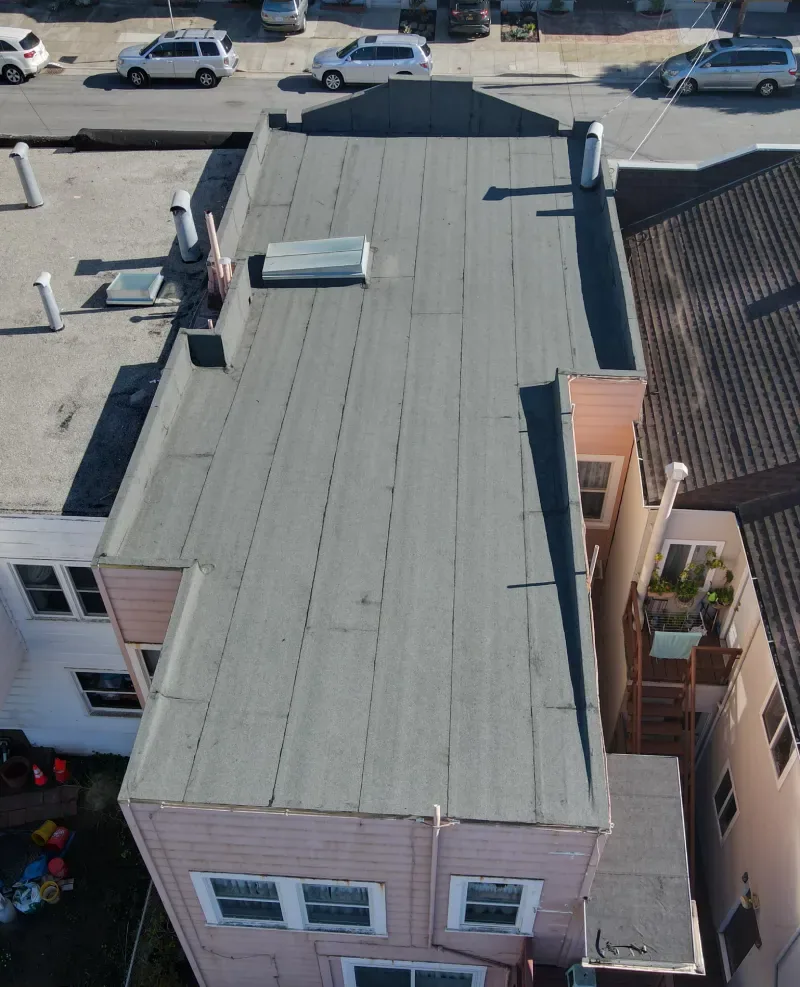
The membrane field is rarely where water gets in. Seams, flashing, penetrations and terminations carry the load, because they are where one material meets another and where movement concentrates. A heat-welded seam on a single-ply roof can open at a cross joint. A wall flashing can shrink and pull from its fasteners. A pipe boot can crack in the sun and let water run down the pipe to the ceiling below.
Edges tell a story too. A loose coping cap or a lifting edge metal strip lets wind and meltwater get under the membrane, which can then peel back in the next gust. We look at all of these on the roof walk, press on soft spots, probe seams with a blunt tool, and photograph each location with a reference to the nearest drain or equipment so the owner can find it again.
Repair boundary: how far to cut
A good repair reaches sound material. If we patch only the visible split, the patch sits on a surface that is already weakened and the new edge becomes the next failure line. We remove loose material back to membrane that is bonded and flexible, clean the area, and install the repair with overlap that matches the system. On a TPO roof that means heat-welded patches with rounded corners. On an EPDM roof it means primed, cured splice tape or liquid flashing at the detail.
The other half of the boundary is below the surface. If the insulation is wet under the repair area, the patch will trap moisture, so we check with a meter and cut the wet insulation out before closing. When wet readings spread far beyond the visible damage, we say so and bring in a moisture survey before spending more on patches.
Drainage and melt
Salt Lake Valley weather includes recurring winter snowfall and cold-season freezing, and the warm months can be hot on dark membranes. Airport records are a regional reference rather than a reading from each West Jordan building, but the cycle they describe is a reason to check drains early. A blocked drain bowl turns a repairable roof into a ponding roof, and water that sits against a seam through a freeze and thaw cycle finds the weakest edge.
During a repair visit we clear the strainers, check the slope toward each outlet, and note any low spots that hold water a day after the snow is gone. Small corrections such as a reset drain ring or a small cricket behind a unit can be part of the repair. Larger drainage problems are written up so the owner can weigh them against ponding repair options before the next season.
Roof-walk notes: what we record
Every repair visit ends with something the owner can keep. We note the roof type and its apparent condition, the location of each repair measured from a fixed point such as a drain or a unit, the materials used and the moisture readings taken beside the work. Photographs are taken before, during and after, so a manager comparing next spring's roof walk can see whether a repair line has moved, opened or stayed flat.
Access is part of that record. A roof reached by a fixed ladder, a hatch or an exterior stair needs a different crew plan than one reached only through a tenant suite, and the notes say which route was used and who opened the door. Tenants who share a building with the roof access get a short notice of the day and the noise window before the crew arrives. That detail saves a phone call the next time the roof needs attention, and it keeps small repairs from waiting on a key.
Roofs across the valley floor
West Jordan sits on the valley floor with access to I-15 and I-80 and a mix of commercial, service, office and mixed-use buildings planned throughout the city, including the downtown core at 7800 South and Redwood Road. Companies such as Danone, Oracle, PayPal, Amazon, Boeing and Sysco are listed among those doing business in the city, which says the commercial setting here is varied. We do not assume a single roof type. A retail strip, an office pad and a distribution building each carry different rooftop equipment, access routes and tenant schedules, and the repair plan follows those facts.
For property managers in West Jordan and the nearby cities of South Jordan and Taylorsville, the practical question is usually which repairs can be done in one visit and which need materials ordered. We bring a repair list from the roof walk, so small details can be handled in a single return trip.
When repair is the wrong tool
Repair has a ceiling. If a membrane is brittle across the field, if seams are opening in many places, or if wet insulation is spread across several slopes, repeated patching costs more each season and leaves the same exposure. In those cases the better path may be a full replacement or a recover over a dry base, and we lay out the numbers for both against the cost of continued patching.
A repair with a clear limit is still worth doing. It stops active water, protects the interior and buys the owner time to plan a budget year. We write the expected remaining life of the repaired area in plain terms and recommend a spring check to confirm that the repair line is holding.
Commercial Roofing Questions
Can a leak be fixed in one visit?
Often the stop can happen in the first visit, once we find the entry point. Finding it takes the roof walk. If the source is a failed detail, we repair it and photograph the finished work.
How do you decide between a patch and a larger repair?
We test the membrane around the damage. If it is bonded and flexible, a contained patch can hold. If it is brittle or the seam has opened beyond the visible split, the repair has to reach farther.
Will a repair affect an existing manufacturer warranty?
It can. Warranty terms usually require repairs to follow the method the manufacturer sets and sometimes require notice. We ask for the warranty paperwork before work begins so the repair stays within its terms.
What happens to the insulation under a repaired area?
We check it with a moisture meter. Dry insulation stays. Wet insulation is cut out and replaced before the membrane is closed, because sealing wet material under a patch lets the water keep spreading.
Should repairs be done in winter?
Emergency stops can happen in any season using temporary materials. Permanent repairs hold best on a clean, dry surface in moderate weather, so we schedule those for the dry window and use dry-in measures until then.
Show us where it leaks
Share where water appears, when it appears, and how access to the roof works. We will arrange the roof walk, mark the repair line on a plan, and confirm what can be fixed in one visit.