A ceiling stain beside a service room can start at an edge detail across the roof, and in a city of truck terminals and older commercial strips the edge is a long way from the stain. West Valley City, UT retains office and industrial zones for commercial development, highlights commercial transportation as an established local activity, and its urban-design plan addresses commercial-property maintenance along major streets and the redevelopment of older commercial corridors. Its Fairbourne vision plans a mixed-use transit district. We inspect the roof that is there, follow the water toward a drain bowl, a seam or a curb, and record which surfaces can support a repair. A commercial roof inspection gives the owner a clear first boundary: confirmed damage, areas that need testing and locations we could not safely reach.
Drainage check: find the low point
Water left in a low area can load a roof and affect the insulation before it shows inside. We start at the outlet, check the bowl and the surrounding flashing, then trace the slope back toward the ponding mark. A blocked strainer, compressed insulation and a separated seam can look alike from the ground but call for different work. We photograph each condition and test uncertain areas instead of assuming the visible stain sits directly below the opening.
A drain and scupper repair should restore a sound flow path and leave a compatible membrane transition. Where a seam has lifted, the repair has to reach material that can hold a tie-in. Where moisture extends below the surface, a small patch may conceal a wider condition, and ponding water roof repair begins by finding whether the water comes from an outlet problem, a low area or damage under the membrane.
Dust and grit from yards and trucking settle in strainers faster than leaves do, and a bowl packed with grit is the usual reason a pond stays after the rest of the roof has dried. On a roof near a truck court we clear the strainers first, check the line below with water from a hose, and note whether the outlet empties onto a surface that freezes.
Older corridors and the roofs behind them
The city's plan expects older commercial properties along its corridors to be remodeled or upgraded as redevelopment occurs. A building's age says little about its roof, since roofs get replaced, recovered and patched on their own calendar, so we check the membrane, the attachment and the earlier repair layers on the actual building. A remodel is the best moment to settle a roof question, because a leak onto fresh drywall costs the owner twice. The Decker Lake Station overlay page takes up that sequence in detail.
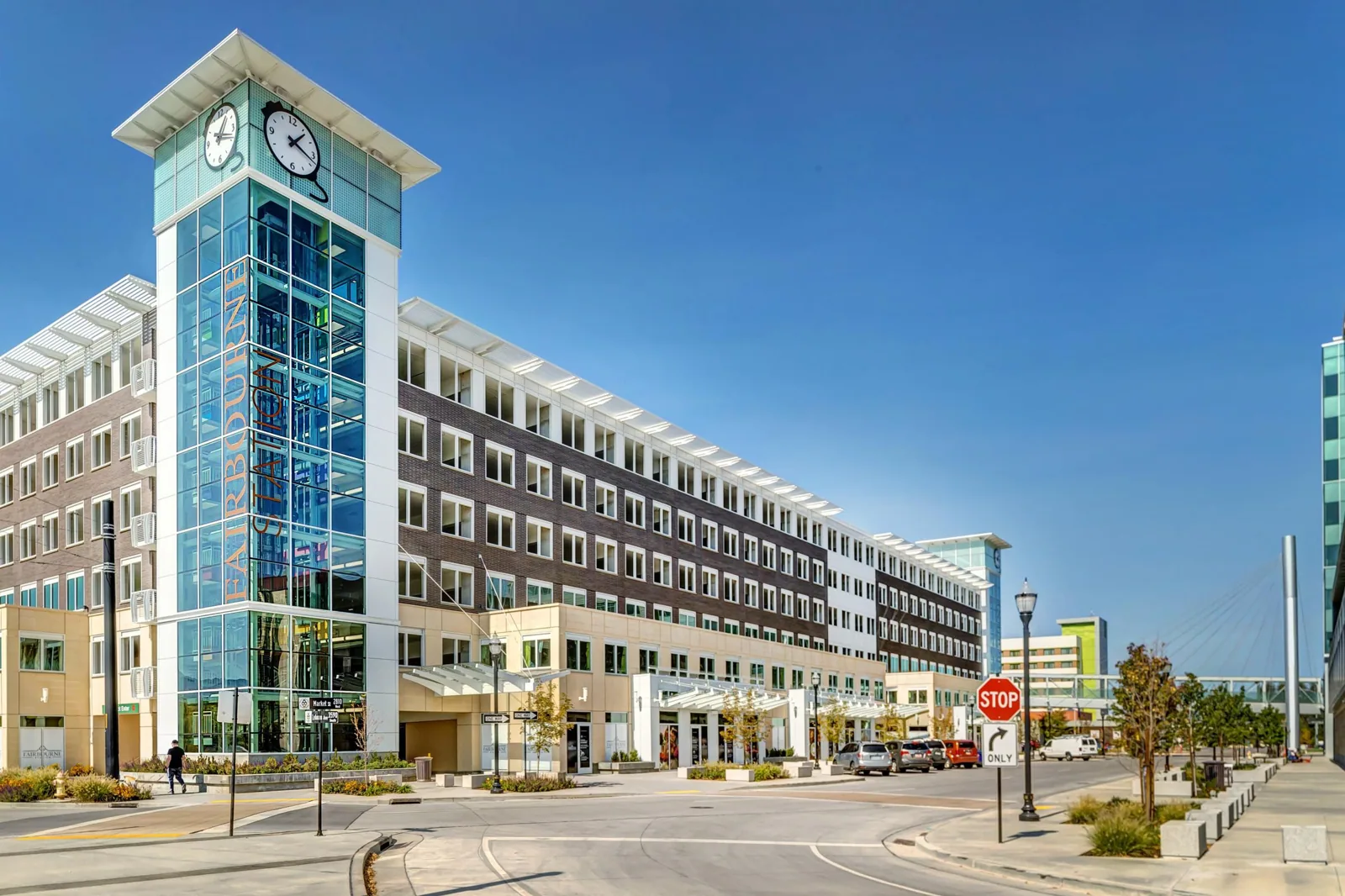
For the mixed-use district around transit, the Fairbourne Station page covers roofs that meet canopies, decks and plazas.
Retained office and industrial zones mean offices, shops and warehouses sit side by side, so one owner may hold roofs with very different needs: an office with rooftop units, a warehouse with a long deck and a truck dock with a canopy. The walk treats each roof as its own case, and the notes use the same format so the owner can compare them.
Roof-walk notes: record each limit
We map the roof sections reached, the path from each reported leak and the details that interrupt the membrane. The walk includes drains, seams, edges, curbs, pipes and rooftop equipment supports. Photographs show the defect with enough surrounding surface to place it, and the notes identify blocked access or areas that need a return visit. If the building is occupied, we coordinate the route so the inspection does not interfere with a loading area, a service entrance or a tenant operation.
Truck and trailer activity means yards, canopies and dock edges beside the roof. We ask the site contact about the safe route and the staging corner, then inspect the assembly instead of guessing from the business category. If work must happen over an occupied space, the occupied-building sequence can specify protection, daily closeout and which sections open first.
Major-street maintenance is part of the city's redevelopment attention, and a roof edge is part of what the street sees. Loose coping, bent gutters and rust streaks below scuppers are the kind of finding that is both a leak path and a visible flaw, so the walk includes the street-facing edges and the discharge points above any sidewalk.
Repair line: separate a patch from a replacement
A localized repair is sensible when the surrounding material remains stable and dry enough to accept a compatible tie-in. We check the edge of the damaged area, the adjoining seams and the insulation before marking where new material should stop. If the membrane has multiple failures or the substrate is wet over a broad section, repeated patches can spend money without resolving the condition. A commercial roof repair scope can address an active opening while identifying what testing or larger work remains.
Replacement becomes a separate decision when repairs cannot make a durable boundary. We review the layers, the drainage, the penetrations and the attachment, then describe the work area and the dry-in sequence. A recover may be possible only when the existing conditions, the structure and the code allow another layer; it is not a way around wet insulation or poor drainage. A replacement plan follows measured conditions, access and the building's needs.
The roof system, wet insulation, edge work, protection and the amount of material to open set cost and schedule. We spell those drivers out so the owner can decide whether to repair, test or plan a replacement.
Work window: protect the occupied space
Salt Lake Valley snow and melt periods make outlet and seam checks useful after a weather change, and Salt Lake City International Airport's normals describe that pattern, while freezing conditions affect access and installation timing. We confirm the roof surface, the forecast, the safety route and the material requirements before setting a repair window. For larger work, the sequence also covers daily dry-in, deliveries, noise-sensitive areas and protection below the section being opened.
When the assembly is stable, a maintenance visit can clear accessible drains, examine seams and record changes since the last inspection. For an active leak, a response can be arranged at any hour, holidays included: we confirm safe access and control water first, then complete the roof review when conditions allow.
Commercial Roofing Questions
How do you identify the roof system on a building?
By reading the surface, probing the seams and, where needed, taking a small core. The membrane, the attachment and the earlier repair layers come from the roof itself.
What does a roof inspection include after a leak?
We trace the reported path, inspect drains, seams, edges and penetrations, photograph conditions and record areas not reached. Testing follows when the visible evidence leaves a material question.
Does snowmelt mean the drain is the problem?
Not by itself. We check the outlet and low areas, then follow water marks toward seams and flashing. The inspection separates a blocked flow path from a membrane or insulation failure.
How do you limit disruption during repairs?
We confirm access, occupied areas, staging and work hours, then divide the scope into sections where the roof allows it. Each open area needs a dry-in plan before work starts.
What determines whether replacement should be considered?
The extent of failed membrane, wet insulation, the attachment condition and the repair history. We document the assembly and explain whether a contained repair can hold or broader work needs planning.
Put the roof condition on record
Share the leak location, the timing and the access limits. We will inspect the areas we can reach, document what is sound or damaged and identify the next step needed to define a repair boundary or replacement scope.