
Ceiling dust drifting onto a desk, a forklift driver stopping when a pallet shudders from a hammer drill overhead, a patient room that has to stay quiet through a morning: the first sign that a building is being reroofed is usually felt below the roof, long before anyone sees the work. In West Jordan, UT, where a roof may be wet with snowmelt in March and baking by July, the window for tearing off a membrane is limited, and the tenants beneath it still have a business to run on the same days.
Reroofing an occupied building is a matter of order. The roof is divided into sections, each section is opened and closed on a schedule the building can live with, and everything below is protected before anything above is disturbed. We write that order down first, then build the work around it.
Phasing: opening only what can be closed
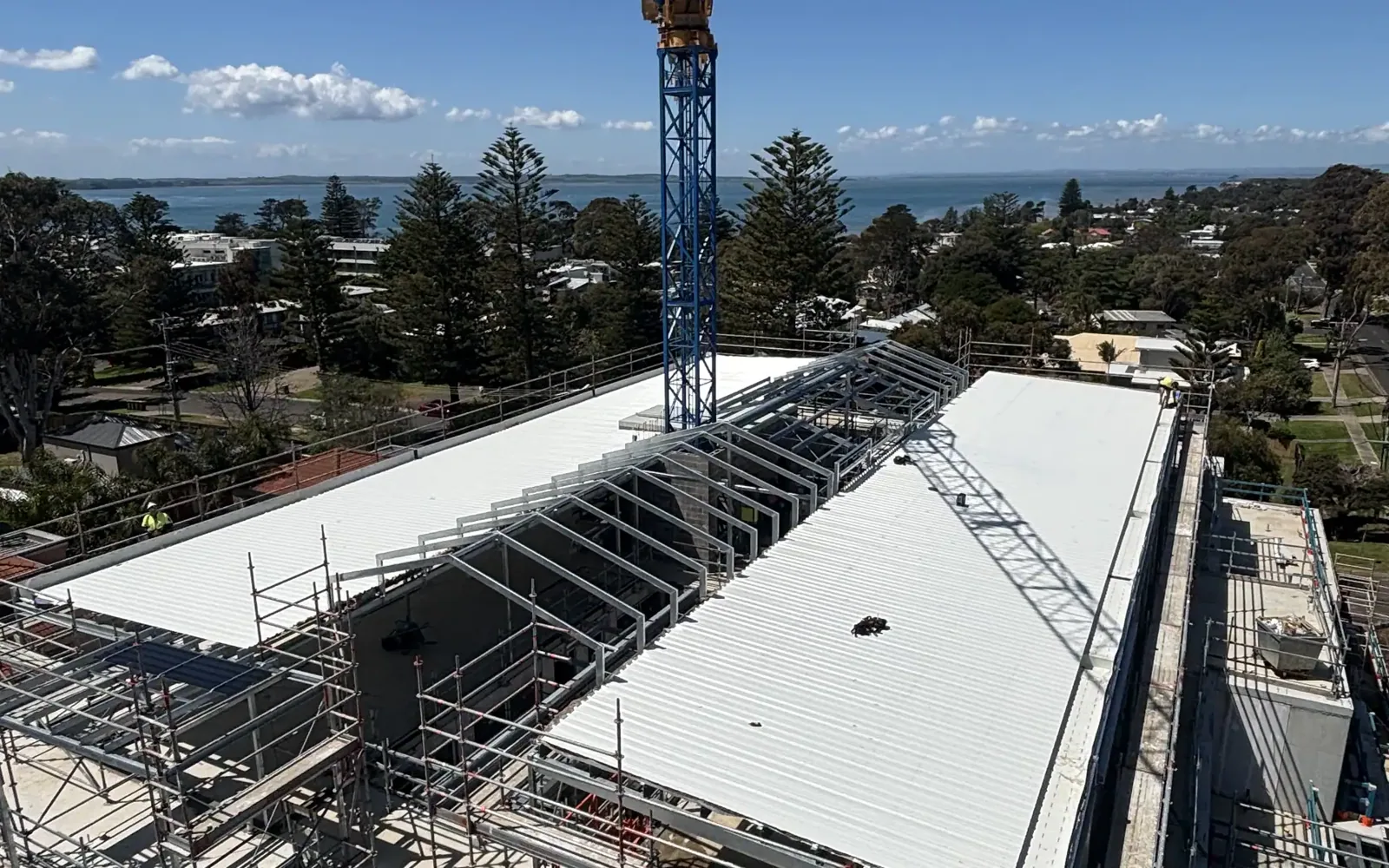
The rule that governs everything else is that the roof is never opened further than the crew can dry in by the end of the shift. A section of old membrane and insulation comes off, new insulation and membrane go down, and the edges are tied in or temporarily sealed before the crew leaves. The next section starts the following morning. On a large roof that means a long sequence of small openings, each with its own boundary line, rather than one large strip left exposed to a storm.
The sequence follows the building's use. We start over the areas that tolerate disruption best, such as storage space or corridors, and finish over the areas that cannot, or the reverse if a tenant has a quiet period that can be used. In a full replacement the phasing also determines where the crane, the hoist and the material staging go, which is a conversation with the property manager before the first day.
Noise, odor and what tenants will notice
Tear-off is loud. Gravel, adhered membranes and old insulation come up with power tools, and the sound carries through the deck into the rooms below. Adhesives, primers and hot work give off odors that can enter the building through outside-air intakes, which are usually mounted on the roof right where the work happens. A tenant who is not warned feels ambushed, and a tenant who knows the day and hour can move a meeting, a shift or a delivery.
We agree on a notice schedule with the manager, covering noisy tear-off days, the days adhesives are used and the days intakes need to be shut or covered. Where odor is a real issue, we choose mechanically attached or low-odor systems, and we coordinate with the mechanical contractor on temporary intake covers. The choice of system, such as TPO or a cold-applied alternative, can be made partly on how it behaves around occupants.
Protection below the deck
Even a perfect plan produces some dust and debris. Insulation fibers, old fasteners and dirt fall through any gap in the deck or around any penetration. Under the work area, ceiling tiles can be covered, sensitive equipment wrapped or moved, and corridors posted. Plastic sheeting can protect an office, though only a person who has been in the room knows what is on the desks. Walking the space with the property manager before the work, and again before each phase, is how we learn what needs covering.
Fire safety needs its own plan. Anywhere heat or flame is used, the crew follows watch periods and keeps extinguishers at hand, and we confirm what the building's insurer and the fire marshal expect before an adhesive or torch is lit. If a leak happens during the job, the schedule includes who calls whom, where the buckets are, and who has the authority to stop the work.
A short walk with the property manager before each phase also catches what plans miss, such as a finished corner suite with new carpet or a server closet that sits under the next section to open.
Access, parking and deliveries
A reroof needs a staging area, a path for dumpsters or chutes, and a place for the crane to stand. Each of those competes with something a tenant uses, whether that is parking, a loading dock or a fire lane. Commercial lots are often shared among shoppers, delivery trucks and employees, so a roof crew rarely has the site to itself.
We map the routes on the site plan: where trucks enter, where material is set down, and where the public is kept away. Fall protection, safe ladder access and secure storage for roofing materials overnight are also sorted out ahead of time. Where a lot cannot lose spaces, deliveries move to early hours, and the hoist and the crane are scheduled for times when the building's own traffic is light.
Weather, melt and the daily dry-in
Salt Lake City International Airport records recurring winter snowfall and freezing periods, and thaw cycles are part of the season. For an occupied building, weather is the most direct threat to the people inside, because an opening that gets rained or snowed on becomes a leak in someone's workspace. We watch the forecast, keep tarps and temporary membrane staged near each opening, and stop work early when a front is moving in.
Cold weather limits what can be installed. Many adhesives and sealants have minimum application temperatures, and wet or frozen surfaces do not bond. A seasonal plan that favors the warm, dry months for the main tear-off, and leaves cold-weather work to repairs and temporary protection, keeps both roof and tenants safer. A rapid response remains available throughout the job if something tears or shifts during a storm.
Buildings that cannot pause
Some occupants cannot stop for a roof. The city plan includes a station area north and northeast of Jordan Valley Hospital as a place for commercial, office, civic and residential uses. Wherever operations, patients or customers are inside, the roof job runs on the occupants' terms.
For medical offices, warehouses and similar spaces, the plan changes in specifics but not in structure: sections, notice, protection and a daily dry-in. Owners in West Jordan can share the building's operating hours, and we will schedule loud and odorous work for the hours when it matters least.
Commercial Roofing Questions
Do tenants have to leave during a reroof?
Usually not. The work is phased so the space below stays in use, and we agree on notice for the loudest days. A few rooms may need to be vacated briefly if a protection layer cannot be installed otherwise.
How do you keep dust out of ceilings?
With covers on ceiling tiles, sealed gaps around penetrations and a vacuum-assisted tear-off where the deck is open. We also check the space below before each phase starts.
What happens if rain starts mid-section?
The section is already sealed to a temporary or permanent edge, so the roof below stays dry. Tarps and temporary membrane stay on the roof near each opening for this reason.
Can the roof be done at night?
Some work can, such as protection, staging and prep, though safety lighting and neighborhood noise limits apply. The main tear-off and membrane work are best done by daylight, when installation quality is easier to check.
Who talks to the tenants?
The property manager sends the notices, and we supply the schedule, the dates for loud and odorous work, and a contact for questions. Tenants with special needs can tell the manager and we adjust the sequence.
Tell us how the building runs
Share the hours the building is occupied, which spaces are most sensitive and where deliveries and parking matter. We will schedule a roof walk, propose a phasing plan and confirm the notice schedule before a start date is set.