
A bucket in a hallway during a February thaw is a familiar sight in a school building. One building leaks at a gym addition, another at a boiler flue, a third at a roof drain that froze over, and each repair competes with the same maintenance budget and the same short list of summer weeks. Districts around West Jordan, UT, hold many roofs of different ages, and the Salt Lake Valley's winter snow and freeze and thaw leave their marks on seams and drains every spring. We help a district sort its roofs into repair, restore and replace, then fit that list into the weeks when classrooms are empty.
Start with the whole inventory
Buildings on a district campus were often added in different decades, and each addition brought its own roof, so a single campus can carry three membranes. Before any bid is written, we walk each roof in the program and record what is there: membrane type, visible age, drainage, flashing, penetrations and areas of standing water. The result is a ranked list that the district can take to its board.
That list is the basis of our multi-site roof programs. It shows which schools need work this summer, which can wait a year with monitored repairs, and which are candidates for coatings or recovers that stretch the budget. A board that sees one clear picture can set a multi-year plan without revisiting every roof each spring.
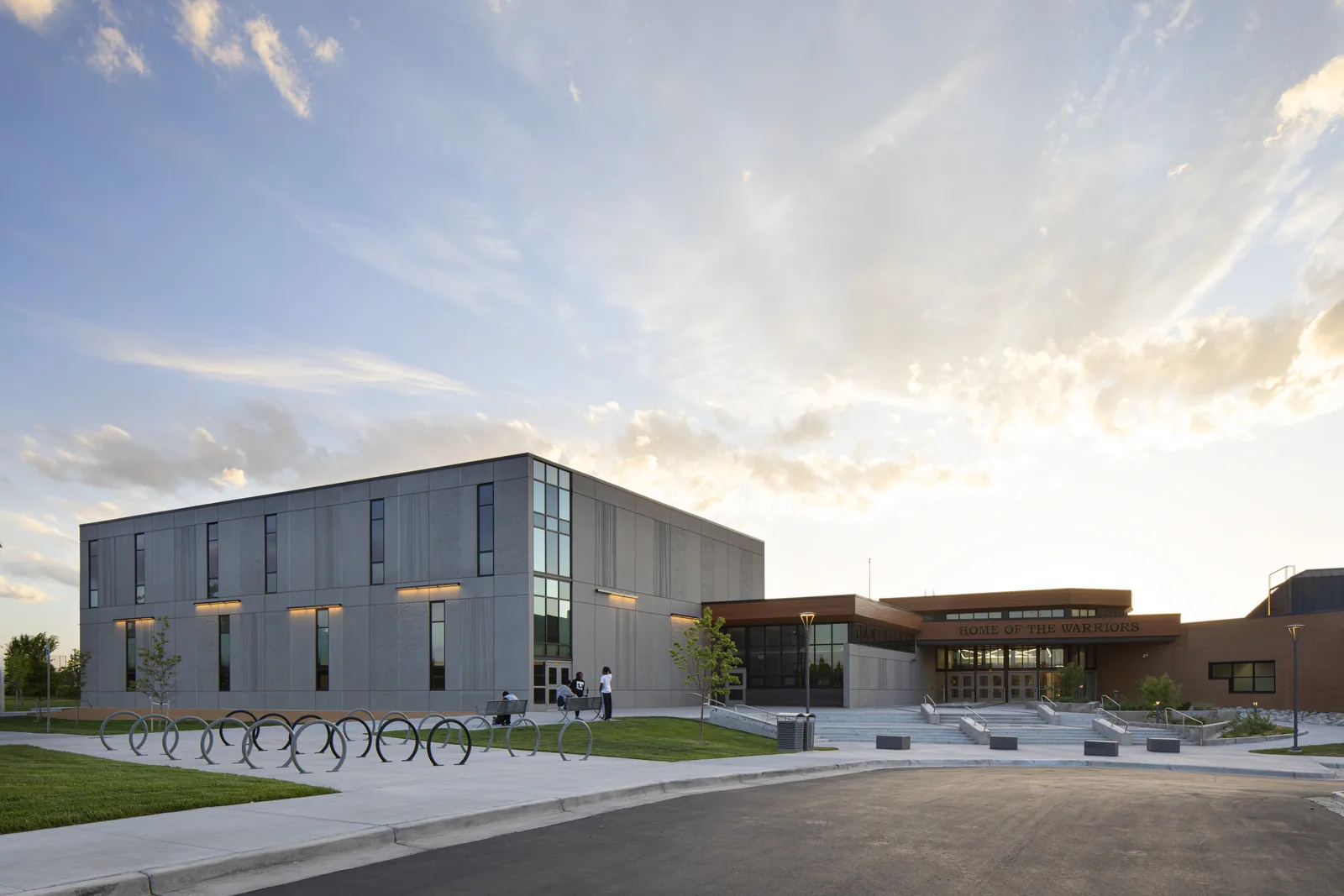
Gyms and cafeterias get special attention. Their roofs span wide, often carry heavy exhaust equipment, and sit over spaces that host events with large crowds. A leak over a gym floor can ruin a hardwood surface in a season, so those roofs go near the top of the walk list even when the membrane looks serviceable from the ground.
Summer window and phasing
The summer break is the cleanest time for large work, and it is also the busiest for every contractor in the valley. A district that wants a major tear-off done before fall needs the scope settled in winter, with materials ordered ahead and schedules agreed with the school's custodial and grounds staff. We build the sequence by building, then by roof section, so a late delivery on one site does not stall the rest.
Some work cannot wait for June. A failed flashing over a kitchen or a gym can be repaired in a few hours, and a temporary dry-in over a classroom wing can be set in an afternoon. We handle those during the school year with barriers, safe hoisting paths and work hours that avoid arrival and dismissal. Our school roofing approach keeps buses, parents and students away from the work zone at all times.
Weather in early summer still brings the occasional storm, so each night the open roof is closed with a temporary seal. By the time students return, flashing, edge metal and rooftop curbs are finished and the roof is clear of materials, with a short walk-through for the facilities lead before we demobilize.
Keeping students away from the work
Roofing next to a school means more than a fence. Material staging must stay away from play areas and pickup lanes, hoists have to be positioned where no child walks, and tools and debris need to be cleared daily. Crews who work during the school year follow site rules about badges, hours and behavior, and the principal gets a contact number and a daily summary.
Fumes and noise are separate concerns. We avoid torch work near operable windows and fresh-air intakes, we choose adhesives and welded methods that suit the building, and we plan loud steps for times that do not collide with testing or assemblies. A district that wants to give parents a notice can use our schedule as the basis for it.
Fire code needs a place in the plan as well. Roof access ladders, hatches and exits must remain usable during the work, and any temporary material left on the roof overnight is weighted and noted for the custodial lead. If a fire alarm or sprinkler zone is touched by the work, the district's contact is told before the crew starts.
Bids, scopes and public records
A school district buys roofing through a formal process, and the scope has to be written so that bidders compare like with like. We prepare condition reports and scope descriptions that a district can attach to a bid package, with quantities, details and notes on access and phasing. When a general contractor holds the prime contract on a school project, the roof scope slots into theirs. A clear scope reduces change orders after the work begins, because the odd items, such as an abandoned curb or a hidden layer of insulation, are already described.
Records matter after the work too. Districts keep warranty documents, drawings and photos for the life of the roof, and our roof warranty management support organizes that file so the next facilities director can find it. A public agency such as a city or county faces similar paperwork, and the same record format serves both.
Snow, melt and the spring check
Winter snowfall and freezing nights are part of the valley's normal cold season, as airport records show. A school roof with a slow drain or an opened seam shows trouble when the melt begins. We recommend a spring walk after the last heavy snow, with attention to drain bowls, edge metal and the joints between additions. Ice can lift coping or pull loose a flashing at a wall, and a quick repair then keeps a leak from developing through the summer.
Schools near the Jordan Valley station area and along Redwood Road go through the same season as every other building in the valley, so the same early spring check applies across the program.
Capital planning that survives a board cycle
A roof plan that lives only in one facilities director's head disappears when that person moves on. We write the plan into a document with building names, current condition, recommended action and a target year. Our roof capital planning format is simple enough for a board member to read and detailed enough for an engineer to check, and it can be updated each spring after the walk.
Where a bond or levy funds a replacement program, the plan also helps stage the work. Large schools with the worst roofs go first, smaller sites follow, and low-risk buildings stay on maintenance until their turn comes.
Commercial Roofing Questions
Can a school roof be repaired during the school year?
Small repairs, yes. We schedule them outside arrival and dismissal, fence the area and keep material away from play spaces.
How early should planning start for a summer replacement?
By winter, so materials are ordered and the schedule is set before the break begins. Late planning leaves little room for delays.
What belongs in a bid package?
A condition report, roof plans, quantities, access notes, phasing rules and the work windows. Photos of existing conditions reduce disputes.
Does a coating make sense for a school roof?
Where the membrane is sound and insulation is dry, it can. A moisture survey tells us whether the roof qualifies.
Who keeps the roof records?
The district does, with our copies available on request. We organize warranty documents, reports and photos in one file per building.
What if a leak shows up in the first weeks of school?
We dry in the opening within a day where weather allows, then fold the permanent repair into the next break. The facilities office gets a note on what was done and what remains.
Send the school list and the leaks
Tell us which buildings leak, which roofs are oldest, and what your summer window looks like. We will plan the roof walks, mark what has to be confirmed on site, and build a ranked list your board can use.