
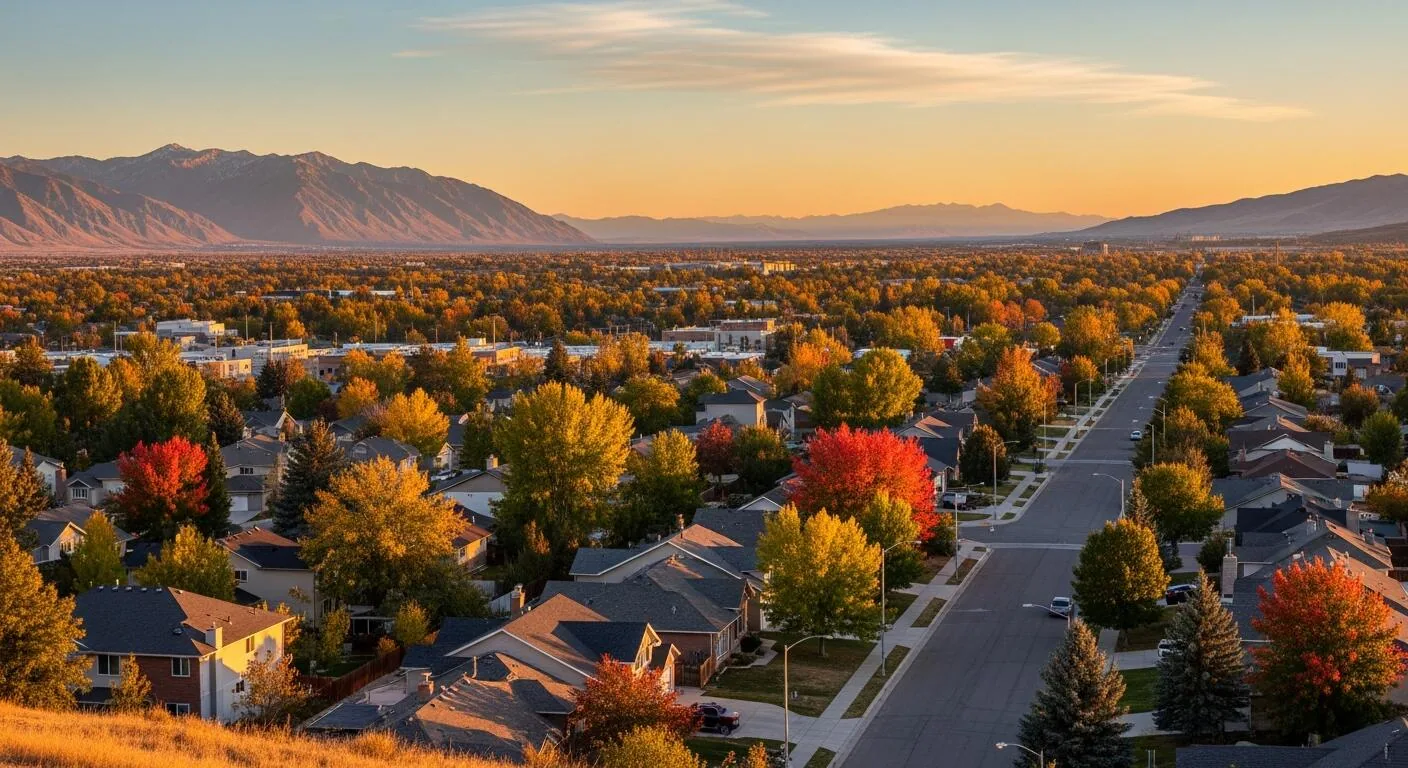
A leak mark near an office ceiling can start at a roof penetration well beyond the room, and in a building that holds a clinic, a professional office and a shop under one membrane, the order in which the tenants notice it matters. Murray, UT names healthcare, transportation, retail, professional office, education and community services as economic sectors, cites I-15, I-215, TRAX and FrontRunner access, and has transit-oriented development areas. Buildings in a city like that run on appointments and schedules, so the first roof walk is planned around access: which entrance stays open, which rooms cannot take noise and who can release a roof zone. Then it follows the water from the interior symptom to a confirmed roof detail.
Leak path: matching the room to the roof
Water can travel under a membrane before it reaches a ceiling, so an indoor stain is only the first reference point. We compare it with the roof framing and inspect the drainage, the penetrations and the nearby seams. A drain that is open can still serve a low area that holds meltwater, and a dry surface can still cover insulation that needs testing. We mark the conditions, take photographs and separate what the walk shows from what requires a small opening.
If a bowl or scupper is part of the path, a drain and scupper repair restores the flow and seals the surrounding transition. For a seam or flashing failure, flashing repair addresses the detail that admits water and the adjacent surface needed for a sound tie-in.
Rooftop equipment is the other frequent source in professional buildings. A unit that serves a suite of exam rooms or an office floor sits on a curb with four corners, and a curb corner that has lost its sealant lets water follow a line or a wire into the ceiling below. We check the flashing height, the counterflashing at the top, the fastener condition and whether anything rests on the flashing, and we record who services each unit so the walk can be coordinated with that trade.
Roof-walk notes: document the assembly
Before selecting materials, we identify the membrane or metal system, the attachment, the insulation and the layers of earlier repairs. The walk also checks roof edges, curbs, drains, skylights and equipment supports where movement or water entry may occur. Photographs carry a roof location, not just a close view of a defect, and the notes list the sections reached and anything blocked by equipment or unsafe conditions. A photo-backed record lets an owner compare the same details on a later visit and see what remains unresolved.
For a clinic or an office, access and protection belong in the same record, because they set the work sequence. If a roof area sits over an exam room or a records office, the crew needs a clear route and a dry-in plan before any material is opened, and occupied-building reroofing can divide the work into sections with notice and closeout tied to each one.
Murray's mix of transit stations and professional buildings also means neighbors. A roof beside a rail line or a station platform may have limited room for a lift, and a delivery truck may have to arrive when a street is quiet. We map the entry points and the staging corner with the property manager before the first day and record them in the file, so a later visit starts where the last one stopped.
Repair line: keeping the decision specific
A patch works only when the area around it can hold a compatible tie-in. We examine the membrane, the seam direction, the flashing and the substrate at the edge of the damage, then test where moisture may extend below the surface. If the failure is contained, a focused commercial roof repair restores the detail without disturbing sound areas. If several sections have released or the insulation is wet, a patch may not address the full condition, and the written scope should show the area, the material and any test that could change the repair line.
Replacement is worth comparing when failures recur or the assembly no longer offers a stable boundary. We review the layers, the drainage, the attachment, the penetrations and the edge conditions before recommending the scope, and a replacement plan describes what will be removed or retained, how areas will be protected and where the daily dry-in occurs.
When several tenants share a roof, the scope draws one clear line down the roof plan, so each tenant sees the work above its own space. Photographs go to the owner and the manager, and the repair log stays with the building. A cost summary lists the drivers that moved the number: the layers, the wet insulation, the penetrations, the edge metal, the access and the hours the work can run.
Timing: coordinating access and melt checks
After snowmelt, outlets, seams and low areas are useful places to inspect, while freezing nights can affect roof access and installation. Salt Lake City International Airport's normals describe the valley's snowfall and freezing, but shade, slope and exposure differ from roof to roof, so we assess the building directly. A small repair needs a sound, workable surface. A larger reroof needs delivery, protection and a sequence that keeps the occupied rooms below dry, and we confirm equipment routes and access with the site contact, particularly where clinic or office schedules limit roof entry.
A preventive maintenance visit can clear accessible drainage points, inspect seams and update the condition record before a leak develops. Emergency calls are taken day or night, holidays included: we check that roof access is safe, limit water movement and return for a full examination when conditions allow.
Cold and wet weather limit what a crew can install, so the plan names a workable alternate date and says which pieces wait for a dry day, which wait for materials and which wait for access. That list lets a property manager see what is holding each task and tell a tenant when to expect the next visit.
Setting up a useful first visit
Share where water appeared, when it began and whether it followed a melt or rain. Tell us the roof entrance, the equipment constraints, the operating hours and the areas that cannot be interrupted. If plans or earlier repair records exist they help map the walk, and we still verify the roof's current assembly and condition. We photograph what can be reached, mark any excluded area and explain whether a test is needed before a final repair line can be drawn. We also serve South Salt Lake and South Jordan, and each property is assessed on its own.
Commercial Roofing Questions
Does a location near transit affect the roof inspection?
It can affect arrival, staging and access, so we confirm the actual roof route with the property contact before the visit.
Can a clinic stay open while roof work is underway?
We plan protection, access and work sections around the building's operating needs where the roof and the site allow it. The sequence is confirmed with the property manager before material is opened.
What if the stain is not directly below a roof opening?
Water can move beneath the membrane. We compare the room location with framing and roof details, then follow seams, drains and penetrations to find the path.
How do you decide whether wet insulation must be removed?
We test where surface evidence suggests trapped moisture and map its extent. The repair line depends on what is wet, whether the substrate remains sound and how the membrane can tie in.
What information helps plan a Murray roof visit?
The leak location, the timing, the roof entrance, the equipment limits and the available work hours. Roof plans and repair records help too, subject to field verification.
Map the leak and the access route
Tell us where the water appeared, when it began and how the roof can be reached. We will inspect the accessible areas, document the assembly and explain what must be tested before the repair scope is set.