
Often the first sign that a roof warranty has a problem is a denied claim, and by then the cause is months or years old: a repair made by a trade that was not allowed to touch the membrane, a drain left blocked through a winter, an inspection that was never logged. Warranty terms live in documents that most owners file and forget, while the roof lives on in a valley where snow melt and freezing nights work on seams and drain bowls every year. We help owners in West Jordan, UT keep the two in step, by reading the warranty, comparing it with what is on the roof and keeping a record that would stand up if a claim were ever needed.
What failed first: the warranty nobody read
Manufacturer roof warranties come with conditions, and the conditions differ from one document to the next. They commonly address who may install and repair the system, what notice is required before work that touches the membrane, what maintenance the owner must perform, which kinds of damage are excluded and whether coverage transfers if the building is sold. We cannot tell an owner what a particular warranty says without reading it, so the first step is always to get the document.
We read the warranty alongside the roof. If it requires periodic inspections, we check whether any occurred. If it limits repairs to particular parties, we note who has worked on the roof since installation. If it excludes ponding or foot-traffic damage, we look for both. The result is a plain list of items that support coverage and items that threaten it.
Equipment changes are a frequent gap. Rooftop units are replaced, new curbs are added and conduit is run across the membrane, often by trades that never saw the warranty. We list every penetration and piece of equipment on the sketch, ask who installed or altered it and check that the flashing matches the manufacturer's published details where we know them. A new curb flashed with the wrong detail is the kind of change a warranty review can find.
Repair boundary: who can fix what
Repairs are where warranties most often go wrong. A well-meant patch by a general maintenance crew, a coating applied over a membrane the manufacturer did not approve for it or a new penetration cut without flashing details can give a manufacturer a reason to question coverage. The safe habit is to read the repair clause before any work starts and to tell the manufacturer or its representative when notice is required.
When we repair a roof under warranty, we write the scope to the manufacturer's published details where we know them, record materials and methods and photograph each step. For roofs whose warranty has expired, we say so and treat the repair on its merits. A commercial roof repair done with records is worth more to the next owner than one done without.
Coatings and recovers deserve a word as well. Putting a new surface over a warrantied roof can change the terms, either extending coverage with an approved system or ending it with an unapproved one. We ask before proposing either, and we describe the options to the owner with that tradeoff in plain view, including an overlay where the roof is dry enough to take one.
Drainage and melt: the upkeep clause owners miss
Many warranties expect the owner to keep drains clear and to correct ponding, because standing water shortens the life of most membranes. In the Salt Lake Valley, snow melt and freeze-thaw periods make the post-melt weeks the right time to check. The airport normals that describe regional snowfall are a valley-wide reference and not a record at any one West Jordan roof, but the practical habit holds: walk the roof after melt, note where water stood and clear what is blocked.
We log each walk with dates and photographs. That log is the owner's best evidence that upkeep duties were met. It also catches small problems, like a drain bowl with a cracked seal or an edge lifted by ice, before they become the kind of damage a warranty excludes.
Damage the warranty may not cover
Warranties generally distinguish between defects in materials or installation and damage from outside causes. Wind events, impact, foot traffic and unauthorized alterations are common exclusions. That does not make a warranty useless; it means the owner should know which losses it addresses and which belong to insurance. After a damage event, we document the roof's condition, separate fresh damage from older wear and help the owner decide whether the loss is a warranty matter, an insurance claim or a plain repair.
A dated baseline report from before the event makes that sorting much easier. It shows what the roof looked like, which seams were sound and what the drainage did. Owners who have a baseline spend less time arguing about what changed.
Sales, refinancing and transfer
Warranty transfer is a common question in a sale. Some warranties transfer with notice and a fee, some require an inspection and some do not transfer at all. Buyers and lenders ask for the warranty, the inspection history and the repair record, and a roof file that has them in order shortens the process. A due diligence roof survey compares the paperwork with the roof and points out gaps before closing.
For owners in West Jordan holding buildings in or near the 7800 South and Redwood Road core, or near the planned station-area districts in the general plan, keeping warranty records current is cheap now and valuable if a sale or redevelopment comes.
Records that stand up: what we keep
For each roof under warranty we keep the warranty document, the installation contract, product data, inspection reports, repair records and notices sent to the manufacturer. Photographs are dated, and each repair names the roof section, materials and limits. These records feed a roof asset management file, so the warranty is one line of a larger picture. Where an owner has several buildings, the same format applies across them through multi-site roof programs.
Notices matter as much as paper. When a manufacturer requires notice before work or after damage, the date the notice was sent and received belongs in the file. We draft the notice, keep a copy and note the response. A claim that fails for lack of timely notice, on a roof that was otherwise well kept, is an avoidable loss.
Next check: send the paper first
To start, send whatever warranty paperwork you have, even if it is incomplete, together with the building address and the repair history you know. Tell us where water appears and how roof access works. We will read the documents, walk the roof and report which conditions support the warranty and which need attention before the next winter.
Commercial Roofing Questions
What if I cannot find the warranty document?
Start with the installer, the original owner or the manufacturer's records. We can also compare the roof with what was probably installed and list what to ask for.
Does a repair by another contractor void a warranty?
It can, depending on the terms. Read the repair clause first and give any notice that is required before work starts.
Does the warranty cover storm damage?
Often not. Wind and impact are common exclusions. A dated baseline helps decide whether a loss is a warranty matter or an insurance one.
Should we inspect a roof before the warranty ends?
Yes. An inspection shortly before expiry can find defects while a claim is still possible, and the report becomes part of the file.
Do you provide the manufacturer warranty?
Warranties come from manufacturers under their own terms. We help owners keep the paperwork, upkeep and repair practices in line with them.
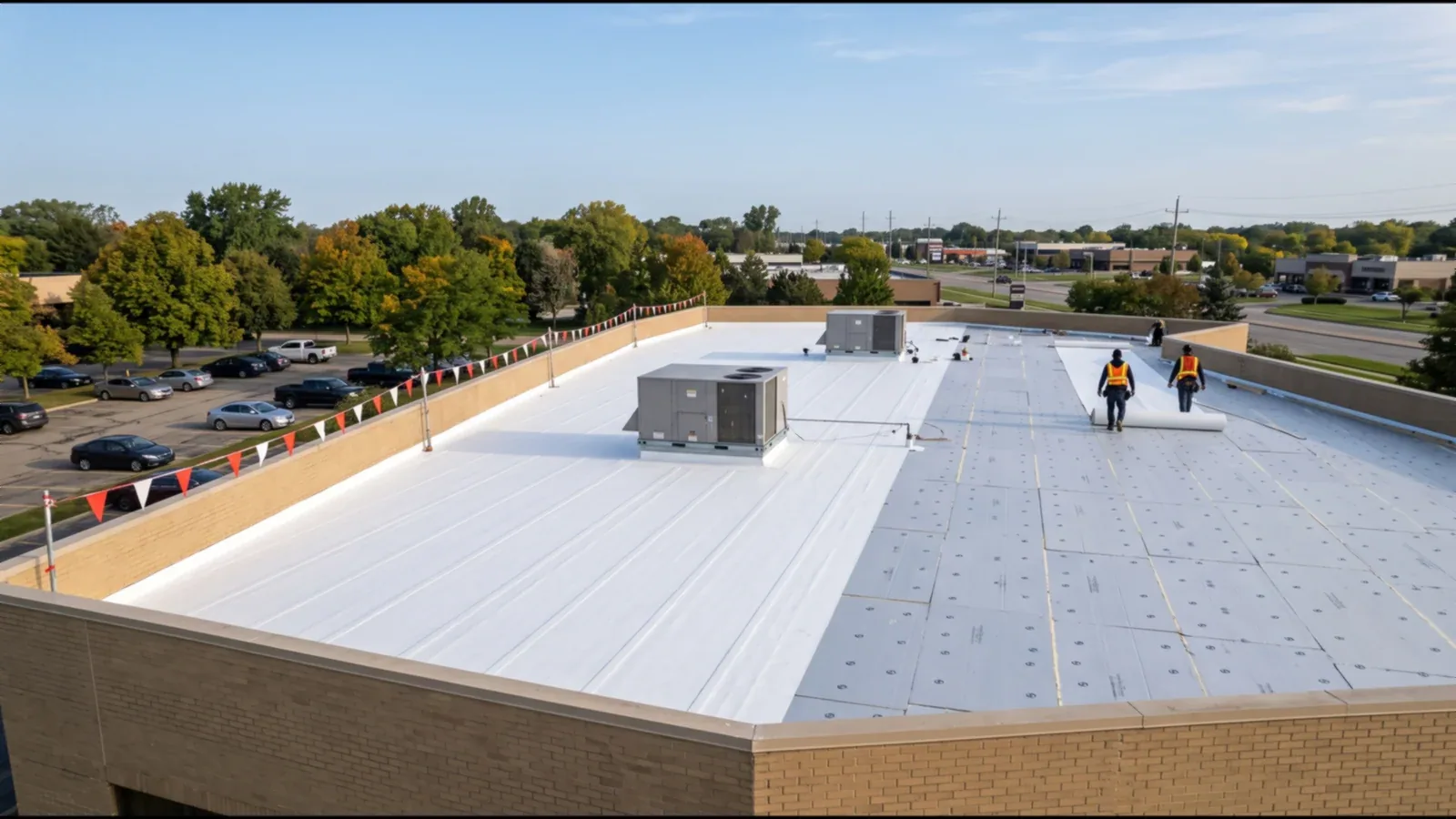
Send the warranty papers and the repair history
Tell us where water appears, when it appears and how roof access works. We will read the documents against the roof and report what supports coverage and what needs attention.