
A buyer walks a building in daylight, likes the lobby, reads the lease abstracts and then learns, a week before closing, that nobody has been on the roof. That gap is the reason roof surveys exist in a transaction: a roof is a large, expensive part of a building that is hard to judge from the ground, and the closing date does not move because a survey is late. For purchases and refinancing in West Jordan, UT, we run roof surveys on transaction timelines, with hands-on walks, moisture checks where they are warranted and a written report that a buyer, lender or attorney can read without having been on the roof.
What failed first: the shape of a transaction survey
A survey for a deal answers a narrow set of questions. What is the roof made of and how old is it? Where is it failing now? What will it need in the next several years, and about what will that cost? Is there a warranty, and does it transfer? The survey reports on each, and it separates facts from estimates so the buyer knows which numbers are firm.
We walk every roof section that can be reached safely, photograph the findings and sketch the roof with sections numbered. Where a section cannot be reached, the report says so. Moisture checks by meter, scan or core are used where surface signs suggest trapped water, since wet insulation is the finding that most changes a price.
Drains, seams at the edges and the area around rooftop equipment are where a failing roof shows itself. We note drain count and condition, ponding marks, patch density and the state of flashing at walls and curbs. A roof with many patches in one area tells a buyer that someone has been chasing a problem, and the survey tries to say where the problem comes from.
Seasonal timing: when the inspection window is short
Deals do not wait for good weather. In the Salt Lake Valley, where winter snow can cover a roof and freeze-thaw periods limit what can be tested, a survey may have to work around conditions. The NOAA normals for Salt Lake City International Airport are a regional reference for that pattern, not a record at each West Jordan building, but the effect is practical: snow-covered roofs hide seams, and cold surfaces limit some tests.
When snow covers a roof, we say so in the report and describe what could and could not be checked. We recommend a follow-up walk after melt, with a price adjustment or holdback tied to its results if the deal allows. Dry-season surveys move quickly, and we can often deliver a draft in days.
For refinancing, the timeline is set by the lender, and the survey is often one item among many. We coordinate with the borrower's property manager for access, deliver a draft quickly if asked and revise after the lender's questions. Immediate-repair items are listed in a form a lender can attach to a holdback agreement.
Repair line: turning findings into ranges
A buyer needs numbers, and we give ranges with their drivers. Immediate repairs are listed separately from near-term items and from the replacement horizon. Each carries a cost range shaped by area, tear-off depth, insulation, penetrations and access. Where a figure depends on conditions we cannot see until the roof is open, the report names the unknown and how it would be priced.
The ranges feed a roof capital plan if the buyer wants one after closing. They also feed negotiation: a lender may require immediate repairs before funding, and a buyer may seek a credit for a roof with limited life. The report is built so each of those uses is easy to support with the evidence.
A infrared moisture survey is worth its cost on larger roofs in a deal, because it can show where insulation has gotten wet across a wide area without cutting into the membrane. Wet insulation changes a replacement from a recover to a tear-off, and that difference can be the largest line in the estimate. The scan is confirmed with a meter or core at a handful of spots, and the report notes which spots were tested.
Warranty, permits and records
The survey reviews whatever paperwork the seller provides: warranties, inspection records, repair invoices and permits. If a warranty exists, we note its terms as far as the document shows them and flag items a buyer should confirm, such as transfer conditions. Our roof warranty management work picks up from there.
Starting July 1, 2026, Utah's 2024 building and energy codes apply with state and local amendments. A buyer planning a near-term replacement should expect energy provisions to be reviewed at permit time, and the report notes when insulation upgrades may affect the scope. We state what the code change may mean for the roof, and we leave the legal reading to the buyer's attorney.
The survey also checks that what the paperwork describes is what the roof has. A seller may describe a roof as recently replaced when the work was a coating or a partial recover. We compare descriptions to the roof, count layers where an edge or core shows them and report differences factually. Discrepancies are not accusations; they are items for the buyer to resolve with the seller before closing.
Roofs across the city's commercial settings
West Jordan's general plan favors commercial, service, office and mixed-use growth and sets planned station areas at Gardner Village, along Redwood Road at 7800 South and at Old Bingham Highway. The city also reports access to I-15 and I-80 and service from South Valley Regional Airport. A buyer in this setting may be looking at several building types, and each needs its own survey approach: a warehouse roof is judged on drainage and seams over a large area, an office roof on equipment and flashing, a retail roof on parapets and tenant bays.
We survey warehouse roofing, office and retail alike, and for portfolio purchases we run the same format across all buildings so they can be compared. A multi-site roof program after closing continues from the same records.
Next check: what we need on day one
To schedule a survey, send the property address, the closing timeline, access arrangements and any documents the seller has shared. Tell us where water appears and when. We confirm scope and timing, arrange access through the property manager and walk the roofs. The written report follows with photographs, a sketch, ratings and cost ranges. For the West Jordan market, we can often begin within days of a request.
Commercial Roofing Questions
How fast can a survey be delivered?
A single building often takes days from walk to draft. Portfolio surveys depend on the number of roofs and access. We confirm a date when we schedule the walk.
What if the roof is covered in snow?
We report what we could check, recommend a follow-up walk after melt and suggest the deal handle the open question through a holdback or credit.
Does the survey include a price for replacement?
It includes a cost range for the replacement horizon, with the drivers named. A firm bid follows a design scope.
Can a lender use the report?
Yes. It is written to be read by someone who was not on the roof, with dated photographs and a roof sketch.
Do you review the seller's documents?
We review warranties, repair invoices and inspection records the seller provides and compare them with what the roof shows.
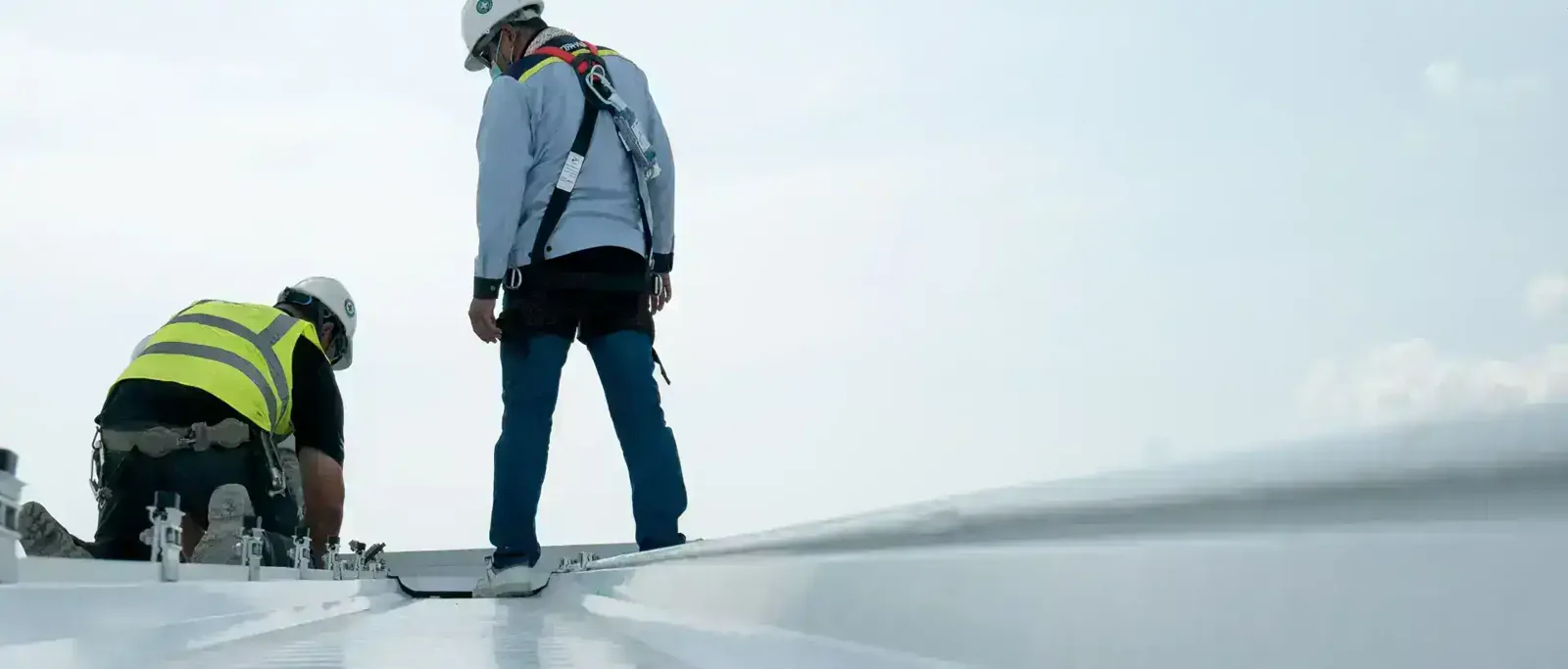
Send the address and the closing timeline
Share where water appears, when it appears and how roof access works at each building. We will schedule the walks and deliver a written survey with photographs and cost ranges.