
An interior stain beneath a rooftop duct in March rarely points to the roof directly above it, and that is the first lesson for any commercial building at the south end of the valley. Bluffdale, UT plans a Regional Core of mixed uses tied to future I-15 access, picks out Wardle Business Park at Bangerter Highway and 2700 West for retail and flex-office development, and sets a transportation goal for the stretch of 14600 South linking I-15 with Redwood Road. A city newsletter adds business and distribution development in Mountain View Business Park and commercial activity at Wardle, The Ranch and Porter Rockwell. Roofs across that spread run from small retail pads to long distribution decks, and each one starts with the same walk: find where the snowmelt leaves the roof and trace it uphill to the seam, the edge or the plugged bowl behind it.
Retail, flex and distribution: three roofs with three failure habits
A retail pad with a parapet fails at its wall bases and its one or two scuppers. A flex-office building leased in bays fails at the curbs and pipe bases that each tenant added. A distribution roof fails at its dock edges, its long seam runs and the low spots where water stays for days. The names on the map do not decide which of those a building has, so the first visit records what the roof actually is: the membrane, how it is held down, where the drains sit, how many penetrations cut it and what repairs are already on it.
From there the work splits by building. The corner pad at Bangerter Highway and Redwood Road gets a parapet-and-scupper review. A bay building at Wardle Business Park gets a roof sketch keyed to its bays. A long deck at Mountain View Business Park gets its ponding measured two days after a melt.
The mix also changes who has to be told. A pad with a single owner needs one phone call. A bay building needs the property manager and, for a noisy day, the tenants in the affected bays. A distribution roof needs the dock supervisor and often a facilities lead who holds the roof key. We settle those contacts before the first ladder goes up, because a roof walk that waits an hour for a key is an hour of daylight lost in a month when daylight is short.
Tracing a leak from the stain back up the slope
Water travels under a membrane, along a deck flute or through a joint in the insulation before it drips, so the room with the stain may be a long way from the opening. We compare the interior mark with the roof slope, the nearest drain, the curbs and the penetrations upslope, and we photograph each suspect detail from a fixed point. Where the surface looks sound but the stain keeps returning, a moisture reading or a small test cut tells us whether the insulation is wet and how far the wet zone runs.
That boundary matters more than the stain. A repair drawn around the visible mark often misses the entry, while one drawn around the wet zone stops the leak and leaves the dry material alone. A written roof condition report keeps the photographs, the readings and the sketch together for the next manager.
Snowmelt, ice and the outlet that decides it
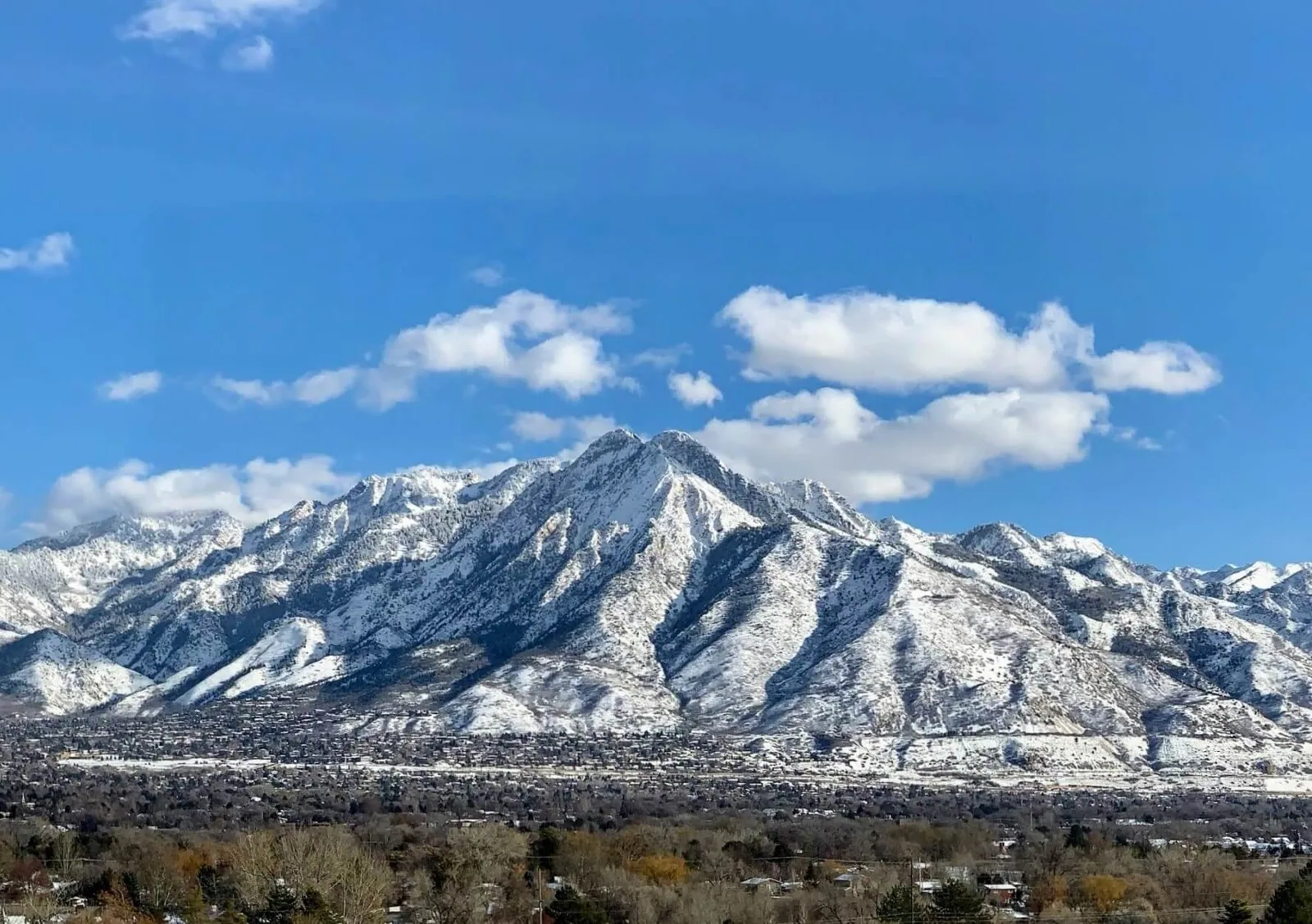
Salt Lake City International Airport's normals describe the valley's winter as repeated snowfall and a cold season of freezing nights, followed by warm summers. At the south end of the valley, where a building may sit higher or lower than the airport, the spring walk is how we learn what this roof did. We start at the strainer and bowl, check the flashing around them, and follow the fall of the roof to any place where water stood after the surrounding membrane dried. Ice can hide a seam or make a section unsafe to cross, so the notes say which areas were visible and which wait for a clear return.
If the outlet is open and water still stays, the cause is usually a low spot, compressed insulation or a deflected deck. A drain and scupper repair fixes the outlet and the membrane tie-in around it, and a tapered correction can follow at the next replacement.
Camp Williams and the road past it
The Utah Army National Guard operates Camp Williams as a training site, and its north entrance is at Bluffdale. According to the Utah National Guard, the Utah Training Center holds administrative buildings, dining facilities, classrooms, warehouses, workshops and maintenance facilities. Roof work on a controlled installation runs on gate access, escorts and mission calendars, and roofing there is specified against the Unified Facilities Criteria. Our military installation roofing work describes how that process runs in general, and each site sets its own conditions.
For the buildings around it, the lesson carries over: ask early who controls the gate, who holds the roof key and which weeks the building cannot take noise. An armory or readiness building with a drill hall brings its own questions, taken up in National Guard armory roofing.
Repair, test or replace: choosing the line from the evidence
A contained repair works when the membrane around the damage is sound and a new edge can bond to it. Several open seams, a soft deck or broad moisture call for a test and a wider comparison. We separate emergency water control from permanent work, so the owner can stop the leak now without skipping the investigation that makes the repair last. A replacement comparison lists the roof sections, the removal limits, the insulation, the edges, the penetrations, the drainage and the access windows, and it names any concealed condition that could move the price.
Owners with several Bluffdale buildings can rank them in a roof capital plan, which puts confirmed needs ahead of guesses about the roofs not yet walked.
Keeping the record ready for the next visit
A useful closeout has dated photographs, section labels, the materials used, the tests run and a plain list of what was not reached. On the next visit, the same outlet or seam is checked first, so a repair that is moving shows up as a difference between two pictures. For an active leak, we start with safe access and temporary water control, then define what the permanent repair needs. For planned maintenance, we schedule a walk after melt and another before the first snow, and we carry open items forward until they are closed.
Share the building contact, the reported area and the access rules, and we will outline the next roof walk for the property in Bluffdale.
Commercial Roofing Questions
How do you handle a roof you cannot reach in winter?
We record what is visible, mark what is under snow or ice and return when the roof clears. A covered seam is treated as unseen, not as sound.
What should I send before a Bluffdale roof visit?
The address, the room where water appeared, the date, the roof access route and any repair invoices. Those let us plan a focused first walk.
Can a distribution roof stay in service during repairs?
Usually. We work in sections, keep dock doors and forklift lanes clear and dry in each section before the crew leaves.
What does a moisture survey add to a leak review?
It shows whether insulation has taken on water and how far, so the work reaches the wet zone and not just the visible hole.
When does a repair turn into a replacement discussion?
When leaks recur, seams are opening in several places or the insulation is wet across a wide area. The findings set that line, not the age of the roof.
Document the roof in Bluffdale
Share the property address, the leak report and the approved access contact. We will walk what can be reached and mark whether repair, testing or a wider plan fits the findings.