
A photograph of a stain on a ceiling tile tells a manager that water got in, and tells almost nothing about where. A condition report picks up from there: it follows the stain back to a roof section, names what is wrong on the roof above it, shows the evidence and says what to do first. In West Jordan, UT, where snow melt and freezing nights send water through the same seams and drain bowls every winter, a report that ties each finding to a place on the roof is the document an owner, a lender or an insurer can actually use. We write them after a hands-on roof walk, and we write them so that someone who was not on the roof can follow them.
Roof-walk notes: what goes into the field work
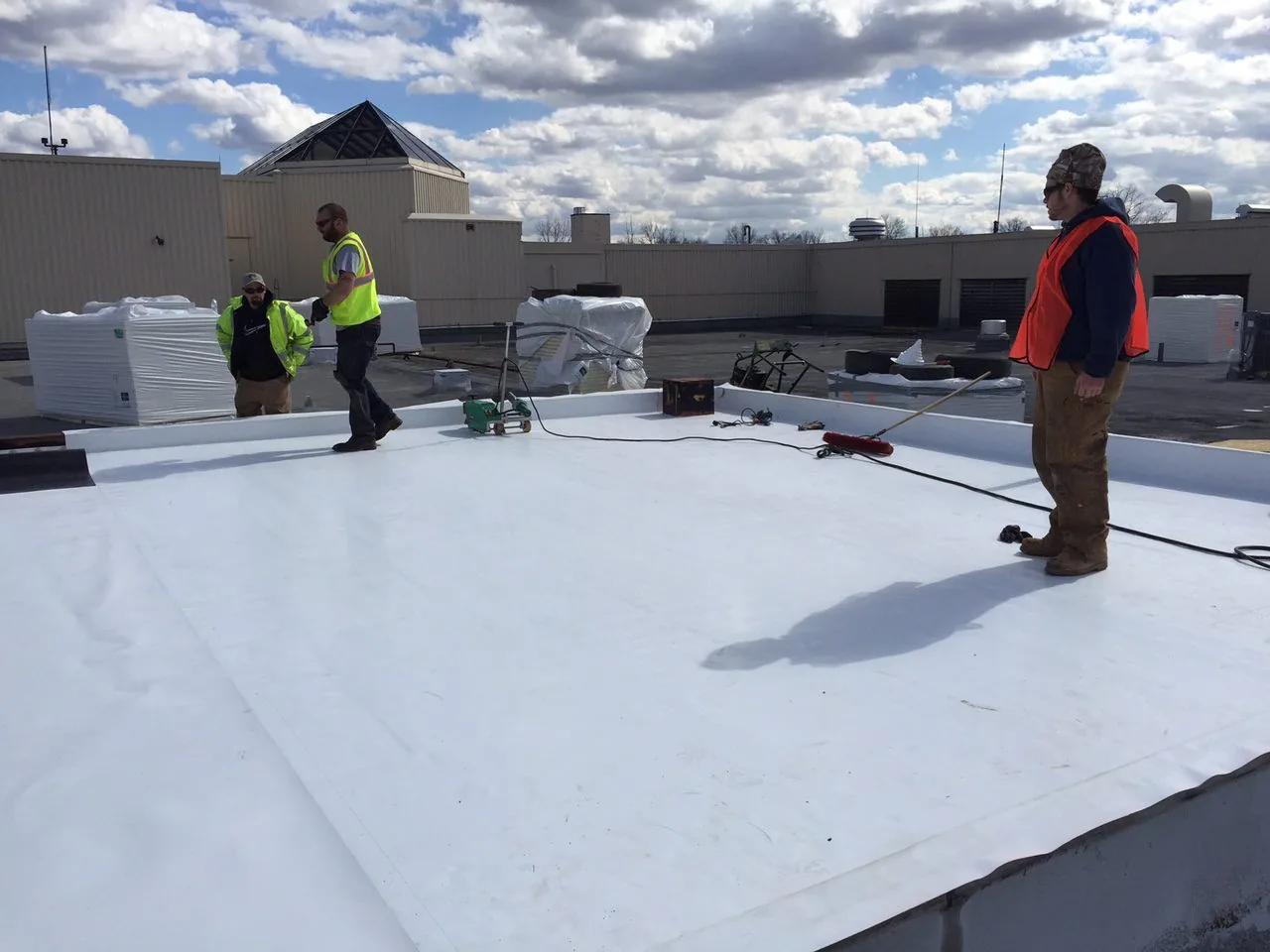
The walk follows a fixed order so nothing is skipped. We start at the drains and scuppers, because a roof that drains well forgives many small flaws, then move to the edges, the field of the roof section by section, and finally the penetrations and equipment. At each step we look for open seams, lifted edges, split flashing, blisters, punctures, ponding and soft areas underfoot.
We photograph each finding with something in the frame that lets a reader find the spot again, and we mark it on a sketch. When surface signs cannot settle whether insulation is wet, we say so and recommend a moisture test. The report is built from those notes, and it is explicit about what we saw directly and what we inferred.
Access gets recorded too. The report notes how the roof is reached (interior ladder, hatch, exterior ladder, lift), who holds the key, where fall hazards sit and which areas could not be walked. That detail looks administrative, but it decides the next contractor's price and safety plan. A roof that takes two people and a lift to reach costs more to repair than one reached by stairs, and the report should say so before a bid is requested.
Where a scan or a core belongs
Some questions cannot be answered by looking. An infrared moisture survey shows temperature differences that point to trapped water, and a drone roof inspection covers large or steep-edged roofs without walking every square foot. Neither replaces contact evidence. We confirm suspect areas with a meter or a small core sample, so the report separates what is wet from what only looks suspicious.
The results go into the report as a map. Wet areas are outlined, dry areas are noted and the boundary between them is shown. That map decides how large a repair has to be, which is the most useful number in the document.
Repair line: findings ranked by what happens if you wait
Every finding gets one of three marks: fix now, plan within the budget cycle or watch. A cracked pipe boot over an occupied office is a fix-now item. A worn walkway pad is a plan item. A faded surface on a dry roof is a watch item. The mark comes with a sentence on why, so a reader does not have to take it on trust.
Cost ranges follow each finding where they can be set. Drivers are named in plain terms: area, access, tear-off, insulation and penetrations. Where a number depends on something we cannot see until the roof is open, such as deck condition, the report says what that unknown is and how it would be priced if found.
Photographs carry the ratings. Each fix-now finding has at least two images: a wide shot that shows location on the roof and a close shot that shows the defect. Repeated findings, such as a pattern of open laps along one seam line, are grouped so the reader sees the pattern first and the individual photographs second. That grouping often points to a cause, such as thermal movement along a long run or a poorly detailed transition.
Drainage and melt: what the water left behind
Recurring snow and freeze-thaw periods mark the valley's winters, as the Salt Lake City airport normals show. Elevation and exposure change from one part of the valley to another. The report therefore avoids claims about weather at the building and records what the roof shows instead.
That means a drainage section with ponding marks, the depth and the likely cause, the condition of each drain bowl and strainer, the discharge path and any ice damage at edges or gutters. If the roof was walked soon after a melt, the report notes it, since water that stood for days leaves marks that a dry week erases.
Some owners ask whether to schedule the report for a particular season. Late spring, after melt, shows ponding and drainage problems clearly. Late summer shows surface wear and heat damage. An early-winter walk, before heavy snow, catches edge and drain problems that winter will make worse. For a roof of unknown condition, any season works, and a second walk in another season fills in what the first could not show.
Who reads the report and what they do with it
A property manager uses the report to schedule repairs and to answer tenants. An owner uses it to set a budget, and a roof capital plan grows directly from its ratings. A lender or buyer uses it to understand what the roof will need after closing, and a related due diligence roof survey adapts the same format to a transaction timeline. An insurer uses it as a dated baseline when damage occurs.
Reports for buildings across West Jordan use the same layout, so a reader moving between a warehouse and an office building finds the sections in the same places. Consistency saves time, and it makes it easier to see which roof needs money first.
Setting shapes what a report has to cover. In West Jordan's general plan the 7800 South and Redwood Road core is the historic downtown and a regional commercial setting, and a planned station-area district lies north and northeast of Jordan Valley Hospital. A roof in a busy commercial core can mean tight staging and shared walls, while one on a quieter street may have open access. We write each report for the building in front of us and record the access and tenant constraints that apply to it.
Next check: what we need to start
To begin, we need the address, the number of roof sections if known, access arrangements and any history you can share, such as drawings, repair invoices or warranty papers. Tell us where water appears and when. We schedule the walk around tenants and weather, and we deliver the written report with photographs and a sketch. Owners who want the findings tracked over time can fold them into roof asset management, where each visit adds a dated entry.
Commercial Roofing Questions
How long does a report take?
The walk takes hours to a day depending on roof size. The written report follows once photographs and any moisture results are in.
Does the report include prices?
It includes cost ranges for findings where they can be set, with the drivers named. Items that depend on hidden conditions say so.
Can I use the report for a lender or insurer?
Yes. A reader who never saw the roof can follow it, because each finding carries a dated photograph and a place on the sketch.
What if the roof cannot be walked safely?
We document what can be reached, use a drone for the rest and say in the report which areas were not checked and why.
How often should a new report be written?
After major repairs, after severe weather and on a regular cycle, often once a year for roofs with known issues.
Tell us where water appears and how access works
Share the address, the leak history and how we reach the roof. We will schedule a walk and deliver a written report with photographs, a sketch and ranked findings.