
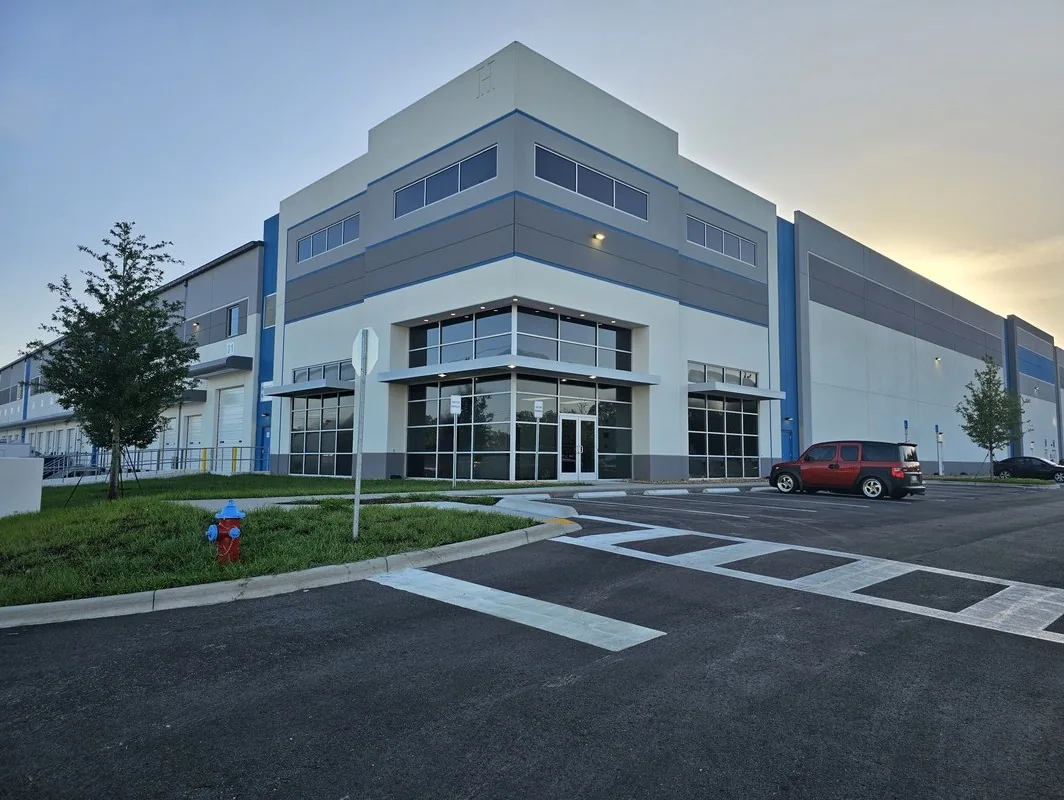
Ponding at the low corner of a distribution roof can look harmless in a photograph and still be the reason a seam fails three winters later. Bluffdale, UT identifies Mountain View Business Park as a local business park, and a city newsletter reports business and distribution development there, while the city's economic strategy puts transportation and infrastructure that support business growth near the top of its list. Buildings that serve that kind of use tend to have long runs of low-slope membrane and dock edges where trucks and weather both arrive, though the roof walk, not the park name, tells us what a given building carries. Each walk starts at the outlets and climbs toward whatever is feeding them.
What failed first: a low spot that never dried
On a low-slope roof the first sign of trouble is often water that lingers well after the rest of the surface has dried. A low spot can come from a deflected deck, a drain set slightly high or insulation that has compressed under traffic. Water that sits on a membrane ages it faster, collects debris and puts constant load on any seam beneath it. We measure where the water stays, trace the slope to the nearest drain and check whether that bowl sits at the lowest point.
If the drain is set high, the pond is built in. If the strainer is blocked, a clean-out restores the flow. If the insulation has compressed, a tapered correction belongs in the next replacement. The choice depends on how much water, how long it stays and what sits below it, and our ponding water roof repair options run from a drain reset to a tapered insulation fix.
Roof-walk notes: dock edges, curbs and long runs
A long roof gets walked in a pattern so findings are easy to find again. We start at the highest point, work down each run and finish at the edges, noting the seam lines along every run and the transitions where runs meet, the dock-side edges and canopies, any lower roof beside a taller wall, the drain bowls, scuppers and overflow path, the skylights and smoke vents, and how the system is held down, whether by fasteners, ballast or adhesive.
A drone roof inspection maps a long roof quickly, and the hands-on walk confirms what the images flag. Findings go into a written report with photographs and a sketch, so the next manager inherits a record instead of memories.
Dock edges deserve their own attention. A canopy or a lower roof beside a taller wall catches snow that slides off the high side, and the strip of membrane under that drift sees weight, moisture and ice in one place for weeks. We look for crushed laps, bent edge metal and a drain bowl buried under the pile, and we note whether the lower roof drains toward the wall or away from it, because a roof that drains into the wall base turns every melt into a test of the flashing there.
Drainage and melt: every outlet has to work
The valley's record at the Salt Lake City airport shows repeated snow and freezing nights before warm summers, and that points to the post-melt question: did the water reach an outlet or stall on the way? On a long roof, one clogged drain means the others cannot take its share, and the pool grows over the nearest seam. Overflow scuppers are the backup, and they matter most on a rain-on-snow day when melt surges toward the same corners.
Heat works against the same laps in summer, with a dark membrane expanding by day and drawing back at night. A preventive maintenance visit each spring and fall clears the drains and checks the laps before either season tests them.
On a roof this long it also pays to know where each drain discharges. A leader that ties into an interior line can back up when the line below is partly blocked, and the water then rises through the bowl and across the roof, looking exactly like a membrane leak. A hose test at the bowl, with someone watching the line below, separates a plumbing restriction from a roof problem in a few minutes, and the result goes into the file with the date. Without that test, a repair crew can chase a membrane defect that was never the cause.
Repair line: how far a repair should reach on a big roof
On a large roof the repair line often follows a bay edge or a purlin line, because water travels along the deck and insulation in those directions. A patch that cuts across a bay can leave wet board on one side. We draw the line from the moisture map and write down the reason. A repair may be enough for one bay. A recover is possible on some roofs, but we open a test area first, since another layer adds weight and can hide wet insulation.
When a section has failed, a staged replacement lets the operation keep running while one bay is open and dried in at a time. On a newer roof we photograph the condition we find, so any question for the installer starts with pictures.
Scale changes how a repair is priced. A single bay with a failed seam is a short job. A run of bays with ponding, soft insulation and opened laps is a project with its own lead times for insulation and membrane, and the proposal names the earliest start and the date by which the owner must decide to hold a dry-weather window. Price follows the layers on the roof, how much insulation is wet, the number of penetrations, how materials are lifted to the deck and what is stored below. Each driver is listed beside its evidence, so the owner sees why one bay costs more than the next.
Seasonal timing: trucks, docks and access roads
A distribution site has its own traffic: truck queues, dock hours, shift changes and yard movements that decide where a lift can stand. We ask the facility manager about gate hours, dock schedules and areas that must stay clear, then schedule deliveries for quiet windows and stage material where it does not block a door.
Someone holding a second Bluffdale site can book both on one trip: Wardle Business Park or the Point Crossing Regional Core.
Next check: what helps before we climb
A roof plan, the dates and bays of any leak reports, repair invoices and a list of what sits under each section help us decide where to start. If product, racking or equipment is sensitive to moisture, tell us and we will begin with the sections above it. A building that is newly built or newly leased deserves a visit before its first winter, while punch-list items are still easy to correct and tenant equipment has not yet crowded the roof.
Commercial Roofing Questions
How long should water sit on a roof after rain?
A day or two at most. Water that stays longer points to a low spot, a high drain or a blocked outlet, and we trace which before recommending a fix.
Does a newer roof still need a walk?
A baseline walk is worth doing. We photograph the roof, mark any detail that looks unfinished and record how the roof started, so later changes are easy to see.
What if a leak is above stored product?
Call right away. We seal the opening temporarily, dry in the area and scope the permanent repair after the contents are protected.
Can the roof be worked on while the dock stays busy?
Usually. The work goes in sections, dock doors and forklift lanes stay clear and every section is dried in before the crew leaves.
What does a drone add on a roof this long?
It shows ponding stains and obvious defects across the whole surface in one pass. A hands-on walk then confirms which marks are real.
Tell us where the water sits
Share the bay or roof section, when water appears and how a crew can reach the roof. We will follow the likely water path and mark the repair line from the evidence.