
A ceiling tile that drops on the first mild afternoon after a long cold spell is a sign that water has been trapped on the roof and has finally found a way down. Snow that sat for weeks, then melted by day and froze at night, builds ice at drains and along edges, and the water behind that ice has nowhere to go but under the membrane. West Jordan, UT, sits in the Salt Lake Valley, where winter snowfall and freezing nights come back every year, and the damage appears when the melt does. A roof walk after the thaw reads what the season did.
What failed first: weight, drifts and drains
Snow adds weight evenly across a flat roof until wind moves it. Drifts build behind parapets, beside rooftop units and at the step between a high roof and a low one, and those spots carry far more load than the field. A roof designed with those drifts in mind carries them without trouble. An older roof with a tired deck, soft insulation or a past leak may sag or crack where the drift sat.
Drains are the other early failure. A drain clogged with debris or frozen shut holds meltwater on the roof, and the water rises until it finds a seam, a flashing or a low edge. On the roof walk we check each drain bowl, strainer and scupper, and look for ice stains, broken clamping rings and tracks where water ran before it dropped away. We note which spots were wet after the last thaw.
Signs of overload are specific. Doors that stick in a room below, ceiling panels that bow, cracks in interior walls near a roof edge and a deck that looks dished between supports all point to weight the structure struggled to carry. Any of those calls for the owner's engineer, and the roof repair waits for the structural answer. Insulation compressed under a drift can leave a permanent low spot that ponds in later seasons.
Freeze-thaw at seams and flashings
Water that slips into a small gap at a seam or a flashing freezes at night, expands and widens the gap. The next thaw lets in more water, and the cycle repeats until a pinhole is a split. The Salt Lake Valley has a cold season with repeated freezing, and freeze and thaw is a predictable pattern we plan for.
The signs show on the roof walk: lifted edges along seam lines, cracked sealant at terminations, torn flashing at walls where snow slid and loaded the metal. Seam failures and flashing failures after a hard winter often trace to this cycle, and the repair for each follows its own method.
Ice dams form where heat from the building warms the roof surface and melts snow that then refreezes at a cold edge. On low-slope roofs the same effect happens at parapets and at drains that sit beside a warm penthouse or rooftop unit. The dam holds a shallow pool behind it, and any weakness in the lap or flashing below that pool leaks. Better insulation and ventilation below the roof reduces the effect, and we point out heat sources that feed it.
Edge metal, gutters and slide loads
Snow on a sloped or metal roof can slide in a mass. Sheets that drop from an upper roof strike lower roofs, rooftop equipment and edge metal. Gutters that were hung for light loads pull away, coping bends at the corner and downspouts crack when ice fills them. A roof edge with ice tracks, bent metal or missing fasteners tells us where load landed.
We replace failed lengths of coping or gutter with heavier attachment where the site calls for it, and we add snow guards or diverters when sliding snow threatens a walk, a door or a roof below. Our edge metal, coping and gutter repairs restore a continuous, well-fastened line. Walkways under a roof edge may need protection during the cold season.
Drainage and melt: the spring check
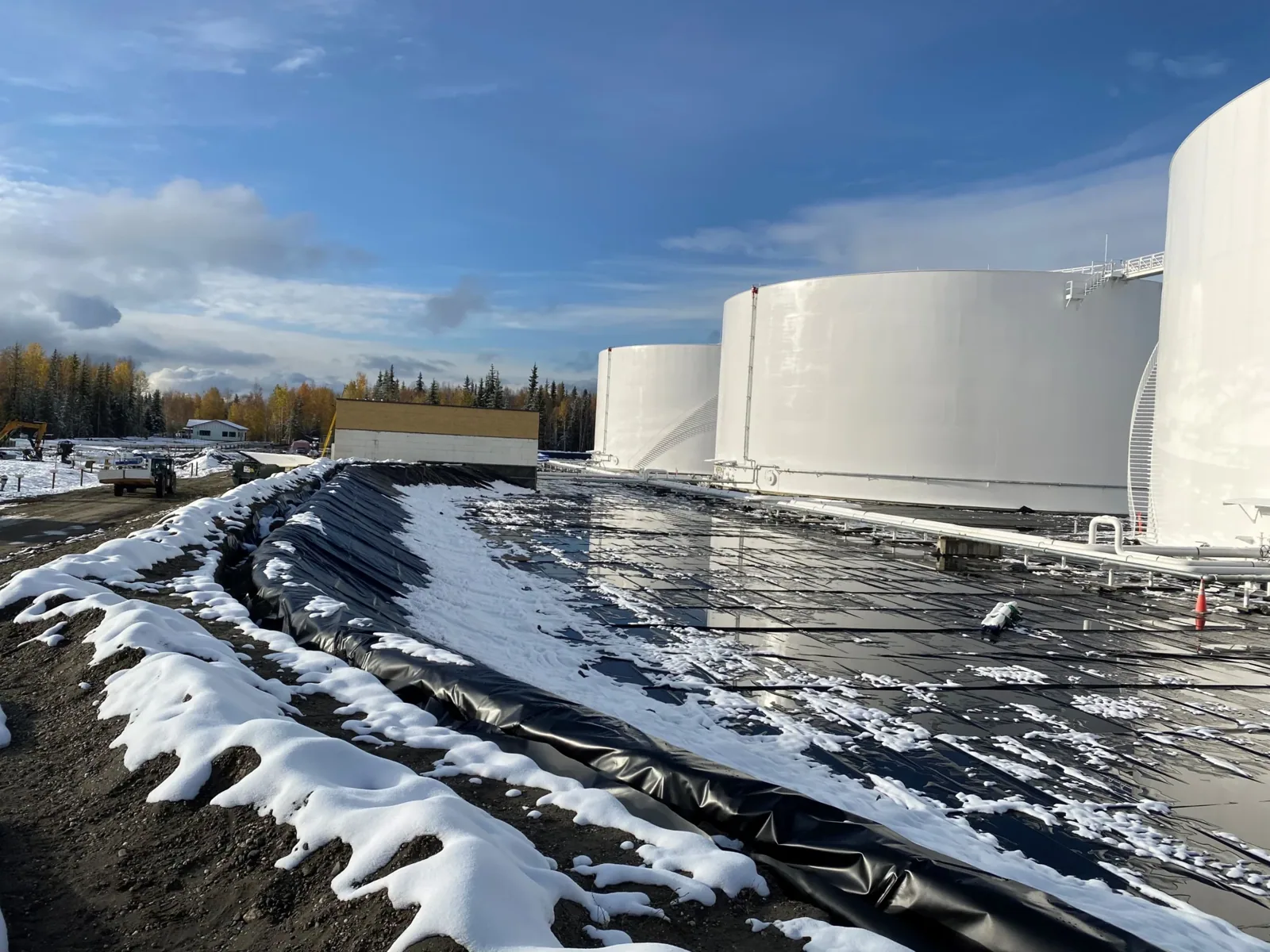
The spring check is a roof walk right after the last heavy snow melts, while stains and water marks are still fresh. We follow each drainage path from the high point to the drain, confirm that water moved freely, and measure any pond that remained. A ponding water repair may follow if the melt left standing water that a clean drain does not explain.
Our drain and scupper work clears blocked outlets, replaces cracked bowls and adds overflow scuppers where a primary drain could freeze. An overflow route is a safety valve: if the main drain is blocked by ice, water leaves through the secondary outlet before it rises above the flashing.
Records from the walk go into the roof file: the date, which drains ran freely, which ponded, which seams opened and which repairs were made. The next spring, the same list shows whether the repairs held, and a drain that froze in two consecutive winters earns a permanent fix such as heat trace or a relocated outlet.
Snow removal without cutting the roof
Removing snow from a roof carries risk. Shovels and ice tools cut membrane, and crews who walk on a snow-covered roof cannot see edges, drains or skylights. If the load or the leaks make removal necessary, we clear carefully, leave a layer of snow over the sheet, and keep tools off seams and flashings. Clearing is done around drains first, so melt can leave the roof.
Emergency conditions change the plan. When water is entering during a thaw, an emergency roof repair crew clears the immediate area, seals the opening temporarily and notes anything else the thaw has exposed.
Roof hatches and skylights hide under snow, and a fall through a buried dome is a real danger. Before any crew crosses a snow-covered roof, the plan marks every opening, and fall protection is set at edges and around skylights. Owners who send their own staff up to clear snow should do the same.
Foothill exposure and valley buildings
Salt Lake City airport normals show winter snowfall for the valley, but local elevation and exposure vary toward the foothills, and a roof in Cottonwood Heights may not see the same conditions as one near the valley floor. Cottonwood Heights identifies Fort Union Boulevard as its main east-west corridor and a redevelopment opportunity, and a roof there is best read on its own drifts and shaded slopes.
Owners in Cottonwood Heights and in West Jordan can use the same spring checklist, adjusted for what the roof showed that winter. A preventive maintenance plan sets the checks on the calendar before the first storm.
Commercial Roofing Questions
When should a roof be checked after heavy snow?
After the melt, while stains and water marks are fresh. A fall check before the first storm is just as useful.
Can snow weight damage a commercial roof?
Yes, especially where drifts build or an older deck has weakened. Sagging, cracked insulation and open seams are signs.
Should we shovel the roof?
Only if a structural or leak concern calls for it. Clear around drains first and keep tools off the membrane.
What is an overflow scupper?
A secondary outlet set higher than the main drain. If ice blocks the drain, water leaves through the overflow.
Does a leak during a thaw mean the roof is failing?
Not necessarily. Many thaw leaks trace to one blocked drain or one split seam, and a roof walk shows.
Can heat trace cable keep a drain from freezing?
It can on a drain that repeatedly freezes, if the electrical supply and the roof detail allow. We review the drain, the power and the sheet around it before recommending it.
Tell us where it dripped after the thaw
Share where water appeared, which drains froze and how roof access works in winter. We will walk the roof after melt, read what the season did and confirm the repair boundary before work begins.