
On a low-slope roof the seam is where two pieces of membrane meet, and it is the one place a roofer can run a probe and find out whether the roof is actually sealed. A seam that has opened looks like a thin dark line, a lifted edge or a ridge where the lap has curled, and after a thaw it often has a stain of silt along it. In West Jordan, UT, winter snow and the repeated freezing that follows it pry at every lap on the roof, and warm summers soften and shrink the same material. The question after a leak is whether one seam failed or whether the entire seam pattern is tired.
Seams by system: welded, bonded and lapped
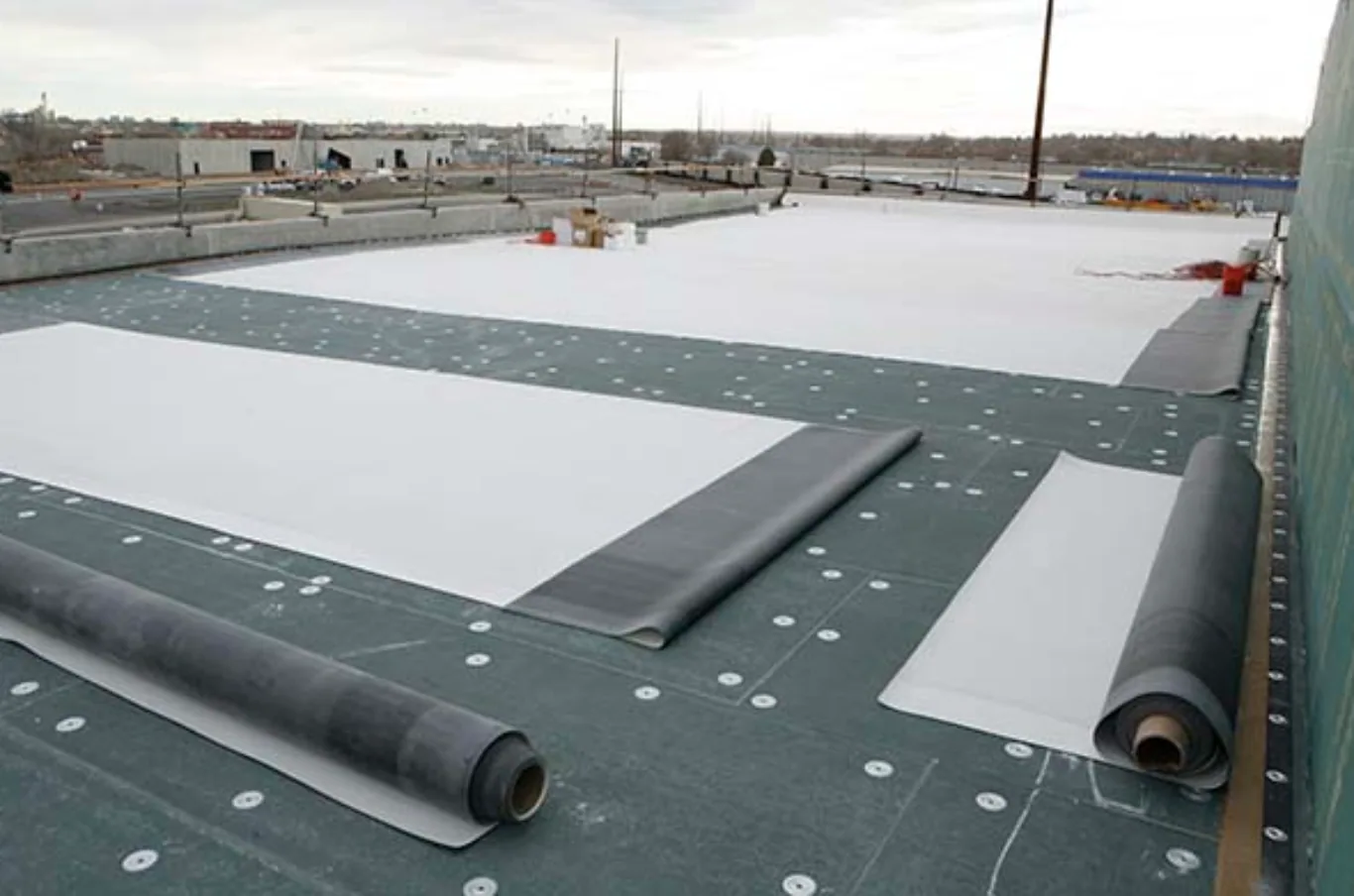
Seams fail in ways that depend on the roof system. Thermoplastic sheets such as TPO and PVC are joined by hot-air welds, and a good weld fuses the two layers into one. A bad weld, or one made on a dirty or wet sheet, shows as a cold bond that peels. Rubber sheets such as EPDM use seam tape or adhesive, which can lose grip as the rubber weathers. Modified bitumen laps are heat-fused or cold-adhered, and the laps can open when the roof flexes.
Built-up roofs have no seams in the same sense, but their felts overlap, and a lap that has dried out or lost its bitumen can open in a similar way. We identify the system first, since the repair for a split TPO seam differs from the repair for an opened modified bitumen lap.
What failed first: movement, ponding and age
Most seam failures start with one of three conditions. The first is thermal movement: membrane expands in summer, contracts in a winter night, and the cycle works at the lap every day. The second is standing water, which keeps seams wet and exposes small flaws to constant stress. The third is plain age, since the polymers in a sheet lose flexibility and the adhesive in a lap dries.
Poor workmanship from the original install shows up as well. A seam welded at too low a temperature or made over a dusty surface looks fine for a few seasons and then separates. We distinguish those cases by the pattern: a single failed lap points to a bad weld, and many laps opening at similar ages points to a roof that is wearing out as a whole.
Foot traffic adds to the list. Service technicians walking to rooftop units grind grit into laps and flex them repeatedly, and a worn path leading to a unit often shows opened seams along its length. Walkway pads from the access hatch to each unit take that wear instead of the sheet.
Roof-walk notes: probing the laps
A visual check finds the obvious splits, and a probe finds the rest. We run a blunt tool along the seam edge, feeling for places where the lap gives way, and we mark each open length with a paint line and a number. The notes record length, width of the opening, whether the cause looks like movement or weakness, and what lies beneath. Photos include a wide shot and a close-up for every mark.
When the cause is not clear, a moisture check under the seam tells us whether water has been getting in. An infrared moisture survey shows wet insulation along a seam line, which means the failure has been leaking for a while and the repair boundary should include the wet board.
Mechanical fasteners at the lap deserve a look too. On a mechanically attached system, a fastener plate that has backed out or a bar that has loosened pulls the seam edge up and starts the opening, so tightening or replacing those fasteners is part of the seam repair.
Repair line: reweld, bond or cover
Thermoplastic seams that have not weathered much can be reheated and welded again after cleaning. If the sheet has aged or gone dirty, a cover strip welded over the seam seals it with fresh material. EPDM laps can be reopened, cleaned, primed and bonded with new tape, or capped with a pressure-sensitive cover strip. Modified bitumen laps are heated and pressed, or sealed with mastic and a fabric cap.
The goal of the commercial roof repair is a seam that matches the field in strength, not just a patch that looks neat. Cold weather limits what can be welded or bonded, so in winter we apply temporary seals that hold through the season and return when conditions allow a permanent bond.
Cleanliness matters more than any tool. Silt, pollen and oxidized surface must be removed from both sides of the lap before heat or adhesive is applied, and a test probe after the repair confirms the bond. We mark each repaired length and photograph it so later visits can compare.
One seam or the whole pattern
When the failures cluster near drains, they link to ponding. When they run along the sun-facing slope, they link to heat and UV, and a heat and UV damage review applies. When they sit at wall bases, flashing is the likelier culprit, and the work overlaps with flashing failure repair.
If many seams across the field are open, patching each one costs more over time than a larger fix. A roof with tired seams but a dry deck and sound insulation might take a coating or a recover. A roof with wet insulation along most laps may need a new membrane for that section. We lay out these options with approximate extents so the owner can decide with the evidence in hand.
Records close the loop. A seam map with repaired lengths, remaining watch items and the date of the last probe goes into the roof file. At the next spring check we compare it against the roof, and a seam that opened again after repair tells us the cause was movement or moisture that the first fix did not reach.
Business parks in Taylorsville and Bluffdale
Taylorsville names Sorenson Research Park as a high-tech business park, and Bluffdale identifies Wardle Business Park near Bangerter Highway and 2700 West for retail and flex-office uses. A roof in either park is read on its own seams, new or old, and a recent roof with a bad weld fails sooner than an old one with good seams.
Owners in Taylorsville and nearby cities can ask for a seam probe after any hard winter. The cost of a probe is small compared with a ceiling replaced after a long slow leak.
Timing helps too. A probe right after the melt finds laps that opened under ice, while the roof is still marked with the season's water lines, and it leaves the dry months for the permanent work.
Commercial Roofing Questions
How can we tell a seam has failed?
Look for a dark line, a lifted edge or silt along a lap after a thaw. A probe along the seam finds openings that cannot be seen.
Does every open seam leak?
No. Some open laps sit above sound insulation and are caught early. Others sit over a low spot and leak at once. The location decides the urgency.
Can a seam be repaired in winter?
A temporary seal can be applied in cold weather. Permanent welds and bonds wait for a dry, moderate window.
Why do seams fail near drains?
Standing water keeps the lap wet and stressed. Correcting the low spot is part of the repair.
When is replacement a better choice than seam repair?
When many laps are open, the sheet is brittle, or moisture runs through the insulation along most seams.
How do you test a repaired seam?
With a probe along the full length once the weld or bond has cooled or cured, and a visual check for gaps. Repaired lengths are marked on the roof plan.
Tell us where the seam line shows
Share where the lines or leaks appear, how old the roof is and how roof access works. We will probe the laps, map what we find and confirm the repair boundary before a crew starts.