
Chalky residue on your fingers after you touch the roof, a surface that looks crazed like old paint, a sheet that has pulled back from a wall and left a gap: those are the marks of years of summer sun. West Jordan, UT, has warm summers, and a roof that carries those months, then a winter of freezing nights, flexes through a wider temperature range than the label on the membrane may suggest. Heat and ultraviolet light do their work slowly, and by the time they cause a leak they have usually worked on the whole slope. The roof walk looks for where the sun hit hardest.
What heat and UV do to a membrane
Ultraviolet light breaks down the polymers and surface layers that keep a membrane flexible. The sheet loses plasticizers, shrinks, hardens and gets brittle. On a thermoplastic sheet the top layer chalks and the seams lose their grip. On rubber membranes the surface cracks into a fine pattern, and on modified bitumen and built-up roofs the granules or gravel wear away and expose the layers beneath.
Heat adds another stress. A dark roof can run far hotter than the air above it, and each day it expands, then contracts at night. That movement works at laps, flashings and fasteners, which is why heat damage shows first at details and on the slope that faces the sun for the most hours. We read both the surface and the details before we say how much life is left.
Mechanical equipment adds localized heat. Exhaust discharge, condenser air and reflected glare from nearby glass can raise the temperature of a patch of membrane well above the rest of the roof, and those patches age faster. Walking the roof, we look for discolored rings around units and a different surface texture in the exhaust path.
Roof-walk notes: reading the sun-facing slope
We start on the sun-facing slope and the areas with the longest exposure, such as the south and west sides of a roof, then compare them to shaded areas. A sheet that is flexible in the shade and stiff in the sun tells us how far UV has gone. Press and flex tests, scraping for surface texture, and a look at the color and gloss of the sheet complete the picture.
We also look for shrinkage. A membrane that has contracted pulls away from walls, curbs and pipe boots, putting tension on flashings and leaving gaps at the base. Tape or probe measurements at several points show whether the pull-back is minor or serious. Photos with a scale go in the report so the next visit can compare the same spots.
Timing matters for the walk. Late afternoon heat softens a sheet, so we test stiffness in the morning when the surface is cool and again at midday, since the difference shows how much movement the roof endures each day.
Repair boundary: patch, coat or replace
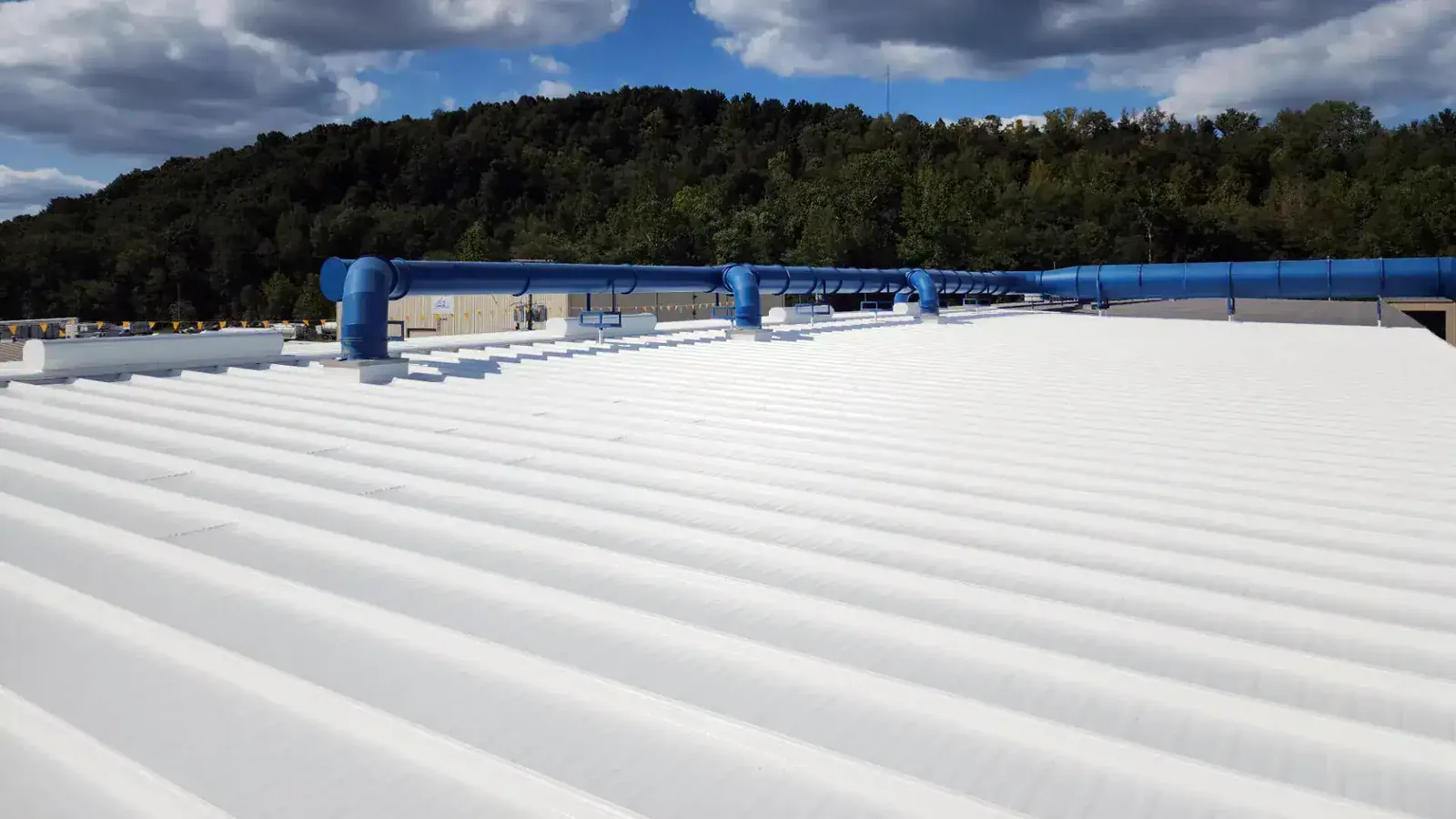
If the damage is local, a patch and a flashing rebuild restore the roof. If the membrane is aged but sound, with dry insulation and flexible seams, a coating can slow further wear. Our roof coating restoration cleans the surface, repairs seams and details, and applies a reflective layer that reduces heat load and shields the sheet from UV.
Silicone and acrylic are the common choices. A silicone coating tolerates ponding and sheds dirt well, while an acrylic coating suits roofs that drain freely. When the membrane is brittle or the insulation is wet, coating is the wrong tool, and a recover or replacement goes into the plan. A moisture survey and a core cut settle that question.
Cost depends on area, surface condition, number of details and access. A roof that needs heavy seam repair and cleaning before coating costs more than one that needs a wash and a topcoat, and a coating over a clean, sound sheet lasts longer than a coating over a tired one. We state the prep steps in the scope so the price matches the work.
Reflectivity, comfort and energy use
A lighter surface reflects more sunlight and sends less heat into the building. That reduces strain on rooftop cooling units in the hottest weeks and slows the thermal cycling that wears a sheet out. A cool roof installation uses a white or reflective membrane or coating for that purpose.
The effect depends on the building, its insulation and its mechanical systems. A reflective roof does not replace insulation, and in a valley with cold winters the owner should weigh heat loss through a thin roof against summer savings. Utah adopted the 2024 International Energy Conservation Code statewide effective July 1, 2026, so replacement roofs follow current insulation provisions, and we check the spec against that edition.
Surface color changes with dirt. A white roof that has gone gray reflects less, and a wash or recoat restores part of the benefit. We include cleaning in a heat-focused maintenance visit.
Where heat shows first: curbs, pipes and edges
Pipe boots made of rubber crack under sun, sealant at terminations hardens, and plastic skylight domes yellow and craze. Each is small and each opens a path for water. We replace boots, reseal terminations and swap domes that have gone brittle, and we look at seams near those details since they move together.
Roof edges and metal take heat as well. Dark edge metal expands and contracts, loosening fasteners over the seasons, and sealant at the joints between lengths dries and opens. A heat review adds the edge to the walk and notes any gaps before winter freezes water into them. Standing water makes heat damage worse, so we also check for ponding on the same slopes.
Gravel and mineral surfacing are worth a note. Granules lost from a modified bitumen cap collect in drains and expose the asphalt below, which weathers quickly under sun. Where we see bare spots, we recommend recoating or a granule-embedded cap sheet at the affected areas before winter.
Open valley rooftops and mixed-use centers
South Jordan describes The District as one of its large mixed-use developments, and Riverton's downtown plan calls for retail and restaurant uses with streetscape improvements. A mixed-use center can put several roofs and many rooftop units close together, and each unit adds a shaded and a sunlit edge where wear shows differently. Salt Lake City airport normals show warm summers and a cold season for the valley, which frames the range a roof lives through, though each building's exposure differs.
For owners in South Jordan and the surrounding cities, a seasonal check in late summer finds heat damage while there is still time to repair it before the first freeze.
Commercial Roofing Questions
What does UV damage look like?
Chalking, fine cracks, a dull or stiff surface and shrinkage at walls and curbs. It shows first on the sun-facing slope.
Can a coating fix a heat-damaged roof?
If the membrane is flexible and the insulation is dry, a coating can extend its life. A brittle sheet or wet insulation calls for replacement.
Does a lighter roof really lower cooling load?
It reduces the heat a roof passes into the building in summer. The benefit varies with insulation, building use and equipment.
How do we tell shrinkage from movement?
Shrinkage leaves gaps and tension at walls and boots, and it does not recover at night. Measurements at several points show the amount.
When is the best time to check for heat damage?
Late summer, after the longest exposure. Repairs can then be done in dry weather before freezing begins.
Will a coating hide leaks?
No. Leaks must be found and repaired before coating, or the coating traps water. We probe, dry and repair first, then coat.
Tell us which slope bakes the longest
Share which sides of the roof face the sun, where it looks chalky or cracked and how roof access works. We will walk the slope, test the sheet and confirm the repair boundary before recommending a coat, a patch or a recover.