
An upstairs suite that is still warm at six in the evening, a rooftop unit that runs flat out from June through August, and a membrane surface too hot to touch with a bare hand all point at the same thing: the roof is taking in more heat than the building can shed. In West Jordan, UT, the annual temperature cycle swings from freezing winter nights to warm summers, and a dark roof absorbs the summer half of that cycle all the way down into the insulation and the space below.
A cool roof is a roof whose surface reflects more sunlight and releases more of the heat it does absorb. It does not replace insulation or fix a failing roof, but when a membrane or coating is being installed anyway, choosing a reflective surface is one of the least expensive ways to lower the heat load.
How a reflective surface works
Sunlight lands on a roof and does one of three things: it bounces back, it turns into heat in the surface, or it passes through to the layers below. A white or light-colored membrane returns a larger share of that energy to the sky, so the surface runs cooler and the layers underneath see less of a daily temperature swing. That swing matters beyond comfort. Membranes expand and contract as they heat and cool, and a surface that moves less over a year tends to stress its seams, fasteners and flashings less.
Two numbers describe the effect, solar reflectance and thermal emittance, and both are published for rated products. We look at the rated figures for the system in question rather than at color alone, because a pale surface with low emittance can still hold heat. The numbers also decay: reflectance falls as dust, pollen and soot settle on the surface, which is why cleaning belongs in the plan.
Membranes and coatings that can be made reflective
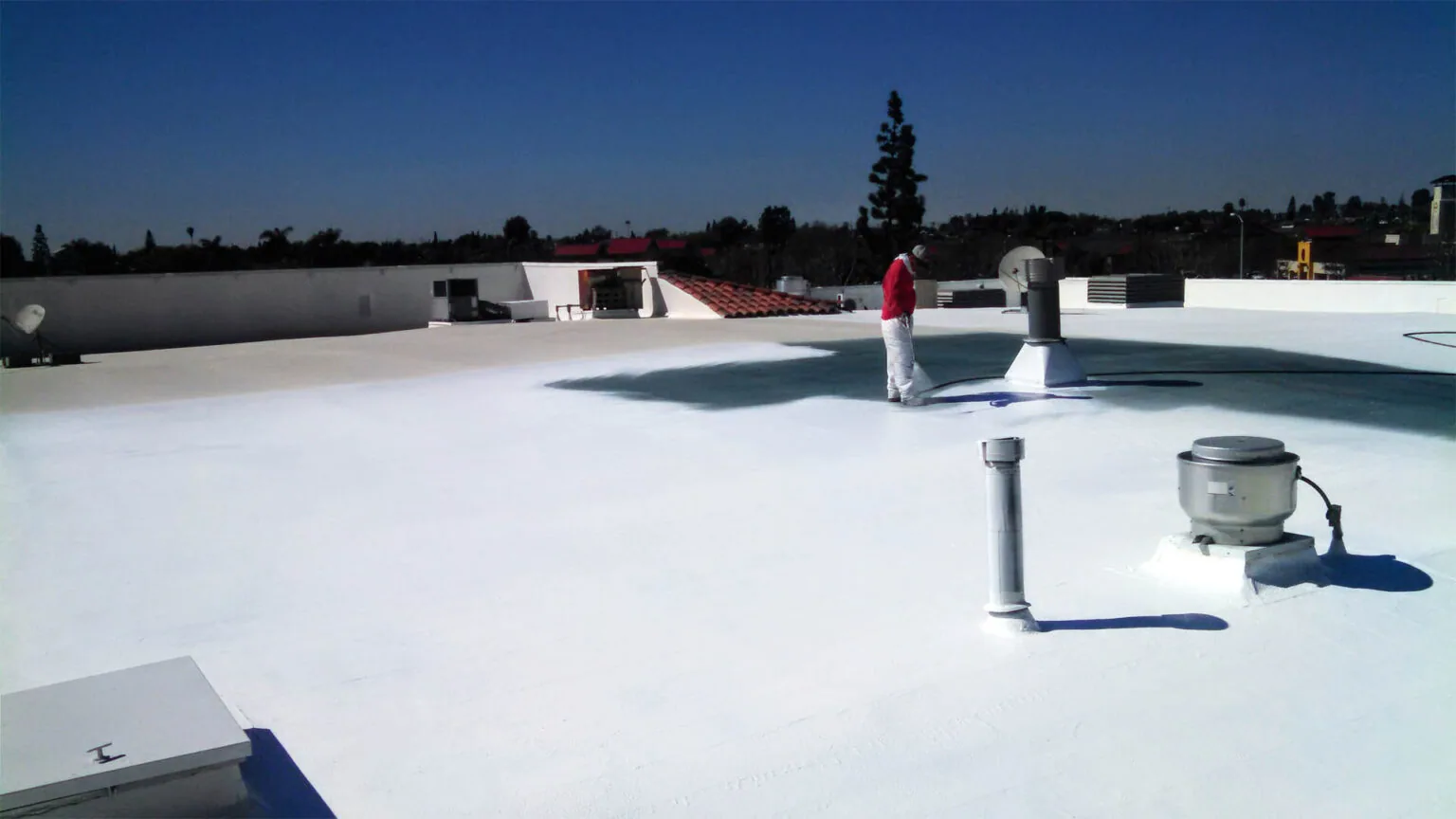
Several roof types can be specified in a reflective finish. White TPO and PVC single-ply membranes come reflective from the factory, and they are a common choice on a full replacement where the old roof is stripped to the deck. An existing roof in sound condition can be given a reflective surface through a liquid-applied coating, either acrylic or silicone, which cures into a continuous film over the old membrane. Metal roofs can be coated or finished with a reflective paint system, and some modified bitumen cap sheets carry a granule surface that reflects better than smooth black.
Each option carries a different price, a different life and a different behavior under standing water, so the choice starts with the condition of the roof as it is today. A coating over a wet insulation board only seals the moisture in, which is why we confirm the substrate is dry before specifying one.
The winter side: snow, condensation and drainage
A reflective roof also meets the cold season, and in the Salt Lake Valley that season comes with recurring snowfall and freezing nights. Salt Lake City International Airport weather normals are a regional reference rather than a reading for each West Jordan roof, but they make the pattern clear enough: a roof that rejects heat in July will also be slower to warm up in January. Snow cover is a bigger factor than surface color once it is on the roof, and melt takes the same path to the drains regardless of the finish.
That is why a cool roof is judged on the whole year. We check that the slope to the drains is sound, that insulation thickness suits the building, and that the dew point will not land inside the assembly. A reflective surface on a roof that ponds water or traps moisture trades one problem for another, so drainage and insulation get decided first and the color follows.
Energy code: what the adopted edition means for a reroof
Since July 1, 2026, the state has had the 2024 building and energy code editions in effect, amended statewide and locally, and the commercial energy-code status page lists the 2024 IECC as the statewide edition. The edition that governs is the one in force for the permit, so a roof being replaced or substantially rebuilt can be pulled into current requirements for insulation, air barriers and roof surface properties.
We read the code language at the start of a job, because the answer shifts with the extent of work and the building's use. The insulation upgrade the code asks for often makes the project a roof insulation and cover board decision as much as a membrane decision. Where a reflective surface or a particular R-value is required, we put it in the scope before the price is set, so the permit review does not reopen the plan.
Keeping the surface cool over time
A reflective roof loses ground slowly. Dust, bird droppings, tire-black from nearby roads and mineral residue from standing water all darken a white membrane, and a ponded area picks up a ring of dirt that holds heat. A cleaning schedule tied to the end of the dry season brings reflectance back without wearing the surface, provided the cleaner suits the membrane. Pressure that is too high drives water under laps and into seams, so we wash at moderate pressure and inspect the laps first.
Coated roofs need to be looked at for a different reason. A coating is a thin film, and wear shows first at foot traffic routes, around equipment and at ponded areas. A short annual check, folded into a preventive maintenance visit, catches the thin spots while a recoat still costs a fraction of what a failed film costs.
Buildings where a cool surface earns its place
West Jordan's general plan supports commercial, service, office and mixed-use buildings. Those building types do not share a roof, but they often share a need: a cooled interior costs money in summer, and a conditioned warehouse, a top-floor office or a building with heavy rooftop equipment sees the savings sooner than an open shell does. Our warehouse roofing and office building roofing work uses that logic to decide where a reflective surface comes first.
If you own in West Jordan and the roof is near the end of its life, a reflective replacement may be the simplest path. If the roof still has years in it, a coating can add a reflective layer without a tear-off.
Commercial Roofing Questions
Will a cool roof raise my winter heating bill?
It can shave a little solar gain in the cold season, but the effect is small compared with the insulation level and the building's air leakage. The summer saving usually carries more weight on a valley building.
Can a coating be applied over my existing roof?
If the existing membrane is sound and the insulation beneath is dry, yes. We scan and probe the roof first, since a coating over wet insulation traps moisture and shortens the life of both layers.
How long does a reflective surface stay reflective?
It declines as the surface collects dirt and as the coating or membrane weathers. Regular cleaning slows the decline, and rated three-year figures from the manufacturer give a better guide than the day-one number.
Does white always mean cool?
Not by itself. Reflectance and emittance are both rated numbers, and a pale finish with poor emittance can hold more heat than a rated product. We compare rated values, not paint chips.
What does the energy code ask of a reroof?
The edition adopted statewide on July 1, 2026 sets the starting point, with local amendments on top. The requirements shift with the extent of work, so we confirm them with the permitting office before pricing.
Check the roof surface first
Share the building use, the age of the roof and when the upper floors run hottest. We will schedule a roof walk, check the substrate for moisture and tell you whether a reflective membrane or a coating fits before any price is set.