
A cut the size of a thumbnail beside the roof hatch can cause a ceiling stain forty feet away, and nobody on the crew that made it will remember doing so. Membranes are thin sheets, and a dropped tool, a dragged ladder foot, a cracked paver or a boot with a stone stuck in the tread can slice or crush one. In West Jordan, UT, snow and ice add to the risk, because heavy shoveling, ice chunks and the freezing of water in a small crack widen a small opening during the cold season. The repair is simple when the hole is found early, and costly when the water spreads into insulation first.
How punctures happen on a working roof
Most punctures come from traffic. Service technicians walk to rooftop units, carry tools, set down panels and drag hoses. Contractors for other trades come up to install conduit, cable, antennas and signs. Each visit puts weight on a thin sheet over soft insulation, and any hard edge or sharp object can cut through.
Other causes are less obvious. Hail, falling branches, wind-borne debris and dropped fasteners cause damage, as do shovels and ice tools used to clear snow. Insulation that has compressed under a unit leaves a soft spot that a heel can punch through. We read the roof for patterns, because punctures that cluster along a walk path tell a different story from those scattered at random.
Fasteners and screws are a quiet cause. A sheet-metal screw that falls out of a duct panel lies in the weave of the membrane until a boot presses it through. Magnetic sweeps after any mechanical work pick up those pieces before they do harm, and we ask the HVAC contractor to run one at the end of each visit.
Roof-walk notes: finding the small ones
A puncture that has not yet leaked is hard to spot from a glance. We walk the roof slowly along the routes people use, scan for cuts, scuffs, blisters and soft spots, and probe questionable areas. On a light-colored sheet, dark lines and dirt marks show cuts; on a dark sheet, glints of light and raised edges show them. We also check lap edges, fasteners and the area around each unit, since those are the places where traffic concentrates.
When a leak is active but the opening is not visible, moisture mapping narrows the search. An infrared moisture survey points to wet insulation, and the puncture almost always sits at the upslope edge of the wet area. Our commercial roof leak repair work follows the wet zone back to the cut.
Timing helps the search. Early morning light shows cuts as shadows, and a roof wetted by a light hose test can show the path of a leak that is dry on a sunny afternoon. We pick the hour for the search by what the roof looks like in that light.
Wet insulation and the repair boundary
A fresh cut over dry insulation needs only a patch. A cut that has leaked for a season may have wet board under it, and a patch over wet board seals moisture in. We take readings around the hole, open the membrane if needed, and remove insulation until we reach dry material. The wet area sets the repair boundary, not the size of the cut.
If the wet zone is small, we replace the insulation locally and patch the membrane over it. If it is large, the repair becomes a section replacement, which we price separately. Photos of the wet material, readings and the dry boundary go into the report, so the owner can see why the repair is larger than the visible damage.
Cost follows the size of the wet area and the access to it, plus the system underneath. A small patch with local insulation replacement is a modest repair, and a large section replacement is a project, which is why the moisture reading comes before the price.
Patch methods by membrane type
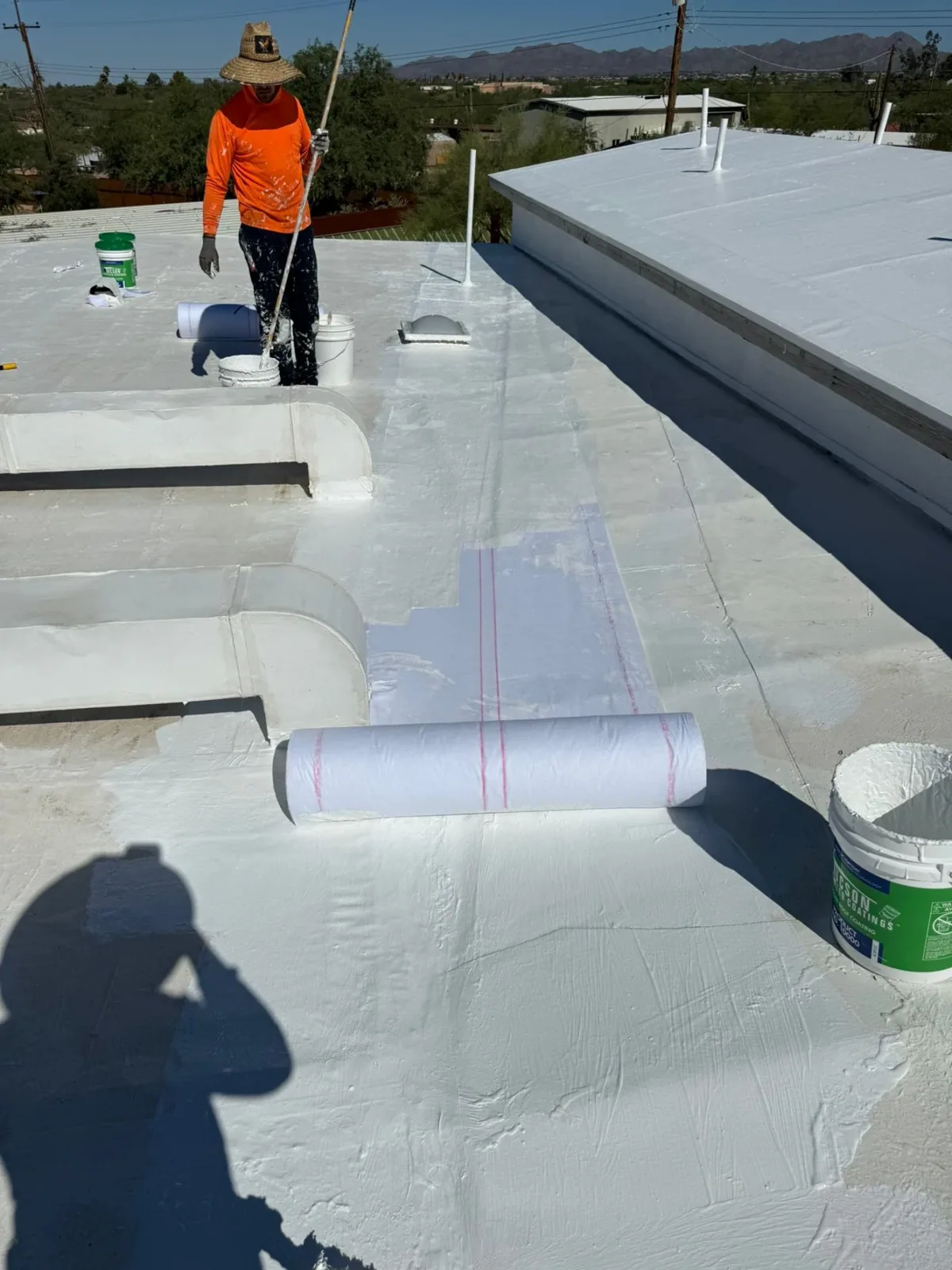
The patch has to match the sheet. On a thermoplastic membrane such as TPO or PVC, a welded patch of the same material, with rounded corners and an overlap, fuses to the field. On EPDM, a cleaned and primed patch with seam tape or a cured adhesive bonds to the rubber. Modified bitumen takes a torch-free or heat-welded patch with a granule-matched cap, and built-up roofs take a layered repair with felts and bitumen.
Cold weather shortens the list of materials we can use. In winter we place temporary patches, such as mastic with reinforcing fabric, that hold through the season and replace them with a welded or bonded patch in a better window. Every patch is probed after it cures, and each is marked on the plan.
Patch size is a judgment call. A small cut gets a patch that extends several inches past the damage in every direction, and a long slice or a cluster of nicks may call for a strip across the full width. The edges are rounded so water has no corner to catch, and the patch is pressed or rolled to remove air.
Walk paths, pads and traffic control
Repairing punctures without stopping the traffic is a short-term fix. A walkway path of heavy pads from the access hatch to each unit gives technicians a wear surface and shows them where to walk. Pads protect the membrane in the high-traffic zones, and the plan can add small signs or paint lines to keep service staff on the path.
Equipment is another cause. A pipe, conduit or refrigerant line resting on the sheet wears through over time, and our equipment curbs and supports raise lines off the surface. At flashing details and seams, where damage is most costly, we add extra protection pads.
Ladders and lifts need pads too. A ladder foot on a bare sheet can crush insulation and cut the membrane, and a lift tire on a thin roof can do worse, so a plywood or pad layer goes under both whenever the sheet is crossed.
Office and technology roofs with steady rooftop service
Draper counts technology-sector companies among its employers, and South Jordan lists The District as a large mixed-use development. Office and mixed-use buildings carry mechanical equipment that needs regular service, and every service visit crosses the roof. Owners with such buildings in Draper or elsewhere can protect the membrane by controlling who goes on the roof and by what path.
A roof access log at the hatch records each visit by trade and date. When a puncture is found, the log narrows the list of visitors and the repair report can reach the party responsible. On an office building roof the hatch key often sits with the property manager, which makes the log easy to keep.
Commercial Roofing Questions
How do we find a puncture that has not leaked yet?
Walk the service routes, scan for cuts and soft spots, and probe doubtful areas. A moisture survey picks up wet insulation under cuts that are hard to see.
Can a punctured membrane be patched in winter?
Yes, with temporary mastic and fabric. A welded or bonded patch follows when conditions allow.
Is a patch enough?
If insulation below is dry, yes. If it is wet, the wet material comes out first, and the repair boundary includes it.
Who pays when a trade damages the roof?
The contract and the evidence decide. An access log and dated photos help trace the damage to the work that caused it.
What stops repeat damage?
Walkway pads on the routes people use, raised supports for lines and a hatch log. Pads cost little compared with repeated repairs.
What does a puncture look like on an older membrane?
Often a crack or a worn spot with exposed fabric rather than a clean cut. Aged sheet loses flexibility, so a small impact opens a larger area.
Tell us where it was cut or stained
Share where water appears, who has been on the roof lately and how access works. We will walk the service routes, find the opening and confirm the repair boundary before work begins.