
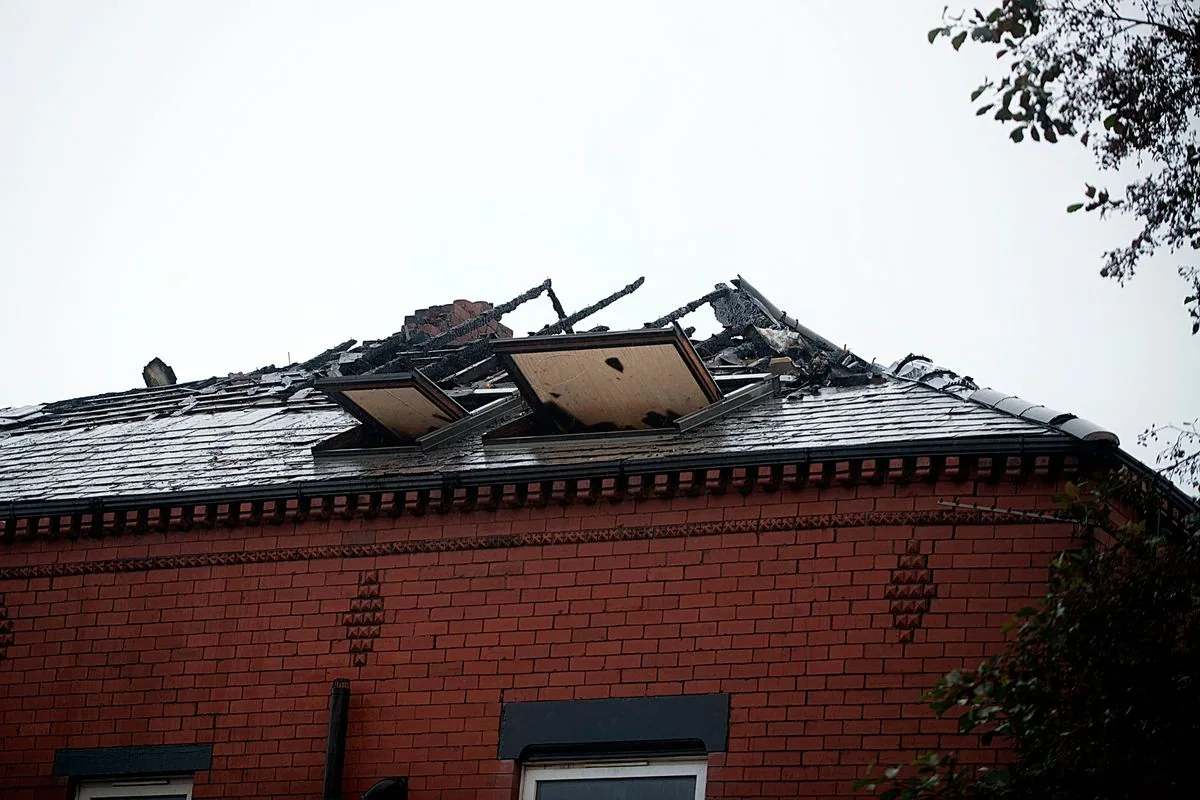
Blackened membrane, a patch of bubbled insulation and a smell of smoke that lingers for days are what the roof shows after a fire in or near a building. The firefighters are gone, the interior crew has started pulling wet drywall, and the roof is open to the next rain or snow. In West Jordan, UT, a loss in the cold months means melting snow on a damaged roof with the same melt problems seen after snow and ice damage, and a loss in summer means sun on exposed deck. The first job is to stop more water from getting in, and the second is to learn how far the heat actually reached.
First hours: safety and dry-in
A fire-damaged roof is not safe to walk until someone has checked the deck. Heat can weaken steel, char wood and soften the bond between the deck and insulation, and firefighters often cut ventilation holes that leave open cuts in the membrane. Before the crew goes up, we ask the fire marshal and the building owner whether the structure has been cleared, and we look from below when we can.
Once the roof is cleared for access, the dry-in begins. We cover open holes with sheet material fixed to sound deck, tarp large areas and secure the edges against wind. Our emergency roof repair response is available around the clock, and the fire loss crew gets a dry building as soon as the roof allows.
Utilities need attention before work starts. Rooftop gas lines, electrical feeds and fire protection piping may be damaged or live, and we ask for confirmation that they are isolated. Debris such as ceiling material, burned sheet and fallen equipment is cleared in a planned order so we never stack load on a weakened deck.
How far the heat reached
Fire damage on a roof is rarely limited to the area that looks burned. Heat travels through the deck, softens the adhesive under the insulation and shrinks the membrane in a wide ring around the visible damage. Smoke deposits soot over the entire surface and can stain or stiffen the sheet. A membrane that looks intact can have lost its flexibility and will crack the next winter.
We probe the roof in a pattern that radiates from the burned area, checking sheet flexibility, adhesion, insulation condition and deck surface. We mark the zone that must come off and the zone we can keep, and record the reasons. An infrared moisture survey adds a map of water that entered during firefighting, since hose water soaks insulation far beyond the burn.
Odor is part of the outcome. Soot absorbed into insulation and the underside of the deck can keep smelling after the interior has been cleaned, and removing the affected layers during the roof repair is often the only way to stop it. We mention it in the scope so the restoration crew does not clean the same space twice.
Deck and structure: ask the engineer
When the deck is charred, warped or exposed to heat, a structural engineer reviews it before new roofing goes on. Steel deck can lose strength after high heat even if it looks fine, and wood deck can char deeper than the surface shows. We document the deck condition with photos and measurements, and we support the engineer with access and sample cuts.
Replacement of the deck, where needed, comes before insulation and membrane. We coordinate with the structural contractor so the roof and the deck are replaced as one sequence, and we avoid covering an area whose deck has not been approved. This step cannot be rushed, and the schedule has to allow for it.
Rooftop equipment on a burned area needs its own check. Units, curbs and supports that sat near the fire may have warped frames, melted gaskets or damaged wiring, and the mechanical contractor decides whether they stay, move or are replaced. We plan curb flashing after that decision, so the new roof is not opened again for a unit swap.
Repair line: remove, replace and restore
The repair removes everything the heat or water damaged and rebuilds the roof assembly from the deck up: new insulation, cover board where the spec calls for it, a new membrane and flashing that ties into the sound roof around it. The tie-in matters, since a new section laid beside a stiffened old sheet needs a transition that handles movement.
Insulation choices are revisited too. Insulation and cover board selection follows the building's fire and energy requirements, and the state's move to the 2024 model codes on July 1, 2026 means replacement areas may be held to newer requirements. We flag those items for the adjuster in the estimate.
Weather shapes the schedule. Adhesives and welds need dry, moderate days, and a winter fire loss may be dried in for weeks before the permanent membrane goes down. During that time we check the temporary cover after each storm, clear snow off the stop and keep the drains open so the building stays dry.
Records for the insurer
A fire claim involves many parties and a lot of paper. We photograph the roof before temporary work, after it, and at each stage of the permanent repair, and we keep a log of materials, measurements and dates. Our insurance claim documentation separates the fire damage, the water from firefighting and any older wear, which helps the adjuster set the scope.
Restoration contractors, public adjusters and property managers all ask for the roof findings, and the same package serves each. Adjusters and restoration crews handling insured losses receive the same photo set and moisture map the owner receives.
Estimates follow quantities and conditions: the area removed, the depth of wet or charred insulation, deck repair, access for lifts and the working windows the building allows. We state each driver so the adjuster sees why a number changed between the first visit and the final scope.
Industrial and warehouse districts
South Salt Lake counts retail, manufacturing, warehouse and distribution firms among its sectors, and West Valley City keeps office and industrial zones for business use. A fire in a warehouse or plant building can reach a wide section of roof, because a large open space lets heat spread along the deck. Owners in South Salt Lake and neighboring cities can use a roof file as part of recovery after a loss.
A manufacturing plant that suffers a fire also needs a dry interior fast, so equipment can be cleaned and production restarted. Roof dry-in comes ahead of nearly every other recovery step.
Commercial Roofing Questions
Can we walk a fire-damaged roof right away?
Not until the deck is cleared. Heat can weaken the structure, and firefighters' cuts leave openings. We confirm access with the owner and fire officials.
Does smoke alone damage a membrane?
It can stain and stiffen some sheets. Heat is the larger concern, so we test flexibility and adhesion around the burned area, and we treat cuts the same way as any membrane puncture.
Why is the repair area larger than the burn?
Heat and hose water spread through insulation and under the sheet. A moisture map and probing set the true boundary.
Who approves the deck before new roofing?
A structural engineer reviews the deck and signs off. We support the review with photos and sample cuts.
How soon can permanent work begin?
After the deck is approved, the roof is dry and the adjuster agrees on scope. Temporary protection holds until then.
Call with the date of the fire and the opening
Tell us where the roof is open, what the fire officials have cleared and how access works. We will send a crew for dry-in, document the roof for the claim and confirm the repair boundary before permanent work begins.