A drip onto a sales floor at noon, a grease-streaked patch of membrane behind a kitchen, or a ceiling tile that lands on a dining table during the dinner rush: these are the calls a regional manager hears from a store. A chain with locations across West Jordan, UT, and the surrounding Salt Lake Valley cannot afford to treat each as a surprise. Winter snow, the melt that follows and a hot, bright summer all work on the same rooftop units, drains and seams, and the store's brand takes the hit when a customer sees a bucket. We plan chain roof work as a program, with one format for every location and one way to schedule around trading hours.
One standard across many storefronts
Chains usually own or lease buildings of different ages in different centers, and the roofs vary even when the storefronts match. A pad site with a membrane roof sits next to an inline unit under a shared shopping center roof, and a freestanding store may have a metal panel roof with a different set of fasteners. We walk each location and report in the same format: roof type, age as read on the roof, drainage, penetrations, flashing and open repairs.
That lets a facilities team compare stores on equal terms. The location with an old built-up roof and ponding goes up the list, and the location with a sound new sheet drops down. Our multi-site roof programs turn that comparison into a schedule and a budget by year.
Brand standards add one more layer. Many chains have rules about visible rooftop work, screening of equipment and the look of parapet caps from the street. We read those standards before choosing edge metal or coping colors, so the repair does not trigger a second visit from the brand's construction team.
Kitchen exhaust and grease on the roof
A restaurant roof lives with a kitchen exhaust fan that discharges warm, greasy air a few feet from the membrane. Over time grease coats the roof near the fan, softens some membranes and clogs drains and scuppers nearby. Fan curbs, grease containment trays and the flashing around them need frequent attention, and a crack at a curb corner lets water travel into the kitchen below.
On a restaurant roof we check the grease path first, then the curb flashing, then any nearby drain. If the membrane near the exhaust has softened, we cut out the damaged sheet and replace it with a material that resists grease. Cleaning the roof surface helps too, and we schedule it with the restaurant's exhaust cleaning vendor so both visits are not wasted.
Walk-in coolers and make-up air units add moisture of their own. Condensate lines that drip onto the roof leave algae and wet spots, and a line that drains to a drain bowl instead of the open surface prevents both. Small details like that rarely show on a budget, yet they decide whether a kitchen roof lasts or needs patching each season.
Trading hours and loud work
Retail and restaurant roofs get worked on in the margins. Mornings before opening, late nights after close, and slow weekdays are common windows, and each store has its own rules. A hotel restaurant or lounge, which a hospitality group runs, follows the guest schedule instead of the retail one. A quick-service restaurant may be quiet at three in the afternoon, while a grocery store may be busy all day. We agree on hours, parking closures and noise limits with the store manager, and then confirm with the shopping center's property manager when the roof is shared.
Fumes matter around food. Adhesive odor near a kitchen intake can force a closure, so we choose low-odor materials and keep fresh-air intakes covered during application. Roofing inside a shopping center, such as a shopping center roof over several tenants, follows the landlord's rules as well.
Weather shapes the calendar too. Retail peaks, such as the weeks before a holiday, are poor times for a tear-off, and a roof that fails in November gets a temporary stop first and a permanent fix in the slower weeks that follow.
Where the stores sit: corridors and centers
Taylorsville points to Redwood Road, Bangerter Highway and several numbered South arterials as its commercial routes, and West Jordan's general plan permits stand-alone commercial and office uses along Redwood Road. Sandy created a South Towne Promenade streetscape design area as a city focal point, and its business hub lists regional retail shopping among its aims. A chain on any of those routes may hold a pad site or an inline space whose roof belongs to the landlord.
That arrangement changes the repair process. The tenant reports the leak, the landlord or property manager owns the roof, and the chain needs documentation to support its request. We provide the photos, the likely cause and a repair scope, so the tenant can send the same packet to the landlord. For stores in Sandy and other cities, the format is the same.
Rooftop units, signs and added loads
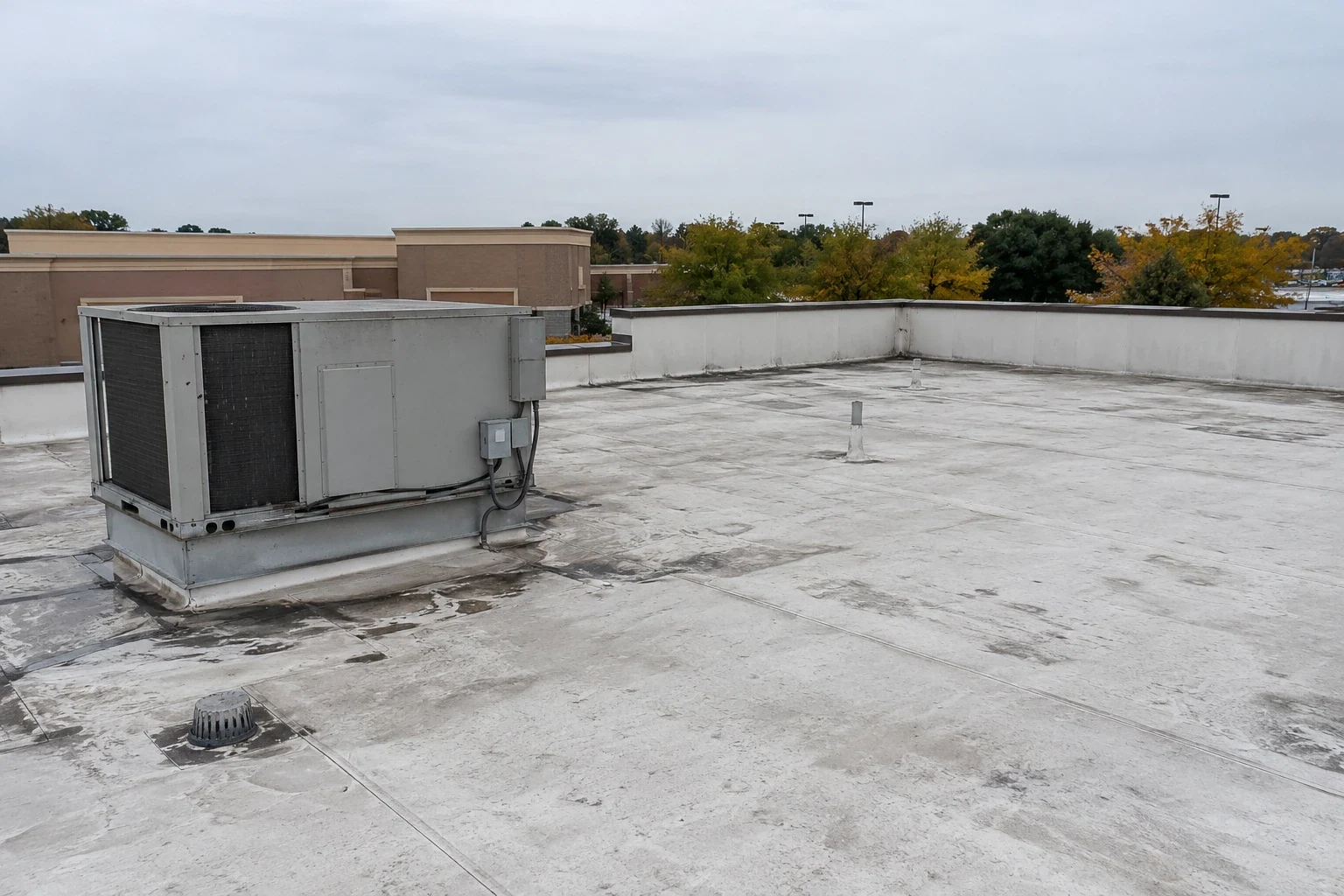
Retail roofs collect equipment over time: air handlers, walk-in cooler condensers, satellite dishes, signage supports and the conduit that feeds them. Every added unit puts new penetrations in the membrane, and every service call puts boots on it. Walkway pads from the roof hatch to each unit protect the sheet, and a clear roof plan shows where each piece of equipment sits and who installed it.
We help chains write that discipline into their service contracts. Our rooftop equipment curb and support work uses curbs and supports that lift pipes and conduits off the membrane, so water runs under them instead of pooling.
Remodels, rebrands and roof timing
A store refresh is a good time to look at the roof. If a remodel adds a new unit or moves a vent, the work can be sequenced with the roof so the same area is not opened twice. A rebrand often changes signs and canopies, and those attach to parapets and walls where flashing already works hard.
When the membrane is sound but tired, a roof coating can add years without a tear-off, and it can improve reflectivity during hot summers. When a store's roof is past that point, a recover or replacement goes into the remodel schedule, and the chain gets one completion date for both.
Records finish the job. Each store's file holds the roof plan, the repair history, the equipment list and any warranty terms, so the next regional manager or the next contractor starts from known facts and not from a phone call to a store that has changed staff twice.
Commercial Roofing Questions
Can a store stay open during roof work?
Most of the time, yes. We work in sections, protect the space below, and avoid loud or smelly steps during peak hours.
Who is responsible for the roof at a leased store?
The lease says. Many leases give the landlord the roof and ask the tenant to report problems, so our documentation supports that request.
How do we handle grease damage?
Cut out the softened membrane, replace it with a grease-resistant sheet and add containment at the fan. A regular roof cleaning prevents repeat damage.
Can you cover many locations with one report format?
Yes. Each store gets a page with the same fields, and a summary ranks the locations by urgency.
What about a flat roof that ponds near the entrance?
A low spot there can stain ceilings and soak the entry. We correct it with tapered insulation, a new drain or a sump, depending on what the roof allows.
Send the store list and the first complaint
Tell us which locations leak, who owns each roof, and when the store is quietest. We will plan the roof walk, mark what has to be confirmed on site, and build a repair order that protects the sales floor.