
A ceiling stain directly under a vent pipe, a drip beside a skylight that only shows up when snow is melting, a rubber boot that has gone stiff and split: the leaks that start at openings in the roof tend to be small, local and stubborn. In West Jordan, UT, every skylight, roof hatch, exhaust fan, plumbing vent and conduit that passes through the membrane is a place where the roof depends on a flashing detail to stay watertight, and those details age faster than the field of the roof around them.
Flashing is the junction work of roofing. It takes a flat sheet of membrane and makes it turn up a curb, wrap a pipe and close around an opening. When it fails, water takes the shortest path into the building, and a patch of sealant over the top rarely settles the question.
The usual suspects at each opening
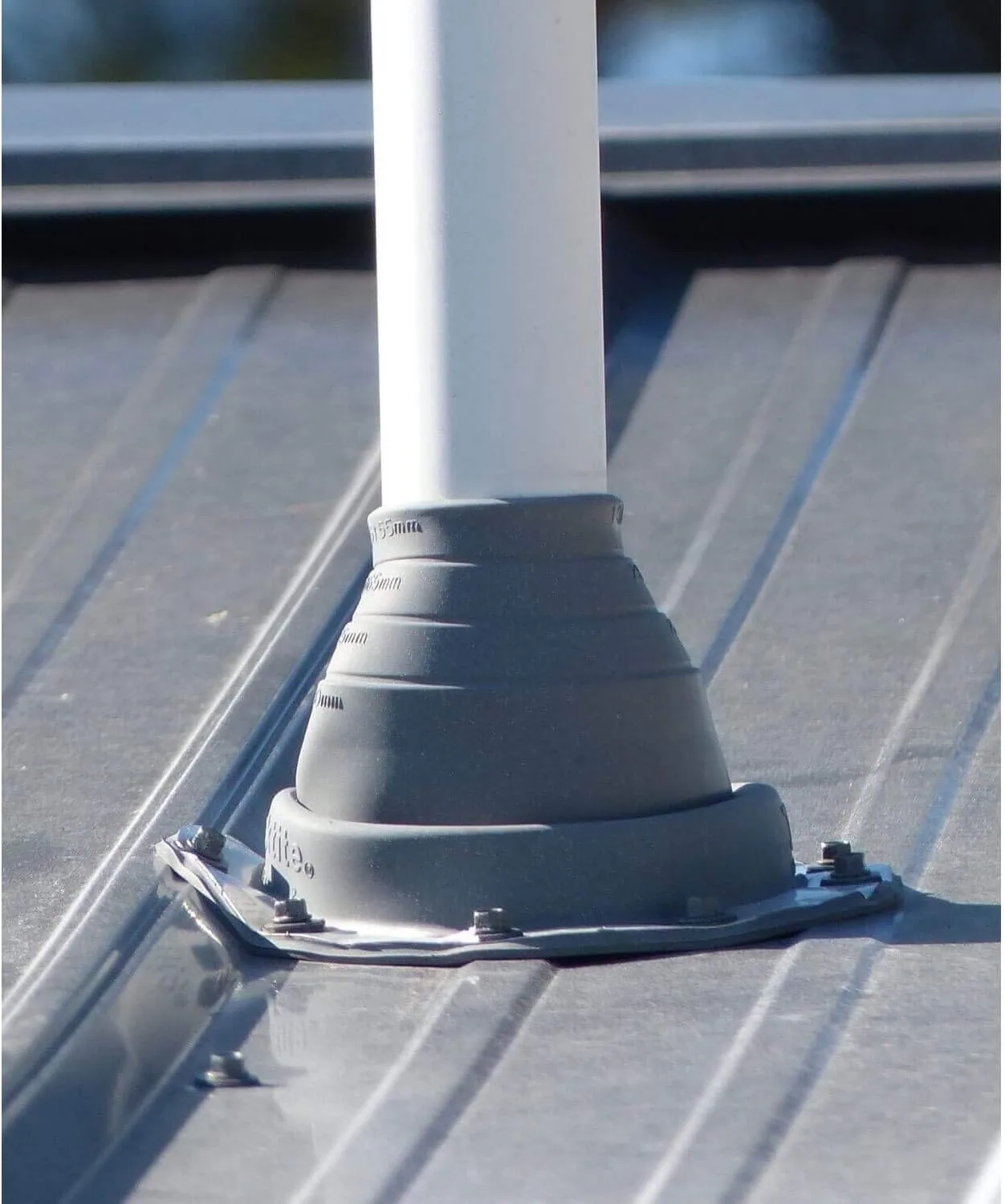
Pipe boots and collars crack in sun and cold, because the rubber or plastic hardens with age and the pipe moves with temperature. Curb flashing pulls away from the curb at the corners where the membrane was folded, and the sealant at the top edge dries and splits. Skylight glazing seals harden and the frame itself can move. Roof hatches have gaskets that flatten and hinges that let the lid sit crooked. Conduit and cable penetrations added after the original roof was built are often sealed with caulk alone.
On the walk we count every opening and give each a number on the roof sketch, then inspect them in order. The count alone is useful: a roof with forty penetrations has forty places to watch, and the scope can weigh whether grouping them under a new curb or relocating a line makes sense.
Skylights: glass, frames and curbs
A skylight leaks in one of three places: through the glazing seal, at the frame where it meets the curb, or at the curb flashing where it meets the roof. Condensation on the inside of the lens can look like a leak and is a different problem, caused by humidity and temperature difference, not water entry. We check the interior and exterior together to tell them apart.
Repair options depend on what we find. A hardened seal can be replaced, a frame can be reset and resealed and a curb can be reflashed. If the unit is old, brittle or crazed, replacing it along with the curb flashing may cost less than repeated repairs. Because skylights bring daylight and sometimes smoke vents, replacement is checked against the code in force. Glazing and curb requirements are reviewed against the 2024 building and energy codes Utah put into effect on July 1, 2026, with their state and local amendments.
Melt and refreeze at the curb
Winter snow and freezing spells show up year after year in the Salt Lake City airport record. No airport reading belongs to a single West Jordan rooftop, yet it hints at a stress that curbs and openings share: snow banks against the upslope side of a curb, melts during the day and refreezes at night, and the repeating cycle pushes water into every small gap in the flashing. A detail that stays dry through summer rain can leak in March.
For that reason, the best time to find a flashing leak is during or right after a melt, and the best time to repair it is in the dry months that follow. Where a leak cannot wait, we make a temporary seal, mark it in the record and return for the permanent repair when the surface is dry enough to bond. Tracing the entry point is the first half of commercial roof leak repair, and an opening is often the answer, since water can travel along a deck or insulation seam several feet from where it enters.
Repair or rebuild: the decision at each opening
A small crack in sealant on a sound flashing calls for cleaning and resealing. A split pipe boot calls for a new boot. A curb whose flashing has lifted at the corners needs new flashing with reinforced corners, and sometimes the curb itself is rotted or too short for the new roof thickness. In that case it is rebuilt to the right height. A flashing failure repair at one opening should not be a cosmetic cover. It should restore a detail that the membrane is truly bonded to.
Where an opening sits in an area of tapered or thick insulation, the curb height and the insulation and cover board thickness must agree, or the flashing ends up too short to shed water. We keep track of the repair method used for each opening, because in the next visit that record tells us whether a repeated failure at the same spot points to a deeper cause, such as movement of the equipment or a poorly set curb.
Equipment, hatches and added penetrations
Rooftop units sit on curbs, and every service call is a chance for a puncture or a crushed flashing. Roof hatches and ladders get constant use. Added conduit, antennas and pipes may have been run through the roof by other trades, sometimes without involving the roofer. We look for these additions and record them, since an unsealed or poorly sealed opening is a leak that has not happened yet.
Where equipment is changed or relocated, the curb and flashing need attention in the same project. A unit that is moved needs its curb and supports reset at the new height, and we coordinate with the mechanical trade so the roof is not left open longer than necessary.
Flashing details by membrane type
Flashing is installed differently on each roof type. On TPO and PVC, preformed boots and welded flashing are standard; on modified bitumen and built-up roofs, flashing is made from membrane plies and sealed with hot or cold adhesive; on metal roofs, curbs and penetrations use formed metal and butyl sealants. Liquid-applied flashing resin can handle odd shapes that preformed parts cannot. The right choice follows the membrane already on the roof, and the walk identifies it before any material is ordered. A flashing that is welded to a thermoplastic sheet cannot be glued to a rubber one, and a mismatch is a leak waiting to happen.
Mixing incompatible materials is a common source of repeat leaks. A patch of the wrong sealant on a membrane can fail to bond or even degrade the material beneath. We identify the membrane first and match the flashing method to it.
Where it matters in West Jordan
Any building with rooftop equipment or skylights has flashing to maintain, from the offices and shops near Redwood Road and 7800 South to buildings by the planned transit stations. Scheduled flashing checks and leak calls in West Jordan reach the same range of buildings, including those in the Old Bingham Highway and Gardner Village station areas.
Commercial Roofing Questions
Is the drip under a skylight always a flashing leak?
No. Condensation on the lens can drip too. We compare the interior and the exterior and test the curb to tell them apart.
Can caulk alone seal a pipe penetration?
It is a short-term patch at best. A proper boot or flashing collar, bonded to the membrane, is what lasts.
Why does a leak appear only in late winter?
Melt and refreeze push water into small gaps that summer rain does not reach. The leak is the same flashing flaw, revealed by the season.
Does replacing the membrane replace the flashing?
It should. New membrane over old flashing leaves the weakest detail in place, so reroof scopes include new flashing at every opening.
How are added conduits and pipes handled?
We locate and number each one, check the seal and replace weak ones with a proper boot or collar.
Tell us which opening leaks
Share where water appears, when it appears and how the roof is reached. We will walk the roof, count and inspect every opening and explain what must be confirmed before a repair line or schedule is set.