
A single-ply roof that flutters in the wind announces by sound alone that something is loose. Versico is a commercial roofing brand that supplies single-ply membranes, including rubber-based and thermoplastic sheets, and roofs of that kind are common enough on commercial buildings that a West Jordan, UT property manager may have several. Our work on single-ply systems of these types begins with questions about attachment: how is the sheet held down, how tight are the fasteners or adhesive and what happens at the edges when wind finds them?
What failed first: attachment and edges
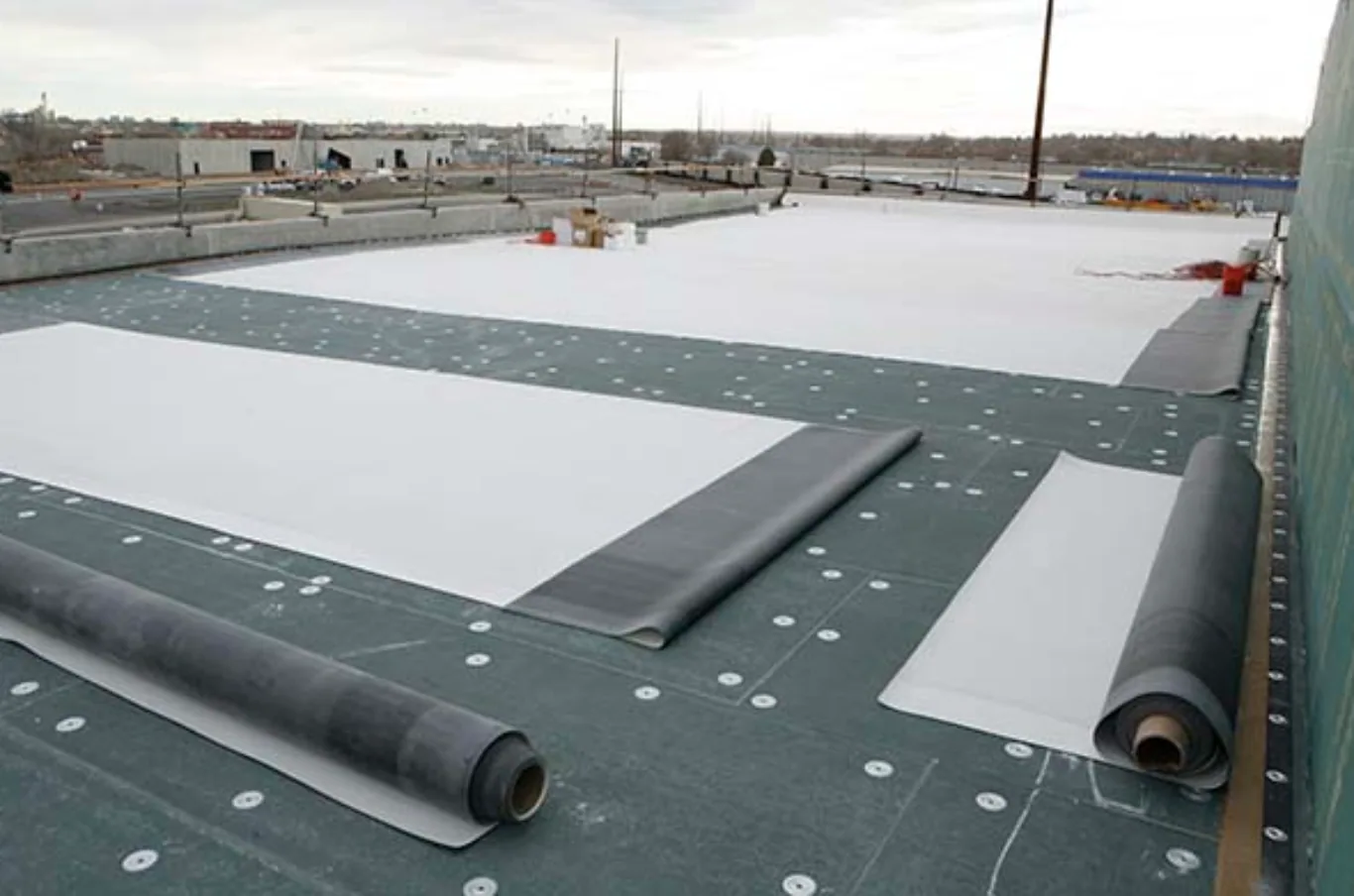
A single-ply sheet is only as secure as its attachment. In a mechanically fastened system, plates and fasteners hold the sheet at set spacing. Over time, thermal movement and wind can loosen them, and a loose plate lets the sheet flutter and wear. In an adhered system, the bond to the substrate can weaken, leaving bubbles or loose areas. In a ballasted system, stone can shift and expose the sheet.
On a walk we press the membrane, look for fluttering and listen for the telltale slap, then check the perimeter where wind forces are highest. Edge metal, termination bars and sealant get a hand test. Any of them loose is a finding, and a loose edge on a fastened system is urgent.
Corners and edges take the largest wind forces, so attachment there is usually denser than in the field. If a roof was installed with a uniform pattern, or if fasteners have backed out at the perimeter, the edge is where a gust will start peeling. We count plates along a sample edge, compare the spacing with the field and note any area where the spacing looks thin. That one check explains many perimeter failures.
Roof-walk notes: when a recover is possible
A recover places a new sheet over an existing roof, usually with a cover board between. It skips tear-off and keeps tenants undisturbed, but it only works when the old roof is dry, flat enough and able to carry the added layer. A moisture survey and a few cores decide. If wet insulation is found, the wet areas must come out, and a partial tear-off with a recover over the dry remainder may fit.
Fastening a new sheet through an old roof also has to reach a sound deck. We confirm deck type and condition, check pullout where fasteners will go and plan attachment patterns for edges and corners, where forces are highest. That planning belongs in the scope, since a recover that hides a bad deck is a recurring repair line.
Drainage is the other recover test. A new sheet over an old roof inherits its slope, so ponding in the old roof ponds in the new one. If low areas exist, tapered insulation or added drains must be part of the recover. We measure ponding depth after rain and mark low areas on the sketch, which turns an expensive surprise into a line in the scope.
Drainage and melt: what the cold season asks
Every drain path in the Salt Lake Valley is loaded by winter snowfall and freeze-thaw periods, which Salt Lake City airport normals describe regionally, while local elevation and exposure differ from roof to roof. A flat single-ply roof holds snow, then releases meltwater in a rush. Drains that are partly blocked back water onto seams, and ice at edges lifts metal.
Once the melt is done we look at strainers and drain bowls, note ponding marks and follow the first stretch of leader. We also look at edges and gutters for ice damage. Summer heat is the other half of the cycle, with sun-facing slopes running hot and seams moving through the day. A spring walk with dated photographs becomes the baseline for the year.
The general plan in West Jordan treats the Redwood Road and 7800 South core as the historic downtown and regional commercial setting, and lists Gardner Village and Old Bingham Highway among its planned station districts. A roof in any of them is judged the same way: by what the walk shows about the sheet type, attachment and drainage.
Flashing details that decide the roof
Most leaks on a sound sheet start at a detail: a wall base, a curb, a pipe boot, a drain or a corner. Each is built from separate pieces joined to the field, and each moves differently from the sheet around it. We check termination at walls, counterflashing, sealant at pipes, and the seams where flashing meets the field. A detail that has pulled away is a repair in an afternoon if found early and a wet-insulation project if found late.
Equipment changes create new details. When a rooftop unit is replaced or a conduit run is added, someone cuts the sheet. We list penetrations on the sketch and check each flashing against the sheet around it. For tenants and managers, a log of who opened the roof and when is the simplest protection.
Sealants and tapes at details have limited life. Sun, heat and movement dry them out, and a bead that was flexible when installed cracks and pulls away. We scrape-test sealant at terminations and pipe boots, replace what has failed and photograph the finished detail. Materials must be compatible with the sheet, which is why we identify it first.
Repair boundary, code and warranty
A repair is the fix for located defects on a dry roof. Wet insulation or widespread failures call for replacement. Expect the price to follow roof area, tear-off, insulation and the number of penetrations, plus how crews reach the work. Under Utah's 2024 building and energy provisions, effective July 1, 2026 and amended by the state and by local governments, any reroof that exposes insulation brings energy requirements into review, so the scope states the proposed values.
Warranties from the manufacturer can name who may repair the system and require notice before work begins. We help owners read their own terms and keep a roof warranty management record of notices, photographs and repair details.
Records finish the job. A short closeout lists the sheet type, attachment method, products used in any repair, locations of work and photographs. It goes into the owner's file and, for buildings in a portfolio, into the shared record. When a question arises years later, the answer should not depend on anyone's memory.
Next check: what to send
Send the address, whatever roof documents exist and a note on where and when water shows up. Tell us how access works. We will walk the roof, test the attachment and edges and report what the system needs. The same walk applies to a neighboring Carlisle SynTec or GAF roof, and a West Jordan building goes on the calendar once the hatch and the key holder are known.
Commercial Roofing Questions
How can I tell if my membrane is loose?
Look for fluttering in wind, bubbles under the sheet and plates standing proud of the surface. We confirm with a hand test and by checking the perimeter.
Is a recover always cheaper than replacement?
Usually, because it skips tear-off, but only if the old roof is dry and sound. Moisture checks decide.
What is a cover board for?
It gives the new sheet a firm base and protects insulation from foot traffic. On a recover it also separates old and new layers.
Why do leaks start at flashing and not the field?
Flashing is built from separate pieces that move differently from the sheet. Movement and age open the joints first.
Who approves the repair method?
The system type and any warranty terms do. We read both before work starts, follow the sheet's published details where we know them and keep the owner's copy of the record.
Tell us where water appears and how access works
Send the address, roof papers and leak history. We will walk the roof, test the attachment and edges and report what to do first.