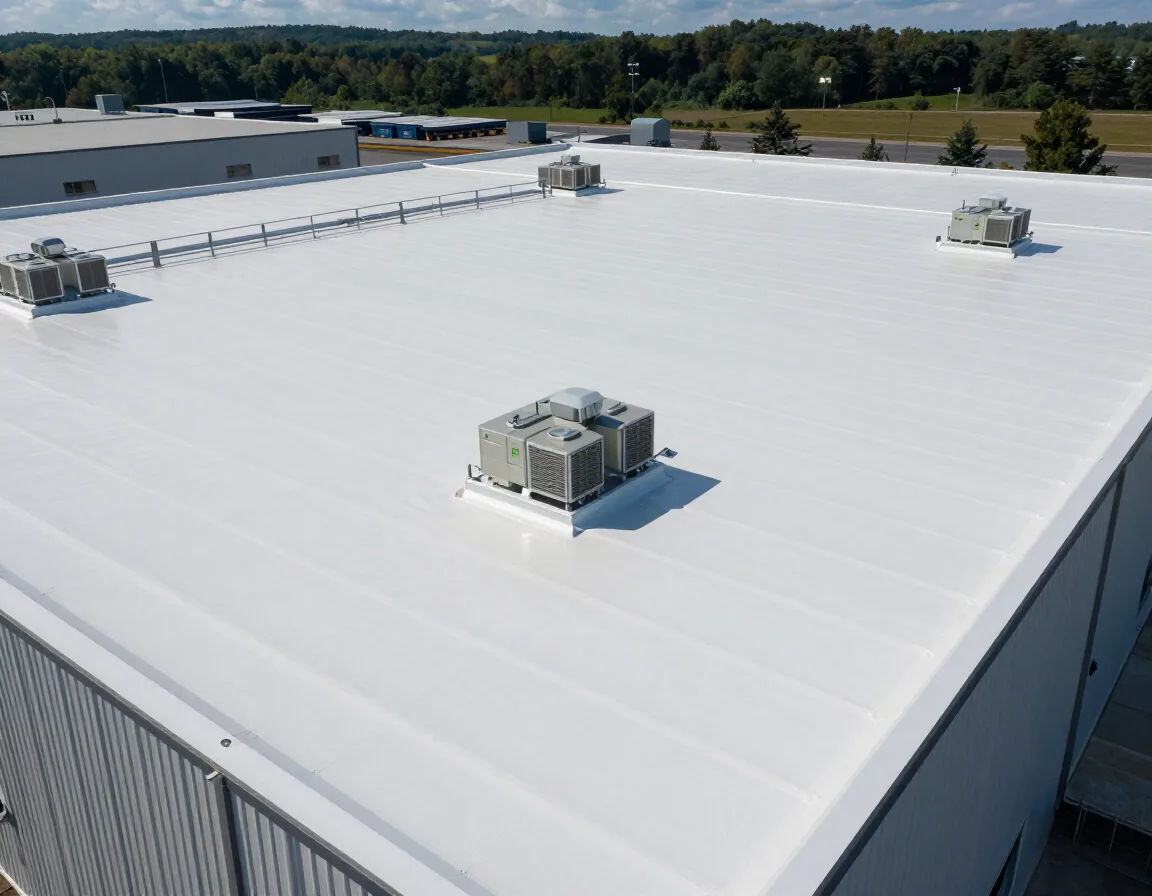
A seam that looks tight in July can be a gap by March, and single-ply roofs are where that happens most. Carlisle SynTec is a manufacturer of single-ply membrane systems, including rubber-based EPDM and heat-weldable thermoplastics. For owners in West Jordan, UT who hold a Carlisle SynTec roof, the work comes down to a few repeating questions: how are the seams holding, how is the membrane attached and where does water go when the snow melts? We install, repair and maintain single-ply systems of these types, and we begin every job with a roof walk that answers those questions.
What failed first: seams and splices
On a single-ply roof, the sheet itself usually outlasts its joints. Rubber sheets are joined with adhesive or tape at splices, and thermoplastic sheets are joined by heat welding. Either kind of joint can open where the roof moves most: along long runs, at corners, at the base of walls and around penetrations. A joint that has lifted a fraction of an inch lets water travel under the sheet, and the stain inside may appear far from the opening.
On the walk we run a probe along seams, look for fish-mouths and edge lifting, and check the cut edges at details. Splice tape and seam covers get a close look, since those are the spots where a small gap becomes a leak. Each defect goes on the sketch with a photograph.
Corners and wall bases get a second pass because membrane is stretched or folded there. A fold that was formed in cold weather can crack when it is bent again, and a corner flashing patched with the wrong material tends to shrink and pull. We look for tenting, where the sheet bridges a corner without touching it, and for gaps between the membrane and its termination. Those are quick fixes if found early.
Roof-walk notes: how the membrane is held down
Single-ply systems are held in place in three common ways: fully adhered to the substrate, mechanically fastened through the sheet or ballasted with stone. Each fails differently. An adhered sheet can lose bond and bubble. A fastened sheet can flutter and wear at fastener rows. A ballasted sheet can lose stone to wind, leaving bare areas that cook in the sun.
Identifying the attachment method is part of the first visit, because repair methods and wind-edge checks depend on it. We look at the perimeter and corners where wind forces are highest, and we confirm that edge metal and termination bars are tight. A loose edge on a mechanically fastened roof is a more urgent finding than the same condition on a ballasted one.
Heat adds its own wear. Summer sun raises membrane temperature well above air temperature, and dark surfaces take the most. Repeated expansion and contraction loosens fasteners in a mechanically attached system and fatigues adhesive in an adhered one. On a warm afternoon we can sometimes see the movement itself, as a ripple along a seam line, and it tells us where to probe.
Drainage and melt: what snow does to single-ply
Winter snowfall and freeze-thaw periods in the Salt Lake Valley are the seasonal stress that matters most for a flat roof. The NOAA normals for Salt Lake City International Airport give the regional pattern, and local elevation and exposure change it from one West Jordan roof to the next. Snow lying on a roof hides ponding and then releases it all at once, and meltwater that cannot reach a drain stands on seams.
After melt, we check drain bowls and strainers, look for ponding marks and follow any low area back to its cause. Ice at edges and gutters can lift metal and push water behind a membrane. A spring walk, with dated photographs, catches those problems while the repair is still small.
A building on Redwood Road, one in the Gardner Village area that the general plan marks as a planned station-area district and one elsewhere in West Jordan all get the same check of how each section sheds water, and the notes record what that roof shows. Where a drain is the only outlet for a large section, we look for an overflow route and recommend one if it is missing.
Repair boundary: patch, restore or replace
Local defects on a dry single-ply roof are patched with compatible material, installed to the membrane's own method. A roof with a sound but worn surface may take a coating, if the membrane type allows it. A roof with wet insulation or widespread seam failure points to a commercial roof replacement, sometimes with new EPDM, TPO or PVC membrane, depending on the building and the owner's goals.
Cost follows area, tear-off, insulation, penetrations and access. We list the options with scope and what each leaves open, so the owner can see the tradeoff between a patch now and a larger project later.
Insulation and cover board decisions come up at replacement. A membrane over damaged or wet insulation will fail early, so the insulation is tested and replaced as needed. A cover board adds a firm base under the sheet and protects the insulation from foot traffic around equipment. Tapered insulation builds slope into a flat roof, and it is the cure for chronic ponding when the structure allows it.
Warranty paperwork and code
If the roof carries a manufacturer warranty, its terms may limit who repairs the system and require notice before work. We read the warranty with the owner, compare it with the roof and write repair scopes that respect its conditions. The roof warranty management record keeps notices, photographs and repair details together.
Utah's 2024 International Building Code and Energy Conservation Code took effect on July 1, 2026, amended at both the state and local level. A replacement that exposes insulation is where energy provisions are usually checked, so scopes state the insulation values proposed.
Utility and equipment work is where warranty trouble often starts. A new rooftop unit, a cable run or a new vent can penetrate the membrane, and each penetration needs a flashing detail that matches the system. We ask owners to tell us before other trades open the roof, and we walk the roof afterward to confirm the flashing. The record of that walk is useful if a question comes up later.
Next check: what to send
Send the address, any roof paperwork and a note on where water appears and when. Tell us how roof access works and which tenants are below. We will walk the roof, identify the system and attachment, test seams and report what we found. A neighboring building with a GAF roof or a Versico single-ply roof gets the same walk, and a building in West Jordan can be scheduled as soon as access is settled.
Commercial Roofing Questions
How do I know whether my seams are failing?
Look for lifted edges, wrinkles at joints and stains below. A probe along the seam finds gaps that the eye misses.
Does attachment method matter for repairs?
Yes. Adhered, fastened and ballasted roofs fail differently and need different repair methods and edge checks.
Can an EPDM roof be coated?
Some can, depending on condition and the coating type. We test adhesion and check the membrane before recommending it.
What if the warranty names an approved installer?
Then the repair clause governs. We read it before work starts, give any notice it requires and write the scope to its conditions.
When is replacement better than repair?
When moisture has spread through the insulation or seams fail across much of the roof. A moisture survey provides the evidence.
Share where water appears and how access works
Send the address, roof papers and leak history. We will walk the roof, probe the seams and report what the system needs.