
A roof with a GAF label on its paperwork usually raises two questions for a property manager: what kind of system is it, and who is allowed to repair it? GAF is a roofing manufacturer whose commercial offering covers single-ply membranes and bitumen-based systems, and owners in West Jordan, UT may meet it on older buildings where the paperwork has gone quiet. We install, repair and maintain systems of those types, and we start any job on a GAF-labeled roof the same way: identify what is on the roof, read what the paperwork says and walk the roof after melt to see what the winter did.
What failed first on single-ply and bitumen roofs
The two system families fail in different places. Single-ply membranes, whether heat-welded or adhered, tend to show trouble at seams, at corners, around penetrations and where the membrane meets a wall. Bitumen-based roofs, which build up water protection in layers, tend to show trouble as blisters, ridging, splits at laps and surfacing that has worn thin. Each family also fails when water gets under it, because wet insulation loses its value and holds moisture against the deck.
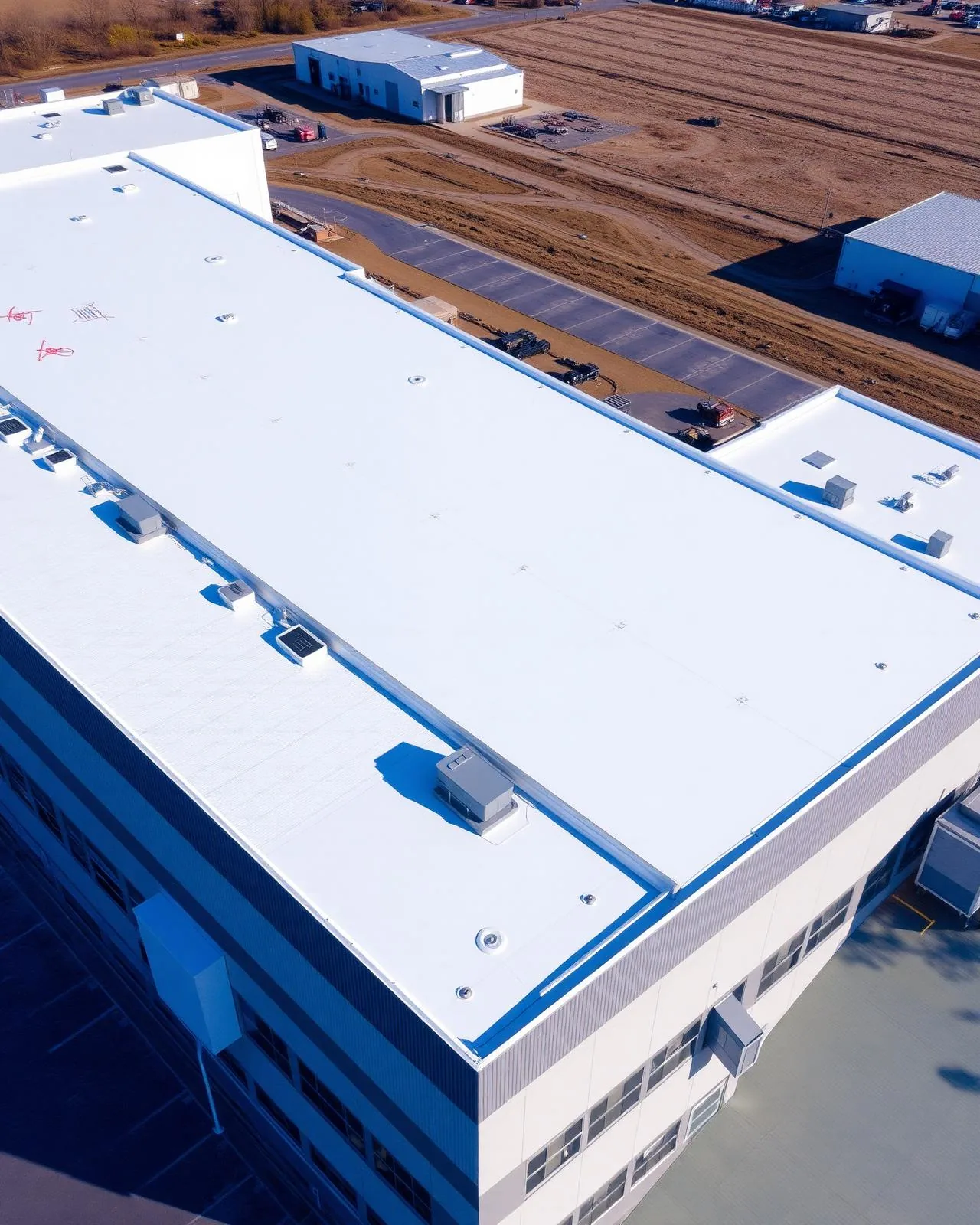
On a roof walk we look for the signs that match the system: open or lifted seams on a single-ply, alligatoring or granule loss on a bitumen surface, and ponding on either. Photographs and a sketch record what we find, tied to numbered roof sections.
Edges and walls deserve extra attention on both families. Wind lifts edge metal first, and a loose cap lets water behind the membrane. We press-test coping, check cleats and fasteners and look at how the membrane terminates at parapets. Where a wall flashing has pulled away, the repair is local and quick if it is caught early, and it spreads into insulation damage if it is not.
Roof-walk notes: identifying what is actually there
A label on a warranty does not tell us the build-up. We confirm the system by looking at the surface, checking seam construction and, where needed, taking a small core to see layers, insulation type and thickness. Roofs that have been recovered or patched over the years can hold more than one system, and the layers affect what can be added.
That identification decides everything that follows. A repair material has to bond to the membrane in front of it, and the wrong choice can fail within a season. We match repair methods to the system we find, following the manufacturer's published guidance where we know it, and we write down what was used so the next repair starts from facts.
Equipment adds another layer of questions. Rooftop units, exhaust fans and conduit supports each sit on a curb or pad, and each curb has its own flashing. Over the years, units get replaced and curbs get altered by other trades. We list every penetration on the sketch, note who services it and check that the flashing matches the membrane around it. A manager who holds one building in the downtown core at Redwood Road and 7800 South and another elsewhere in the city may find two very different assemblies, and the identification step keeps them from being treated alike.
Drainage and melt: what winter asks of these systems
Any membrane in the Salt Lake Valley is stressed by winter snow and freeze-thaw periods, and the Salt Lake City airport normals give a regional picture that no single West Jordan roof is certain to match. Local elevation and exposure vary. The practical lesson is where to look after melt: drain bowls, low spots, edge metal and seams along the sun-facing slope, where repeated thaw and refreeze open small gaps.
Warm summers add heat to the cycle. Surfaces expand and contract through the day, and long seams move. A TPO roof or a modified bitumen roof will show that movement at details before it shows it in the field, so we look at flashing terminations first.
Drains are the other half of the check. A drain bowl that has cracked or lost its seal lets water into the building without any membrane failure at all. We look at strainers, bowls, clamping rings and the first stretch of leader we can see. Clearing a blocked drain after melt is the cheapest maintenance a roof gets, and writing down what was found makes the next visit smarter.
Warranty status and who may repair
Manufacturer warranties come with conditions about who installs and repairs the system, what notice is needed and what upkeep the owner must perform. The warranty stays between the owner and the manufacturer; our job is to help the owner keep the roof and the paperwork in step. We read the warranty document, compare it with the roof and list what supports coverage and what threatens it.
Where a roof is under warranty, we ask whether notice is required before work, and we write repair scopes to the system's published details where we know them. The paperwork, inspection log and repair record all go into a roof warranty management file the owner keeps. If the warranty has expired, we repair on the roof's merits and keep records.
Repair boundary: patch, restore or replace
A repair suits a roof with located defects and dry insulation. A restoration, such as a coating, suits a dry roof with worn surface. A replacement suits a roof with wet insulation across much of its area or seams that keep failing. The system type shapes the options: some single-ply membranes accept coatings, some do not, and bitumen surfaces have their own coating paths.
Price depends on roof area, tear-off, insulation depth, how many penetrations there are and how crews reach the roof. With Utah's 2024 building and energy codes effective July 1, 2026, a replacement scope should note insulation values and energy provisions that a reviewer may check.
Insulation is the quiet variable. A roof with dry insulation can be repaired or recovered; a roof with wet insulation must have the wet material removed. We map wet areas with a moisture survey and confirm with a core, so the repair stops at the wet boundary and leaves the dry material alone. That keeps cost tied to the roof, which is the point of the walk.
Next check: send what you have
Bring the building address, whatever paperwork the roof came with and a description of where water shows up, and say how a crew reaches the roof. The walk identifies the system, reports its condition and names the first repair. A second building with a Carlisle SynTec or Johns Manville roof gets the same report format, and a property in West Jordan can be walked once access is arranged.
Commercial Roofing Questions
How do I tell whether my roof is a single-ply or a bitumen system?
Single-ply is a smooth sheet with welded or adhered seams. Bitumen roofs show layered sheets or a mopped, gravel or mineral surface. A core sample settles it.
Who stands behind a GAF warranty?
The manufacturer does, under its own terms. We read the document with the owner, keep the repair record and give any notice the terms require.
Can any contractor repair a roof under warranty?
It depends on the warranty. Read the repair clause and give any required notice before work begins.
What does a coating do for an aging roof?
It renews the surface and seals small cracks on a dry roof. It does not fix wet insulation or failed seams.
When should a replacement be planned?
When moisture has spread or repairs recur. A moisture survey and a condition report give the evidence and the timing.
Tell us where water appears and how access works
Send the address, any warranty or installation papers and your leak history. We will walk the roof, identify the system and report what it needs.