
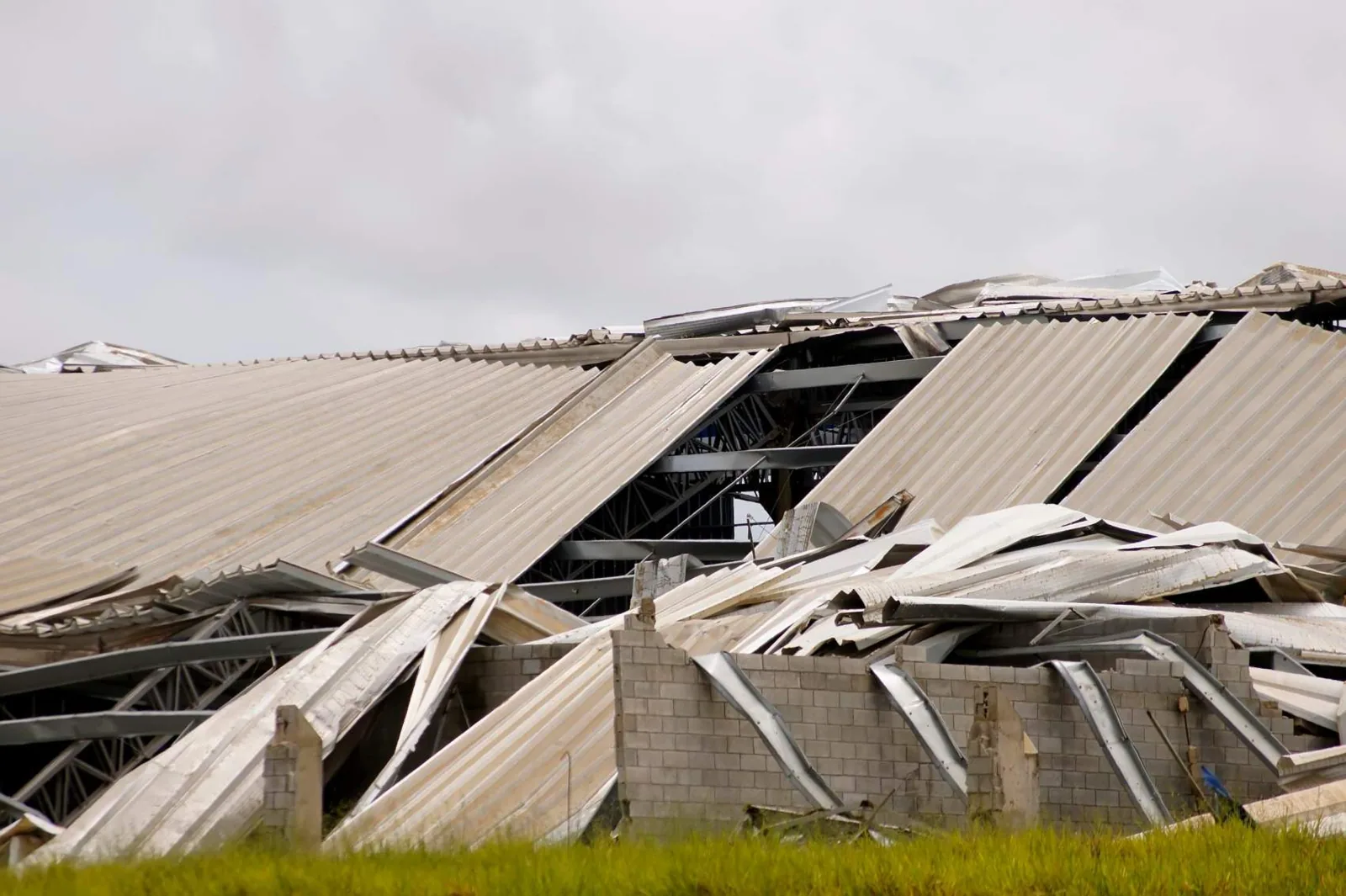
A sheet of membrane that flaps against the parapet after a gusty afternoon, a strip of coping lying in the parking lot, a rooftop vent hood sitting a few feet from where it was bolted: these are the signs a manager notices first, and they point to a roof that took a load it was not holding well. In West Jordan, UT, a wide, low building with long open edges catches the most air, and a roof that has spent winters under snow and melt may already have a few weak points waiting for a strong gust. The first step is a roof walk that finds every lifted area, not only the one that leaked.
What failed first: corners, edges and curbs
Wind pressure on a flat roof is highest at the corners and along the perimeter, so that is where damage begins. A membrane that was adhered or fastened less securely at the edge pulls free, folds back and exposes the insulation. Edge metal and coping, which hold the sheet down along the parapet, bend or peel when their cleats let go, and once one length lifts the neighbors follow.
Rooftop equipment is the other early casualty. Unsecured hoods, vent covers, loose conduit and satellite mounts can slide, tip or fly, and they strike the membrane as they go. On the roof walk we trace the damage from the first lifted corner along the edge, then inland, noting where fasteners pulled through and where adhesive let go.
Ballasted and fully adhered systems fail differently. A ballasted roof can lose stone from a corner and expose the sheet, while an adhered roof lets go at the bond line. A mechanically attached sheet flutters, and the fasteners work out of the deck over many gusts. Knowing the system tells us where to look and which repair will hold.
Roof-walk notes: separating event from age
Not every lifted corner comes from the last storm. Fresh wind damage leaves clean edges on a tear, bright metal at a bend, and debris still on the roof. Older damage shows dirt in the gap, weathered adhesive and stained insulation below. We photograph both and mark them on a plan, because the repair may include only the new damage while the older openings are listed separately.
This distinction helps in a claim. Our insurance claim documentation records the evidence for each area, with dates and measurements, so an adjuster can see which lifted sections belong to the event. A roof that shows a wide pattern of loose edge metal usually needs an edge upgrade, and we say so.
Equipment gets the same scrutiny. We check whether hoods and covers were secured with screws or only sat on their curbs, because unsecured items move first and then damage the field. Loose conduit and cable trays are re-supported so they stop rubbing on the sheet.
Dry-in plan after a wind event
If the membrane has lifted or torn, water is the next problem, and the dry-in plan comes before the permanent fix. We secure the loose sheet with temporary fastening or ballast, cover exposed insulation, and tie down or remove flying hazards. Our emergency roof repair response is available around the clock, and a crew can reach the roof once access and safety are confirmed.
Wet insulation under a lifted area is marked for removal. A moisture reading on the first visit and another before the permanent repair show whether it dried or held water. If the insulation is wet, the repair boundary grows to include it, since a new membrane over wet board holds moisture against the deck.
Debris is part of the dry-in. Pieces of coping, loose gravel from a ballasted roof and broken vent covers can puncture the membrane if left, and they can clog drains during the next melt. We sweep the roof, bag what we collect and record where each piece was found, which also tells us the direction of the wind.
Repair line: reattach, reinforce or replace
The repair follows what the walk found. If the membrane field is sound and only a corner lifted, we reattach it with the method that suits the system: new adhesive, plates and fasteners at a mechanically attached sheet, or welds at a thermoplastic seam. Where the edge failed, we replace the coping or edge metal with a stronger attachment, often a heavier cleat and a closer fastener pattern.
Perimeter upgrades make sense on a roof with repeated edge loss. A wider band of adhesive or added fasteners near the corners costs more than a simple patch, and it reduces the chance of repeat damage. Where the sheet is weathered or the insulation below is saturated, a commercial roof repair may give way to a larger replacement of the affected section. Seam damage found on the walk is handled under seam failure repair.
Timing depends on the weather. Adhesives and welds need dry, moderate conditions, so in winter we use mechanical attachment and temporary seals and schedule the permanent bond for a better window.
Open corridors and exposed buildings
Wind exposure follows the building and its surroundings, not the zip code. A tall building with no neighbors, a wide warehouse beside an open field and a strip center along a busy road each see different pressure. West Jordan reports access to I-15 and I-80 and names 7800 South and Redwood Road as its historic downtown. A building standing open along a highway approach and one tucked among neighbors in a downtown core sit in very different settings. Airport weather records describe the valley, and exposure is read from the roof itself and the buildings next to it.
Herriman's plan steers its denser commercial uses toward Mountain View Corridor, and a building there will have its own exposure. Owners in Herriman and across the valley can use the same roof-walk checks after any strong wind.
Next check: before the next season
After the repair, we recommend a follow-up walk in a few weeks and again after the first snow. Wind damage can loosen neighboring areas that looked fine on the first visit, and snow adds weight to any area that was left weakened, which is the same load behind snow and ice damage. A preventive maintenance visit tightens loose fasteners, secures equipment and reviews edge metal, which keeps a small problem from becoming the next claim.
The records from the repair stay with the roof. A short list of what was reattached, which edge lengths were replaced and where the new fastener pattern sits tells the next crew where the roof was weak, and it lets a manager brief the owner without a second walk.
Commercial Roofing Questions
How soon should a roof be checked after a windstorm?
As soon as it is safe to walk. Lifted corners and loose edge metal let water in with the next rain or snowmelt.
Can wind damage be repaired without replacing the roof?
Often. If the field is sound and insulation is dry, we reattach the membrane and replace the edge metal.
What does an adjuster look for on a wind loss?
Fresh tears, bent metal, displaced equipment and debris on the roof, compared against older wear. Dated photos help.
Does edge metal need replacing every time?
Only where it moved or bent. A new cleat and fastener pattern at the failed lengths often holds better than the original.
Why do corners fail first?
Air pressure is highest there, so any weak attachment shows first. Added adhesive or fasteners at corners reduce the risk.
What if the insulation is wet under the lifted area?
It comes out. A new sheet over wet board traps moisture against the deck, so the repair boundary follows the wet area found by a moisture reading.
Tell us what lifted and when
Share which edges or equipment moved, whether water has entered and how roof access works. We will send a crew for dry-in, walk the roof for the full extent and confirm the repair boundary before work begins.