
A roof crowded with curbs, pipe stands, hatches and odd corners, where cutting and welding sheets would mean dozens of seams around each obstacle, is where spray foam earns its place. Spray polyurethane foam, or SPF, is applied as two liquids that react on the roof and expand into a rigid, closed-cell insulation that bonds to the surface and flows around every projection without a joint.
In West Jordan, UT, where cold-season freezing and warm summers both put demands on a roof, a foam roof does two jobs at once, insulating and waterproofing, and then depends on a protective coating to survive the sun. We apply foam when the roof and the weather suit it, and we say clearly when another system does the job better.
Foam plus coating: two layers, two jobs
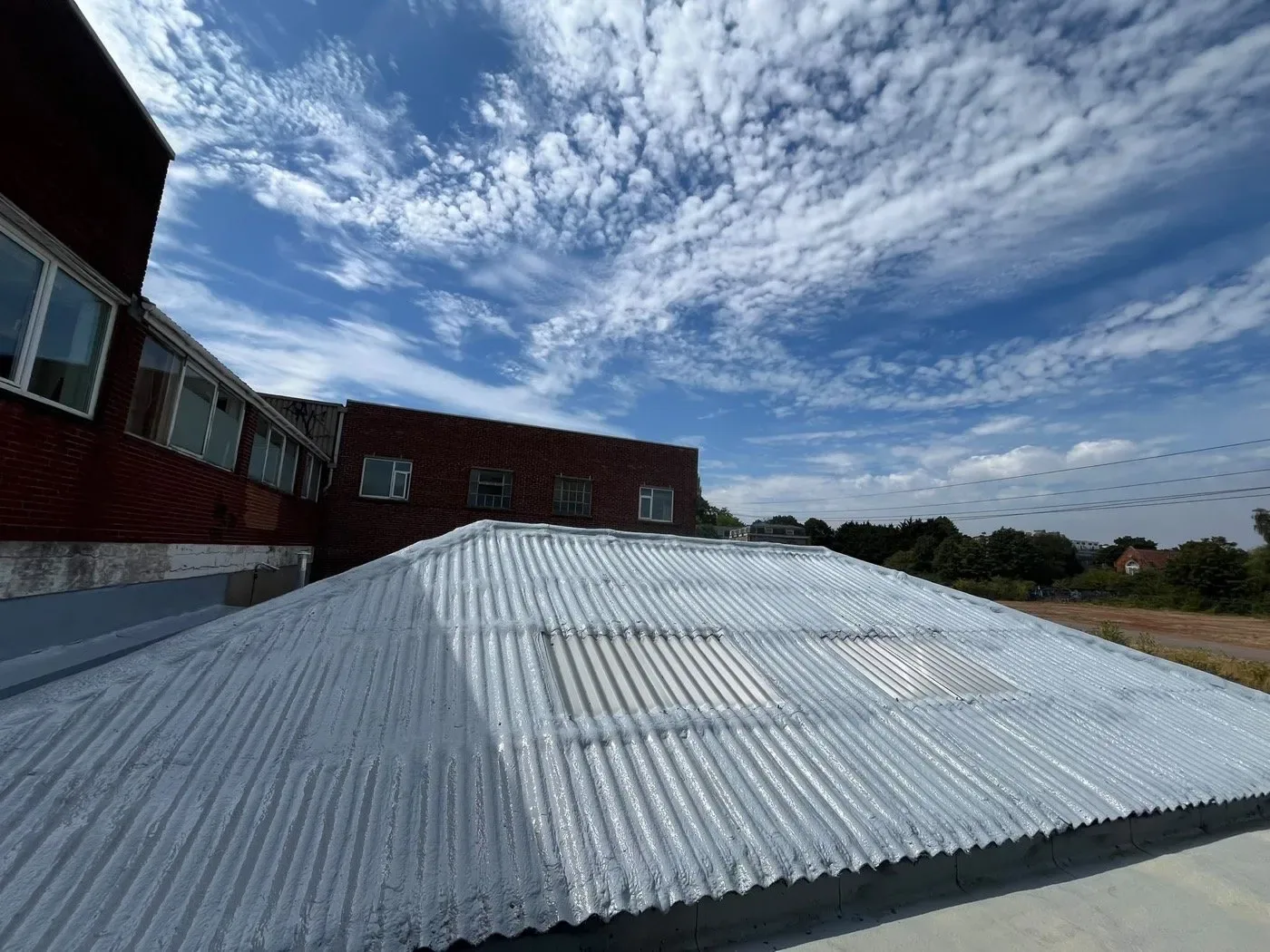
The foam itself is sprayed in passes, called lifts, until it reaches the required thickness, and each lift is checked for thickness with a probe before the next goes on. It cures to a firm, lightweight board with a slightly textured surface that is naturally adhered to the substrate. Foam alone would break down in sunlight within a short time, so a coating goes on to protect it from UV and to shed water. Silicone and acrylic coatings are the usual choices, sometimes with granules added for traffic.
The result is a continuous surface with few joints for water to find. It also means the roof's health depends on the coating, which is thin and takes the wear. The coating is the part that is inspected and recoated over the years, and the foam below can last far longer as long as it stays dry and covered. A silicone coating tolerates ponding better, while an acrylic is easier to recoat and suits drier slopes.
Application conditions: wind, temperature and moisture
Foam is sensitive to weather during installation. A surface that is damp, cold or windy gives poor adhesion and a rough, uneven cure, and overspray can drift onto cars, windows and neighboring roofs. The substrate has to be clean and dry, and the air and surface temperatures must fall in the range the foam manufacturer allows.
Winter snowfall and freezing recur in the NOAA record for the valley (the airport station is a proxy, not a gauge on any West Jordan roof), and that pattern means the practical season for foam is the warm, dry part of the year. We watch wind speed through the day with a handheld meter, shield the edges of the work area, mask the surrounding surfaces and have the crew stop when conditions turn. Early morning dew can ruin a pass, so we check the substrate with a moisture meter before each day's start.
Insulation, cure and the energy code
Closed-cell foam provides insulation that is bonded directly to the roof, with no gaps behind the membrane for air to move. That continuous layer supports energy performance and keeps the dew point out of the structure. The statewide energy code edition took effect on July 1, 2026, with local amendments layered on top, and a roof being rebuilt or substantially altered is reviewed against whichever edition is in force at permit.
We work out the thickness needed to reach the target insulation value, then confirm that the foam, the substrate and the coating are an approved combination. Fire performance matters too: foam is combustible until covered, so the building code requires specific coverings or thermal barriers, and our job plan follows the details in the design. When the roof needs more insulation than the old assembly provides, our roof insulation and cover board work is part of the same conversation.
Slopes, ponding and the shape of the roof
Spray foam can build slope. By varying the thickness of the foam, an installer can create a taper that directs water toward drains on a roof that is flat or dished, which is a quiet advantage on older roofs with chronic ponding. That works only if the substrate and the structure can carry the foam and the load of snow, and only if the drains sit low enough to receive the water.
Where ponding persists, the coating takes the punishment, and foam that stays wet for long periods can break down. We map low spots with a level and a roof walk, then taper the foam toward drains or add a drain where none exists. The same attention applies when we respond to ponding water on any roof type.
What foam does not like
The surface of a foam roof is firmer than it looks but easier to dent and puncture than a sheet. Hail, dropped tools and the sharp feet of equipment can break the coating and expose the foam. Birds peck at it, and sunlight breaks down any bare patch within a season. Repairs are simple when caught early: clean, patch the foam, and recoat.
Foot traffic needs control, with marked walk pads along the service routes and a rule about where tradespeople step. Grease and chemicals can attack some coatings, and equipment installed after the roof can pierce it. Our commercial roof repair work on a foam roof starts with a coating inspection that logs every dent, scuff and thin spot, so each one is fixed before sunlight or water finds the foam beneath.
Irregular roofs in older districts
In the Granary District, a former railroad and industrial corridor in Salt Lake City, older warehouse buildings are being reused for new business, and a city program backs rehabilitation of those buildings. Midvale's Main Street district plan aims to preserve the street's historic character. Rehabilitated buildings in districts like these can have roofs with irregular shapes, added equipment and many details, which is where foam's joint-free coverage helps, provided the substrate suits it.
We serve Salt Lake City, Midvale and West Jordan, comparing foam with modified bitumen and single-ply options for each roof. A roof walk, a moisture scan and a look at the structure decide whether foam is the right answer.
Cost drivers are plain enough: the thickness of foam, the number of coating coats, the amount of masking and protection needed around the roof, and any preparation of the old surface. Roofs with many obstacles tend to favor foam because the alternative requires hand-cut flashings at every one of them. Roofs that are wide, open and free of equipment often favor a sheet system.
Commercial Roofing Questions
Can foam go over my existing roof?
Often it can, if the existing roof is dry, clean and firmly attached. A moisture scan and core samples decide, and wet insulation must be removed before foam is sprayed.
How often does the coating need renewing?
It wears gradually with sun, traffic and ponding, and it is inspected each year. The recoat timing depends on the coating type and how the roof has been treated.
Is foam safe on an occupied building?
The spray produces fumes during application, and the building's intakes must be covered or shut off while the work and the cure proceed. We coordinate the schedule with the property manager.
What happens if a hailstone dents the roof?
A dent that does not break the coating is cosmetic. A break exposes the foam to sunlight and water, and it is cleaned, patched and recoated promptly.
Can foam fix a roof that ponds?
It can build slope to move water to the drains if the structure allows. Where ponding is chronic, we also look at drain placement and the coating choice.
Tell us about the roof shape
Share the roof's age, how many curbs and obstacles it carries, and where water stands. We will schedule a roof walk, scan for moisture and confirm whether foam fits before any price is set.