
A damp spot on the ceiling of a resident's bedroom is a health matter before it is a roofing matter, because moisture that lingers in a ceiling cavity invites mold, and the people who live below it may have little ability to leave the room. Senior living communities in West Jordan, UT may have long, low buildings with many wings, covered entries and courtyards, and their roofs carry winter snow and spring melt over spaces that are lived in around the clock. The first goal on any roof walk is to find water that has reached the structure before it reaches a person.
The second goal is to do the repair without turning a quiet residence into a work site.
Long buildings with many wings
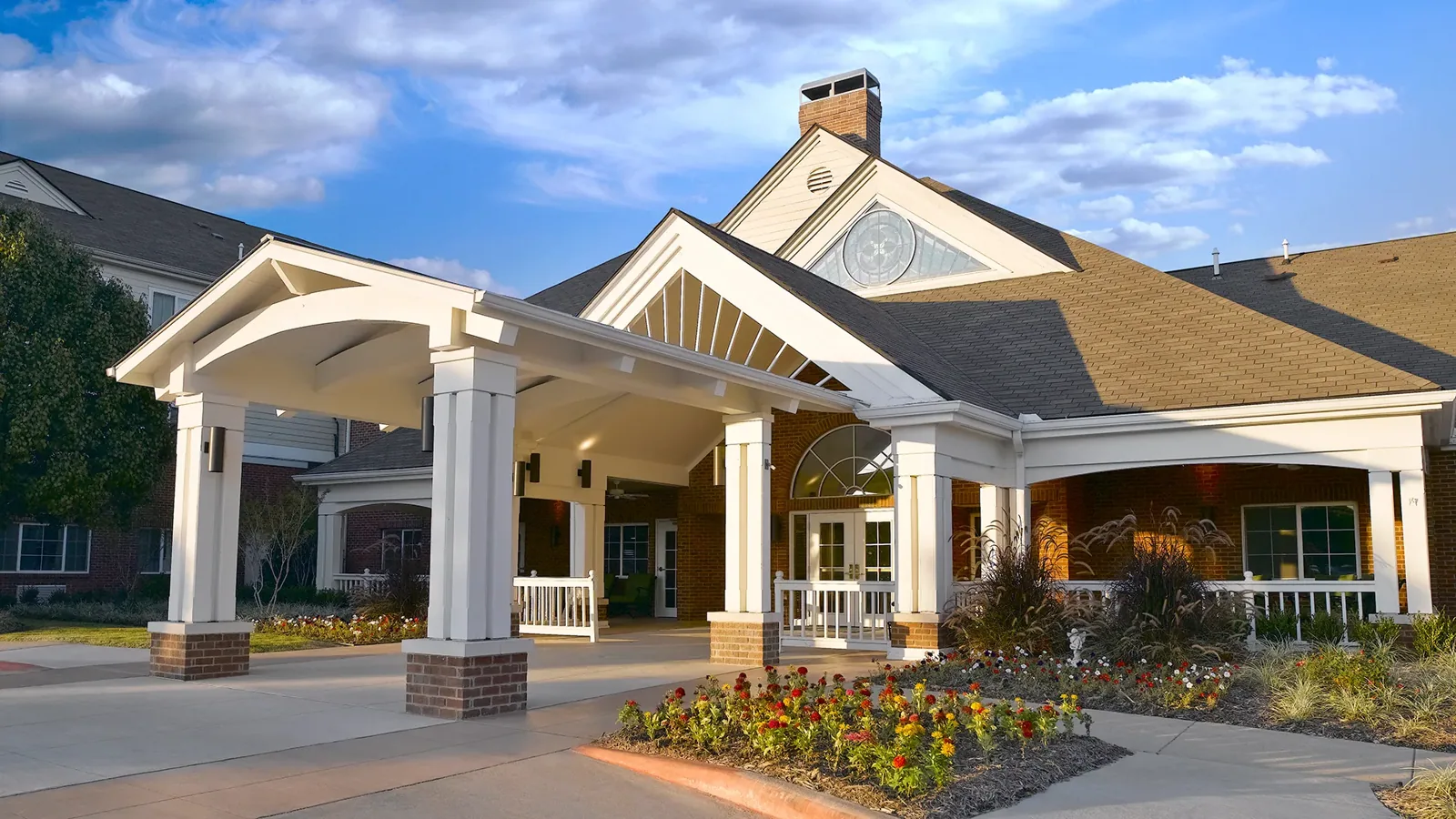
Care communities are often assembled in pieces: a main lodge, a few residential wings, a dining hall, an activities room and a covered portico where vans pull up. Each piece has its own roof and its own seams where one roof meets another wall. Water tends to enter at those meeting points, where flashing has to bridge two heights, two materials or two construction periods.
We trace each wing separately on the roof walk. Courtyard corners, where two wings meet at an inside angle, collect snow and shed it in a concentrated stream that tests the membrane. Roof valleys and low spots near the courtyard drain are checked for ponding after a melt. Where a covered entry meets the main wall, we probe the flashing and the sealant behind the edge metal, since the entry is both the most used and the most visible part of the building.
Drainage and melt after a storm
For a senior living site, the valley's winter record from the Salt Lake City airport, with recurring snowfall, freezing and warm summers, matters in a specific way. It is a regional guide and not a reading at each West Jordan community, but ice that forms at a downspout or a covered walkway is a fall risk for residents and staff. A roof that sheds melt onto a walking path is a safety issue as well as a leak risk.
After the first thaw we look at where each roof discharges. Downspouts that empty onto a sidewalk, gutters that ice over above an entry and scuppers that drip onto a patio are all noted. Corrections can be as simple as extending a downspout or adding a splash block, and larger changes are written up for the community's maintenance plan before the next winter.
Quiet, safe and predictable work
Residents rely on routine, and a roof project that breaks it can unsettle them. We agree with the administrator on work hours that avoid meals, rest periods and medical appointments, and we arrange noisy tasks for the middle of the day when most residents are in common spaces. Staging goes away from entrances and from the paths used by walkers and wheelchairs. Where a van or an ambulance must reach a door, the access lane stays clear at all times.
Notice is given in plain language to staff, residents and families. It states the days, the work area and what residents may hear. Dust and odors are controlled, with low-odor adhesives or mechanically fastened systems chosen near fresh-air intakes. Debris is swept at the end of each shift, and nails and loose material are collected with a magnetic sweeper along walkways.
Wet insulation and indoor air
Water that leaks into a roof assembly does not always show on a ceiling. It can soak the insulation above, stay there through the cold months and wet the drywall later. In a building where residents are present all day and all night, that hidden moisture is the thing to find. A moisture survey maps the wet areas across the roof, so the repair reaches the wet insulation and not only the visible split.
When a stain does appear inside, we ask the maintenance team to note the room and the date, and we coordinate with them on any ceiling opening needed to dry the cavity. Our work ends at the roof, but the notes we give maintenance staff identify which rooms should be rechecked once the roof is closed up.
Care communities and the valley's growth
The city plans for regional commercial, service, office and mixed-use growth, and its station-area policy pairs offices, civic buildings, shops and homes, including the planned area north and northeast of Jordan Valley Hospital. Murray lists healthcare among its economic sectors, and South Jordan describes Daybreak as a mixed-use area with housing and transit. A senior community near any of those uses shares crane access, staging space and delivery routes with its neighbors.
Operators in West Jordan, South Jordan and Murray can arrange a walk of the roof with us. For operators with several properties, a healthcare operator program keeps every roof on the same report format. A community with a clinic wing or a rehabilitation unit raises questions similar to those on a medical office roof, and one built as multi-story housing resembles an apartment roof in its leak patterns.
Repair, recover or replace
Care operators plan capital in cycles, and a roof report that fits a budget cycle is more useful than one that only lists problems. We separate repairs that stop a known leak, a recover that can add a membrane over dry insulation with less noise and debris, and a replacement where the insulation is wet or the membrane is spent. Cost drivers are named for each path: roof area, number of wings, insulation depth, penetrations and the pace the residents can accept.
Inspectors and owners ask for proof, so the administrator gets a clean record after each visit: roof type, grade for every wing, the location of each repair from a drain or unit, what was installed and the dampness checks beside it. Photos carry room numbers. The same file gives the next spring check a map of the earlier repair lines, along with notes on any warranty notice that was sent. Dates of any reported odors or damp spots help, because lining them up with the weather points to the wing that needs a closer look.
Commercial Roofing Questions
Can the roof be replaced with residents living below?
Yes, in sections. Noisy work is kept to mid-day, staging stays clear of entrances and walking paths, and each section is closed up before the evening. Low-odor systems are chosen near intakes.
How do you keep an access lane open for emergency vehicles?
The lane to each door is marked and kept clear of staging at all times. Hoists and material piles go on the opposite side of the building, and the crew sign-in includes the lane rule.
A resident room smells musty. Is the roof involved?
It can be. Wet insulation above the ceiling holds moisture for months. A moisture scan of the roof over that wing shows whether water is entering from above, and the maintenance team can then dry the ceiling cavity.
Who do you notify before work starts?
The administrator, the maintenance lead and, through them, staff, residents and families. The notice names the days, the work area and the noise to expect, in plain language.
What if ice forms where the roof drains onto a walkway?
That is a safety item we flag in the report. Extending a downspout or redirecting a scupper often fixes it, and we list the correction for the maintenance plan.
Tell us which wing and which room
Share where water appears, when it shows up, and how roof access works in your community. We will plan the roof walk around meals and rest times and mark the repair line before any schedule is set.