
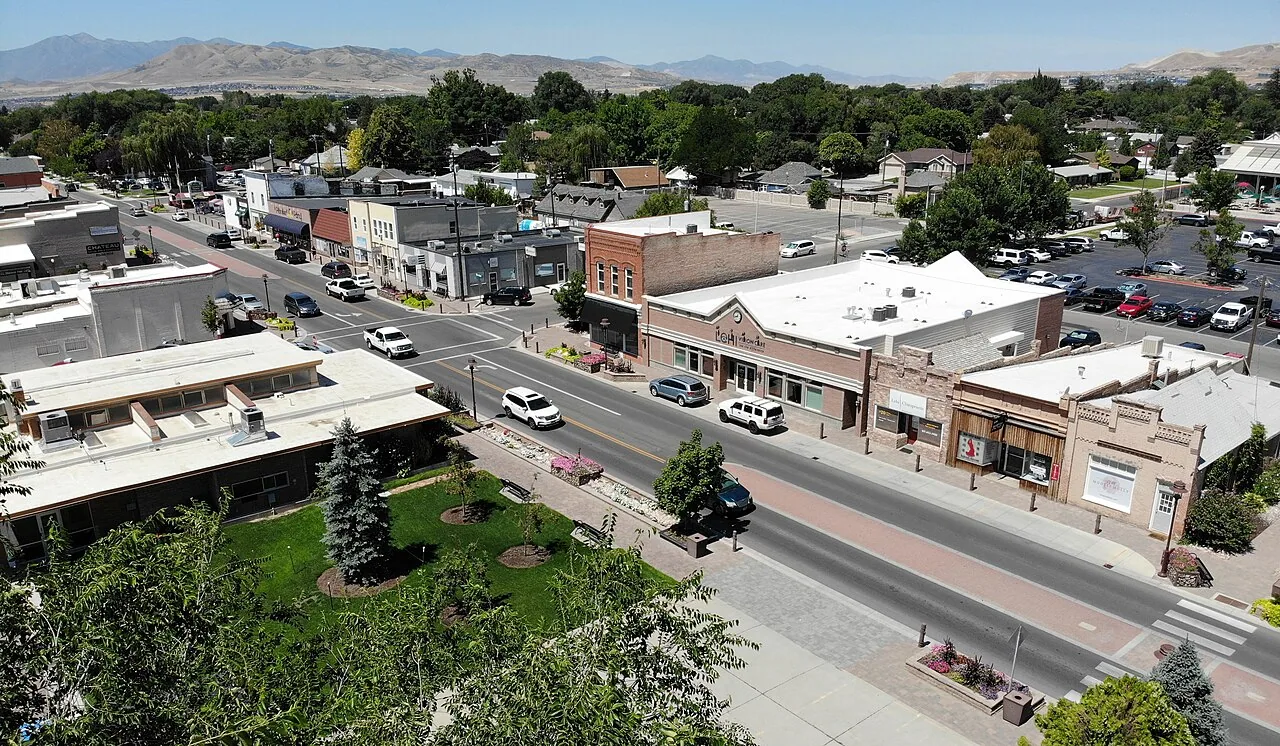
Meltwater dripping from a rooftop unit onto a parking-lot sidewalk is a small symptom that tells a roofer a lot: where the snow sat, which way the roof falls and whether the curb under that unit still sheds water. Sandy's downtown illustrative master plan guides future development in its central business and commercial district, and the city ties downtown planning to mobility, station-area planning and neighborhood activity-center plans. Its economic-development agency says it seeks quality employment, office space, retail shopping and entertainment in the regional commercial center. A roof in a district with that mix usually carries equipment, shares access with neighbors and has tenants who notice a drip quickly, so we begin a roof walk by finding where water leaves the roof and following it back to its cause.
What failed first: curbs, edges and the drip line
On an office or retail roof the first failures tend to be small and mechanical. A unit curb loses its sealant at a corner. A coping joint opens where the metal moved with the sun. A gutter pulls away from the fascia under the weight of ice. None of these is dramatic, and each lets water into a place that is hard to see from inside.
We look at those details first because they are the places where a roof meets something else: equipment, a wall, an edge, a drain. The record notes the condition of each with a photograph and a location, and it flags any that show staining, movement or a repair that did not hold. That gives the property manager a list to work through, ordered by consequence and not by size.
Ice deserves its own line in the notes. Water that refreezes in a gutter or at a roof edge can lift metal and push meltwater back under the first course of membrane, so we record any sign of damming, such as staining below an edge or a bent bracket, even when the day of the walk is dry.
Roof-walk notes: equipment, shared walls and the field
Downtown commercial buildings often have rooftop units serving several tenants, and the paths technicians walk to reach them wear the membrane. We map those paths, check for punctures and scuffs, and look at the condensate lines that discharge onto the surface. A line that drips on one spot all summer leaves a stained, softened patch that fails first in winter.
- Unit curbs, corner reinforcement and counterflashing
- Condensate discharge points and the surface beneath them
- Party walls and parapets between tenant spaces
- Drain bowls, scuppers and overflow openings
- Seams and laps in the walking paths
Where tenant reports are scattered, we plot them on the sketch. A cluster along one wall points to a flashing; a cluster near a drain points to ponding; a scatter across the field may call for a moisture reading or an infrared moisture survey.
Drainage and melt: what the valley reference says
The Salt Lake City airport's weather normals list winter snowfall and snow-depth periods. Elevation and exposure may differ in downtown Sandy, so the roof itself is read after a melt. They justify a post-melt check for water marks at drains, low spots and seams, and for ice that has formed at edges and in gutters.
Snow can bury a detail. Should a unit curb or drain bowl lie under snow on the day, the record notes it and a second visit is booked for a clear roof. We would rather state what was not seen than fill the gap with an assumption about what is probably there.
Warm summers matter too. The same normals show them, and a dark membrane takes that heat into its seams every afternoon. Movement at curb corners and wall bases is what opens the gap the next thaw finds, which is why the first walk pays attention to those corners in every season.
Repair boundary: how far the fix reaches
A curb repair can stop at the curb when the surrounding membrane is sound. A seam repair can stop at the seam when adjacent laps are tight. When wet insulation, repeated leaks or a soft deck turn up, the boundary may move to include a whole bay or a whole slope. The proposal names the boundary and the evidence for it, and it lists any concealed condition that could change it.
An owner who wants to spread cost may favor a staged plan: repair what is leaking, correct the drainage and schedule a replacement for a year the owner chooses. A commercial roof repair scope names the materials and the surface preparation and says what gets checked at completion.
The proposal spells out what moves the numbers: layers on the roof, wet insulation, penetrations to rebuild, roof access and the use of the space below. Those drivers, and not a unit price quoted before the roof is opened, decide the numbers.
Seasonal timing: around parking, hours and winter
Shared parking and tenant hours shape the work. We plan a lift position that keeps entrances and accessible spaces open, schedule loud tasks outside office hours where leases allow and bring material in small loads. For a retail or entertainment tenant, the plan also notes event or sale dates when the lot is fullest.
Cold weather limits what can be done. Some adhesives and welds need minimum temperatures, so larger projects are scheduled for the warm months, while temporary protection and small repairs can proceed in winter when conditions allow. A spring check after the last hard freeze catches damage before summer storms and heat add to it.
Office tenants tend to notice a drip within a day, so quiet-hour limits, protected desks and a named contact are written into the plan before the first lift goes up.
Next check: a short list from the owner
A roof plan, leak dates with rooms, recent repair invoices and the tenant list are the useful things to send. Add how the roof is reached and who signs off on a change of schedule. That lets the first walk concentrate on conditions, and the findings can split urgent protection from work that can wait.
Owners with property in the Cairns District or the Sandy Corners planning area can keep one record format across buildings, and a maintenance visit after each melt keeps drains clear and details checked.
Commercial Roofing Questions
Why do rooftop units cause so many leaks?
Each unit adds a curb, penetrations and foot traffic. Sealant dries, corners move and condensate keeps one spot wet. We check all three on every unit. A walk pad along the service path keeps the membrane intact.
Can work happen while offices stay open?
Usually. Lift positions, noisy tasks and material staging are planned around entrances, parking and office hours, with a contact who can pause the work. Interior protection goes in under any ceiling likely to be disturbed.
What decides the scope of a downtown office roof?
The building, the tenant use and the condition the roof walk finds. We tie each finding to a photograph and a place on the sketch, so the scope follows the evidence.
What if snow hides the leak source?
We inspect what is visible, record what is not and schedule a return when the roof is clear. Ice and snow can also hide a drain bowl, which is why a clear-day return matters.
How often should drains be cleared?
After each major melt and before the first snow, at minimum. A maintenance visit also checks flashing and records changes since the last walk. Strainers, scuppers and overflow openings all get the same look.
Start with where the water showed up
Tell us which room or roof section is affected, when the leak appears and how roof access works. We will walk the likely path and set a repair boundary or next test from what we find.