
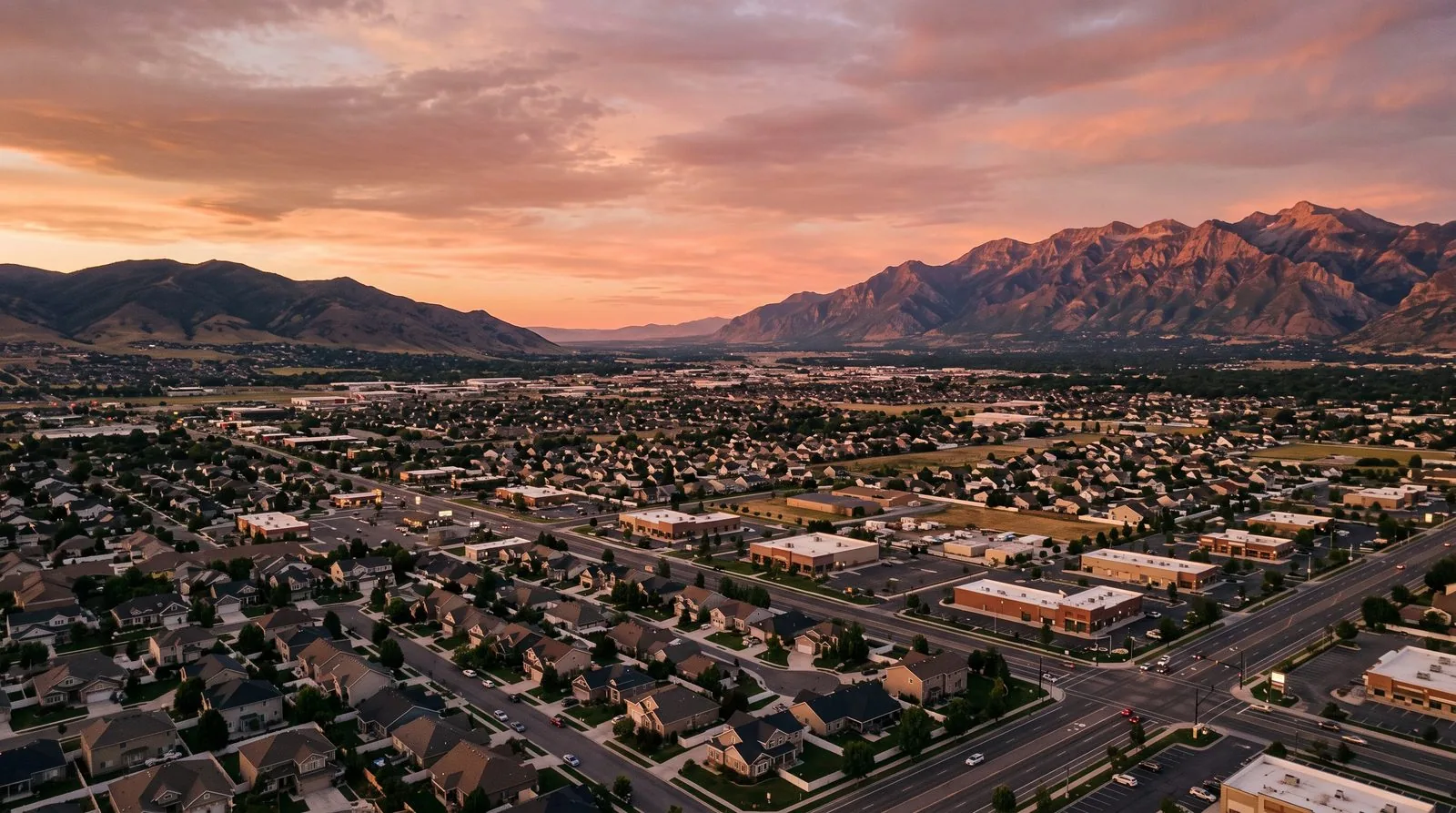
One drip can mean very different things depending on what sits under it: a lost afternoon in a shop, a night's sleep in a hotel room, a stopped line in a small production space. Midvale's Town Center Core District includes properties along Main Street, Holden Street/700 West and Center Street, and the city anticipates retail, service, office, lodging, civic, residential and industrial uses in the broader Main Street redevelopment area. Its adopted concept plan frames the district as a walkable town center with access to local businesses. A roof plan for a district with that range of uses has to rank leaks by what they interrupt, not by the size of the stain, so we begin by learning what lies directly under each roof section.
What failed first: the thing nobody ranked
On a property with several uses, the first mistake is treating every leak the same. A small drip over a stockroom gets the same priority as a small drip over a residential unit because no one wrote down the difference. By the time the second leak appears, the repairs are being made in the wrong order.
We start with a use map: each roof section matched to what happens below it, how sensitive that space is to water and how soon its occupants would notice. Then we walk the roof, rate each defect and place it on the map. The result is a list ordered by consequence, with the roof findings beside each entry and the tests that would settle any doubt.
Heat belongs in the use map as well. Warm summers show in the same airport normals, and equipment that serves a lodging or residential space runs hardest then. Curbs and flashing around those units age faster than the field, so they are checked before the cooling season, not after the first call.
Roof-walk notes: ordering the findings
The ranking is simple. Highest consequence goes first: an active leak over a sleeping or residential space, over equipment or over stored goods that cannot be replaced. After that come live leaks over ordinary commercial space, conditions about to leak, and wear that can wait for a watch date.
- Active leaks, with the use below each noted
- Open seams, lifted flashing and failed curb corners
- Wet or compressed insulation found by probe or reading
- Drains, scuppers and low spots that hold water
- Sound areas, listed so they are not repaired by habit
A roof asset management record keeps this ranking current as uses change, so the next repair follows the building and not last year's priorities.
Where two uses share a wall, the notes mark the flashing along it and which side would see the water first. That makes a later conversation between two tenants or owners shorter, because both can look at the same photograph.
Drainage and melt: confirming the exits
For the valley, the airport record lists snow, snow depth, freezing nights and warm summers. They are a reference, and the roof on a given Midvale block supplies its own evidence. After snow clears, we follow the water to each exit and note which ones are open, which are blocked and which discharge onto a surface that cannot take the flow.
On a district with Main Street, Holden Street and Center Street frontages, a scupper or downspout may discharge toward a sidewalk or an alley. We record where each one lands. A downspout that dumps onto a walkway makes ice in cold weather, and one that dumps against a wall wets the base. Neither is a membrane failure, but both are the roof's responsibility until the water is somewhere safe.
If a roof drain serves more than one use, the notes say so. A single clog then threatens several spaces at once, and the first fix is clearing the drain before any other work is priced.
Repair boundary: by use, by section, by season
The boundary of a repair can follow the use map. A section over a residential or lodging space may justify a more thorough fix than a section over a storage room, even if the defects look alike. A section over an industrial use may need a different material from one over an office. The proposal explains each choice.
For wider problems, the choice is between a staged repair program and a replacement of the wet or failed layers, and between a recover and full removal when layers are already stacked. A test opening in the doubtful area settles whether a recover is possible. A commercial roof repair states its materials, its preparation and its final check.
Layers, wet insulation, penetrations, access and the hours each use allows drive the price and the calendar. The proposal states each driver beside its evidence, so the choice between a staged program and a replacement is made on the same facts.
Seasonal timing: protecting the sensitive hours
Each use has hours that matter more. Lodging and residential spaces are most sensitive at night and in the early morning; shops and offices during opening hours; industrial uses during shifts. We ask for them, then schedule loud and dusty work for the least sensitive window of each section.
Full projects wait for warm, dry stretches because adhesives and welds have cold limits; winter work stays with temporary protection and small repairs. Replacement scopes are checked for insulation, fire and edge details against whatever the building department says governs the permit.
Dust and odor follow the same logic. Adhesives, primers and torch-free welding are chosen with the neighbors in mind, intakes are protected, and a section over a sensitive use is finished before the next one over an ordinary space is opened. The posted plan names the section, the hours and the person who can halt the work.
Next check: what to send before the first walk
A list of uses by suite or floor, a roof plan if one exists, leak reports with dates and the names of anyone who must approve access are the useful things to send. Tell us how roof access works and who can stop work if a space needs quiet.
Owners with property in the Main Street District or in the Granary District can keep one use-map format across buildings, and a preventive maintenance visit keeps drains clear between projects.
A written record follows, with each finding tied to the use beneath it and sorted by urgency.
Commercial Roofing Questions
How do you rank leaks across different uses?
By consequence: residential and lodging spaces, equipment and irreplaceable stock first, then ordinary commercial space, then conditions likely to leak. The ranking goes in the report with the roof findings beside each entry.
Can one roof have different repair standards by section?
Yes. A section over a sensitive use can justify a more thorough fix than a section over a storeroom. The proposal explains the reason for each difference.
What if the uses change?
The use map is updated and the ranking is redone. The roof record stays the same. Photographs from earlier visits stay in the file.
Does the concept plan decide the roof system?
No. It describes a walkable town center. The roof walk establishes the system and its condition. Planned retail, office, lodging, civic, residential and industrial uses each place different demands on the roof.
How do you handle noise near lodging or homes?
Loud work is scheduled in agreed hours and noted on the posted plan with a contact who can stop it. Quiet hours for lodging and residential uses go on the plan before any lift is booked.
Start with what sits under the roof
Tell us the uses below each roof section, where water shows up and how roof access works. We will build the use map, walk the roof and set the order of repairs from the evidence.